Get Full Government Meeting Transcripts, Videos, & Alerts Forever!
Get email alerts on the Administrative Rules topic
No spam. Unsubscribe anytime.
Statewide Virtual Charter School Board opens rulemaking to tighten applications, add mission‑specific measures
Summary
The Statewide Virtual Charter School Board voted to begin rulemaking to amend Title 77 chapters 1 and 10, adopting a two‑phase application process, a staff 30‑day initial review to screen applications for merit or legal compliance, and the option for schools to propose up to three mission‑specific performance measures.
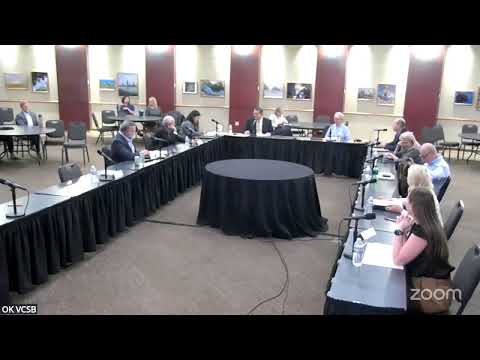
The Statewide Virtual Charter School Board voted to initiate the administrative rulemaking process to revise Title 77, chapters 1 and 10 of the Oklahoma Administrative Code, opening public notice and comment on proposed changes to the board’s application and oversight procedures.
Board members agreed to a set of staff‑proposed changes designed to sharpen the board’s authorizing work and shorten time spent reviewing low‑quality applications. The proposed rules would formalize a two‑phase application process: an initial phase that requires applicants to demonstrate organizational capacity and model merit, followed by a ‘ready to open’ phase that ensures operational readiness. Agency staff would have a 30‑day window after submission to determine whether an application is officially ‘received’ for board consideration; staff could decline to accept applications that are inconsistent with board standards, violate law, or appear plagiarized.
The board also approved as an addendum language allowing a school to propose up to three mission‑specific performance measures (they must be evidence‑based, valid and aligned with the school’s mission). Those mission measures may account for up to 10 percent of the academic weighting in the board’s Performance Framework Index and would be proposed during an initial application or renewal.
Board members debated larger changes to the academic weighting in the frameworks, with several members arguing for raising the academic portion to a higher minimum (60 percent was discussed as a target). Staff said the board would continue to study models from other states before finalizing weight changes in rule text.
The vote to enter rulemaking carried on the board meeting floor; the rulemaking process will publish proposed text, accept written comments and hold a public hearing before returning to the board for further action. If the board moves forward after public comment, the changes would then proceed through the legislature and governor as required by statute.
The motion to enter rulemaking did not adopt final rules; it authorizes staff to begin the formal notice and comment timeline required under 75 O.S. and the administrative rules process. The board later voted to add the mission‑specific performance measure paragraph to the draft being circulated for public comment.
Next steps: staff will publish the proposed rule text, collect public comment, and bring revised rules back to the board for further consideration before any final adoption.