Get Full Government Meeting Transcripts, Videos, & Alerts Forever!
Get email alerts on the Property Title Bona Fide Purchaser topic
No spam. Unsubscribe anytime.
Utah Court of Appeals hears dispute over whether buyers were bona fide purchasers after sheriff's sale
Summary
During oral argument in Skyline Holdings v. Payan and Castro, counsel disputed whether recorded judgment documents and a certificate of sale put later purchasers on notice of an unrecorded beneficiary's interest in property transferred to a revocable trust. The panel pressed competing readings of Utah recording statutes 57-3-102(4) and (5).
The Utah Court of Appeals on Friday heard oral argument in Skyline Holdings v. Payan and Castro, a dispute over whether later buyers took title free of a judgment creditor's unrecorded trust interest.
At argument, Spencer McDonald, counsel for Skyline, told the three-judge panel that the case turns on two central questions: why the "first in time, first in right" principle did not prevail and whether the buyers qualify as bona fide purchasers given recorded documents before closing. "There was a transfer from the judgment debtor in the foreclosure matter to a revocable trust in 2019," McDonald said, adding that a judgment information statement was recorded on April 28, 2021 and "that's the date on which the judgment information statement was recorded in the county recorder's office." He argued the judgment should have attached on that date and that the buyers or their agents failed to conduct judgment-index searches before closing.
Appellees' counsel Sarah Goulet disputed that the buyers had notice of any undisclosed beneficiary interest. Goulet said the 2019 warranty deed conveyed the property to trustees of a revocable trust and "there was no indication in that document that [the grantor] retained any interest as a settlor or as a beneficiary," invoking Utah Code —7 57-3-102(4) to say a recorded deed naming a trustee but not naming beneficiaries does not charge third parties with notice of an undisclosed beneficiary interest.
The panel pressed both sides on the practical mechanics of county recorder indexing and title searches. One judge asked whether a recorded judgment that is not abstracted to a parcel would show up in a routine address-based search; counsel agreed county practice varies. The certificate of sale from a sheriff's sale, recorded Feb. 17, 2022, was also discussed: counsel and the panel debated whether that document, when indexed to a parcel but not yet abstracted, would or should put a buyer on notice.
Goulet argued the statutory scheme and precedent support protecting subsequent purchasers who relied on record title. She pointed to subsection (5) of —7 57-3-102, which she said allows a grantee who takes from trustees to convey free and clear of unrecorded beneficiary interests when those interests are not disclosed of record. "Once the grantee becomes the grantor, it's resolved," she said, adding that requiring third parties to probe private trust instruments would be impractical.
McDonald countered that treating the judgment and certificate of sale as ineffective notice would undercut the effectiveness of sheriff's sales and create perverse incentives to ignore judgment-index searches. "Who on earth is going to bid at a sheriff sale if they know ... there's willful disregard of recorded statutes?" he asked, saying title insurance and due diligence exist to address recording/abstracting gaps.
Both sides cited Utah cases and recording statutes in support of their readings; counsel referred to Haake, Pioneer Builders, and other authorities. The panel did not announce a ruling Friday; Chief Judge Ryan Tenney said the court would issue a decision as soon as it can.
The case centers on a chain of events counsel described as: a November 2019 deed conveying the property to trustees of the SMB revocable trust; a judgment information statement recorded April 28, 2021; subsequent instruments tied to a sheriff's sale (including a certificate of sale recorded Feb. 17, 2022 and abstracted in late March 2022); and later conveyances to Back 1 LLC and to Payan and Castro. The Court of Appeals must decide whether, under Utah recording law and the bona fide purchaser doctrine, the later purchasers took title free of the judgment creditor's unrecorded equitable interest.
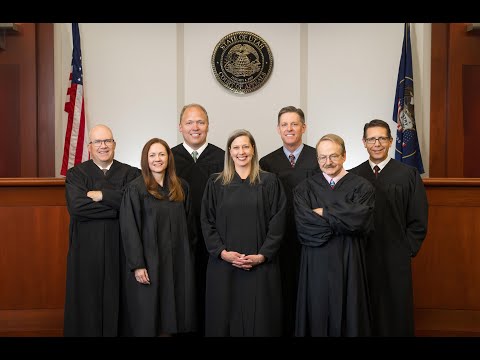
The panel, chaired by Judge Ryan Tenney and including Judges John Luthy and David Mortensen, heard argument but asked several detailed factual and statutory questions. The court did not take additional testimony and indicated it would rule in writing.