Get Full Government Meeting Transcripts, Videos, & Alerts Forever!
Get email alerts on the Education Technology topic
No spam. Unsubscribe anytime.
Sumner County staff outline plan for 1-to-1 iPad rollout for secondary students and teachers
Summary
Sumner County Schools staff presented a plan to provide iPads to every K–12 teacher and 1-to-1 iPads for students in grades 6–12, citing online testing needs, accessibility features and AppleCare protections; staff said high schools would get devices first in August and no formal board vote occurred during the study session.
Sumner County Schools staff on Tuesday presented a proposal to move the district toward a one-to-one Apple iPad program for secondary students and provide each K–12 certified teacher with an iPad, citing the district’s need to meet online testing requirements and expand instructional tools.
Dr. Langford, introducing the item during a study session, said the board will consider a formal vote in the coming weeks and framed the plan as a strategic use of remaining ESSER funds. “Budget season is here…we wanted to share some information about an Apple investment that we’re looking at as a district,” he said.
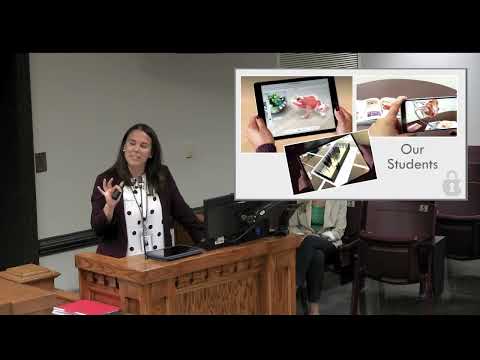
Jean Hesson, the district’s elementary supervisor and supervisor of instructional technology, reviewed prior deployments and the proposed scope. She told the board the district has already deployed about 3,000 iPads in K–2 classrooms, placed carts at middle and high schools and plans that would result in one-to-one devices for all sixth through twelfth graders, one iPad for every K–5 teacher plus five iPads per 3rd–5th classroom and an iPad for each K–12 certified teacher. Hesson said the iPads will run secure testing platforms and also expand classroom experiences, from augmented reality anatomy lessons to primary-source exploration: “These devices will absolutely run the ACT, the EOCs…But these devices are a lot more and provide way more opportunities and experiences for our students than online testing.”
Board members asked detailed questions about equity and access. Lancaster asked about home Internet access; staff said pandemic-era data showed roughly 25–30% of families lacked traditional broadband at home but many families have smartphone hotspots and some instructional apps will work offline. Hesson said the district expects to use a mix of platforms: “We will still use Google Classroom. It’s going to be a both-and,” she said, while adding that Apple Classroom offers teacher-facing management tools to monitor and lock student screens in class.
The district said professional learning and support are part of the package: Apple will provide an on-site Apple-certified coach for a calendar year to help teachers and leaders integrate the devices. Hesson also noted expanded infrastructure work already under way — additional access points and increased bandwidth — so classrooms will have the density needed for many simultaneous devices.
On costs and device protection, Hesson said the purchase includes AppleCare, which in the education configuration provides two accidental-damage replacements per device per calendar year; she clarified that education AppleCare does not cover loss or theft but the district’s mobile-device management system can remotely disable or "brick" lost or stolen devices and mark them as district property. Hesson said schools will retain existing Chromebooks and that district device funds will remain available to buy accessories, chargers and maintain reserves.
Staff outlined a phased rollout timetable: the district intends to distribute devices to high school students before the start of the school year (targeted for August) so students can complete required online ACT testing, with middle school distribution following later (late September–October) to allow time to learn from the first roll-out. Staff said logistics around collecting devices for updates, summer maintenance and exact trade-in/refurbishment timing are still being finalized.
No formal motion or vote was recorded during the study session. The board recessed into executive session at the end of the presentation. The district will share draft acceptable-use agreements and proposed policies with principals and stakeholders before any widespread take-home implementation.