
MDOC requests $35M+ for pay, $1M for community corrections and $4.2M ongoing for prisoner health-care in FY27 pitch to House subcommittee
Get AI-powered insights, summaries, and transcripts
Sign Up Free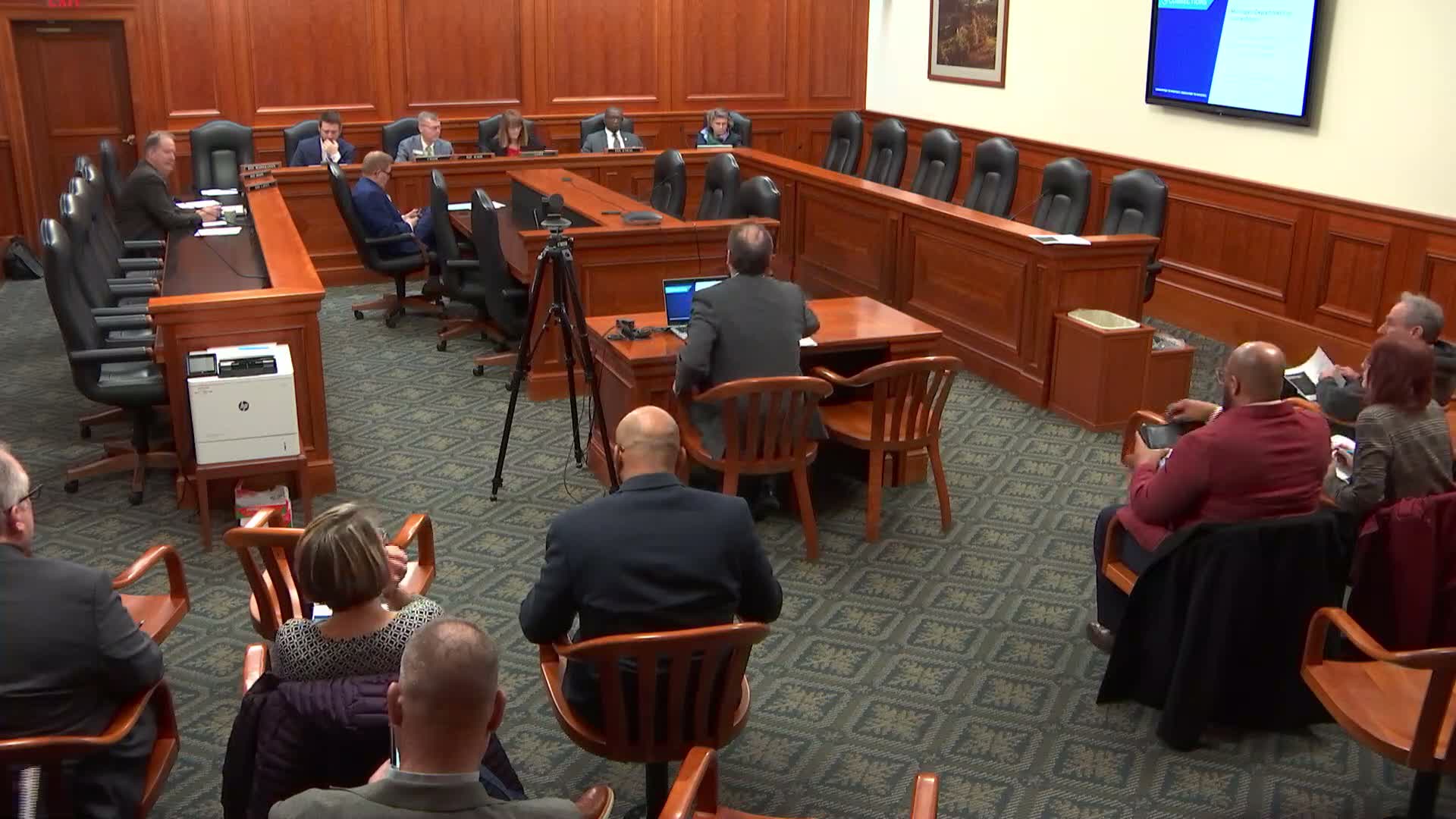
Summary
MDOC staff told the House Appropriations Subcommittee on Corrections and Judiciary the executive recommendation for FY27 includes more than $35 million for employee compensation, a $1 million boost for community corrections, and a $4.2 million ongoing shortfall to cover rising prisoner health-care contract costs.
LANSING — Michigan Department of Corrections (MDOC) staff outlined the governor’s FY27 executive recommendation to the House Appropriations Subcommittee on Corrections and Judiciary, emphasizing three priorities: employee compensation, community corrections expansion, and rising prisoner health-care contract costs.
Kyle Kaminski, speaking for MDOC on behalf of Director Washington, said the department is seeking just over $35,000,000 in employee economics for FY27 to fund negotiated compensation and insurance adjustments. "That 3% raise, across the department equals about $30,000,000," he said, adding that the remainder covers insurance and other built-in cost changes. Kaminski characterized the request as necessary to support staff recruitment and retention.
Kaminski reported that MDOC graduated 760 officers from the academy in calendar year 2025 and that current class sizes generally run "somewhere between about 175 and 200." He told the committee vacancy rates vary by facility — some below 5% and others with rates as high as about 37% — and described targeted recruitment strategies, including sending whole academy classes to facilities with the greatest staffing need in the Jackson region.
On community corrections, Kaminski said Michigan law establishes a community corrections process administered through locally developed advisory boards and annual plans. He said the current appropriation has been $14,200,000 and MDOC is asking for an additional $1,000,000 to bring the total to $15,200,000 to accommodate new counties joining and to sustain effective existing programs. "A 100% of this funding goes back to the local, community corrections," he said, stressing the funds pay for locally run diversion and reentry programming.
Kaminski told the committee the agency expects roughly 45–50 counties are participating now and that near-term growth is likely to be in the low single digits as additional counties complete application processes.
Turning to prisoner health care, Kaminski described a carry-forward approach used in the previous budget cycle that shifted about $30,000,000 in planned capital work-project funds to cover FY26 health-care contract increases. Based on current projections, he said approximately $18,000,000 of that $30,000,000 will be spent in FY26, leaving about $12,000,000 to carry into FY27. MDOC projects total FY27 health-care contract increases of about $16,200,000 — driven primarily by inflationary pressures — producing a remaining baseline gap of roughly $4,200,000. "We are requesting that $4,200,000 is ongoing, [a] current services baseline adjustment to help cover the cost in FY27 of the contract," Kaminski said.
Kaminski also described process work on budget “boilerplate,” saying the department and chairs have trimmed or combined redundant sections and that MDOC is open to further changes.
Committee members pressed MDOC on operational implications. Representative O'Neil praised community corrections work in her district and asked about conditions at the women's Huron Valley facility; Kaminski said he could not discuss individual health information in an open hearing but that MDOC is engaging with legislators and community groups on concerns and welcomed facility visits.
Representative Cabot asked for demographic detail on aging prisoners as a driver of health-care costs. Kaminski said the fastest-growing cohort in the prison population is in the 50–55 age range and that people entering custody often have unmet medical needs, which increases system costs. "Our fastest growing group is the older group," he said, and MDOC offered to follow up with exact median-age figures.
Members also queried how custody level affects health-care delivery. Kaminski explained that while clinical need does not automatically vary by custody level, delivering care in higher custody units is more logistically challenging and expensive because staff must bring services and medications into those units rather than moving patients to central clinic areas.
On contractor payments, Kaminski said the ambulance payments owed by a previous contractor remain entangled in bankruptcy litigation — the state has sued the prior contractor — and that the current contractor (referred to in testimony as VitalCore) has had cash-flow issues and is working to become current with subcontractors, including ambulance providers. He said MDOC is pressing the contractor to address outstanding bills.
The subcommittee approved minutes and later moved to excuse absent members before adjourning. Kaminski and staff offered to provide follow-up demographic and program-detail figures to the committee.
What’s next: MDOC will provide requested demographic breakdowns and staffing/financial details to the subcommittee as budget negotiations continue; the agency indicated some FY27 health-care shortfalls would require ongoing baseline funding if not covered by one-time sources.
Sources: Testimony by Kyle Kaminski on behalf of MDOC to the House Appropriations Subcommittee on Corrections and Judiciary.