
Rep. Brian Mast: Trump's remark about Iran leadership doesn't by itself make U.S. policy a —regime change' war
Get AI-powered insights, summaries, and transcripts
Subscribe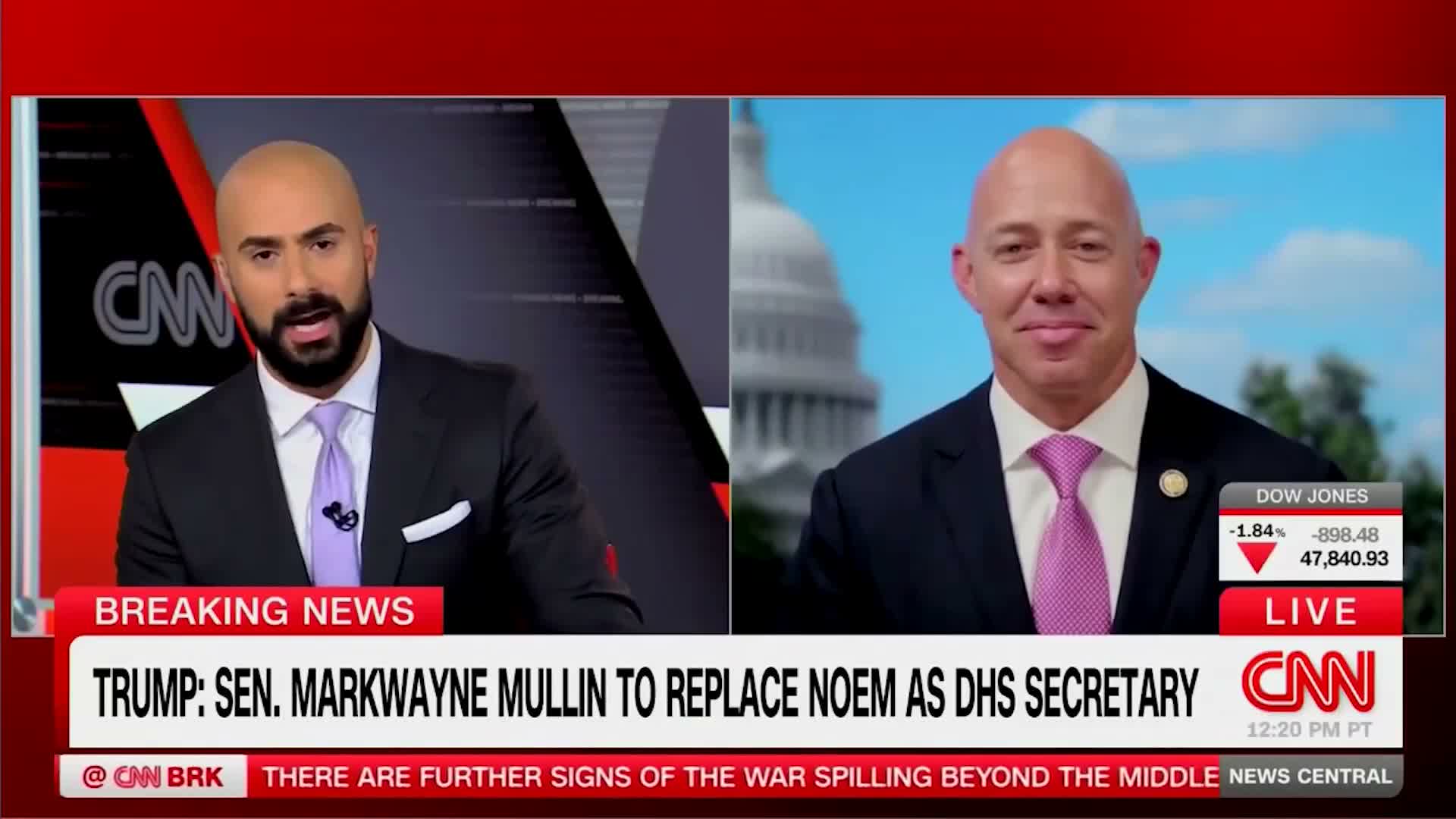
Summary
Rep. Brian Mast told an interviewer that President Trump's comment about being "personally involved" in picking Iran's next leader does not automatically equate to a U.S. policy of regime change; Mast said the U.S. legitimately aims to remove Iranian military capabilities that threaten Americans but acknowledged risks of prolonged conflict if an uprising turns into civil war.
Rep. Brian Mast said President Trump's remark that he must be personally involved in selecting Iran's next leader does not, on its own, convert U.S. policy into a formal —regime change— war. Mast, introduced in the exchange as "congressman," argued the United States has a legitimate interest in removing Iranian military capabilities that can threaten Americans and that those objectives do not necessarily mean a direct U.S. occupation.
Mast framed his view around recent attacks he said Iran or its proxies have carried out against U.S. forces and shipping, citing drone strikes, attacks on vessels and an incident in Jordan that he said killed three Americans. "We would be moronic to not want a change in regime there," Mast said, while distinguishing wanting a different Iranian leadership from a policy that commits the United States to install one.
The interviewer pressed whether Mr. Trump's public remarks undermine the administration's denials that it is seeking regime change. Mast replied that the stated objective, in his view, is to "remove every single piece of Iranian military hardware that can reach out and touch an American," and to target the systems and people responsible for attacking Americans.
Mast also described Iran's domestic succession processes, saying an 88-person assembly plays a role in choosing leaders and that that process could produce another hardline cleric. He said the president is urging Iranians to take back their country and that, in Mast's assessment, protesters now have "substantially more support," including backing from the United States and regional partners.
When the interviewer suggested that urging uprisings risks civil war and could require extended U.S. involvement or nation-building, Mast acknowledged the liability but said the current policy differs from past interventions such as Iraq or Afghanistan because the administration is calling for Iranians themselves to act as the "boots on the ground." He argued the resources and regional alignment behind that pressure are stronger now than in some past cases.
The interview concluded without any formal action; the exchange ended when the interviewer thanked Mast for his time.