
State Ethics office seeks nepotism ban, tweaks to conflict rules and quorum in SB 323
Get AI-powered insights, summaries, and transcripts
Subscribe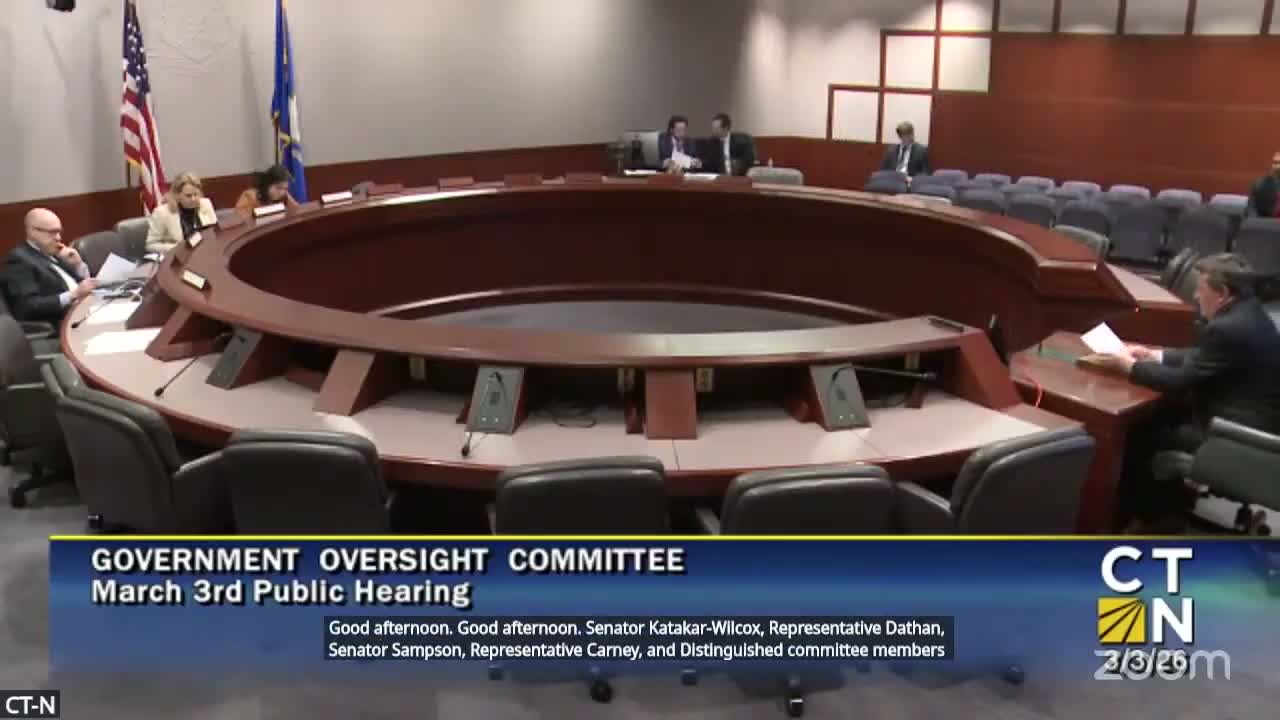
Summary
The Office of State Ethics proposed substitute language for SB 323 to add an explicit nepotism prohibition, align retirement‑plan reporting, adjust quorum for the citizens ethics advisory board and expand conflict rules to cover outside employers; the committee pressed the office to clarify 'actual knowledge' thresholds.
Peter Lewandowski, executive director of the Office of State Ethics, testified in support of substitute language for Senate Bill 323 that would revise the state code of ethics. He said the office’s proposals include:
- Lowering the Citizens Ethics Advisory Board quorum from six to five members (a simple majority of a nine‑member board); - Amending financial‑interest reporting to treat 403(b) plans similarly to 401(k) plans for securities disclosure; - Inserting an explicit prohibition against nepotism into §1‑84 that would bar use of state office or position for the purpose of facilitating employment or promotion of immediate family members; and - Extending the substantial and potential conflicts provisions (§1‑85, §1‑86) to cover official action that benefits an official’s outside employer or the outside employer of a spouse, with exemptions where benefits apply broadly to a profession or industry.
Members questioned how 'actual knowledge' of a conflict would be established; Lewandowski said the provision targets legislators and would require some concrete awareness — for example committee membership, knowledge of a bill’s title or contents, documentary evidence or emails — rather than a mere inferred association. On nepotism, he said the substitute language uses the phrase 'for the purpose of facilitating' to capture intentional acts to secure employment or promotion, not casual introductions.
Lewandowski described the enforcement process: probable‑cause hearings followed by potential full hearings before the board, and noted the board may impose fines (up to $10,000 per violation) and cease‑and‑desist measures; employment discipline would remain an agency decision.