
Proponents say ranked-choice voting would expand choices and reduce negative campaigning; some officials urge caution
Get AI-powered insights, summaries, and transcripts
Subscribe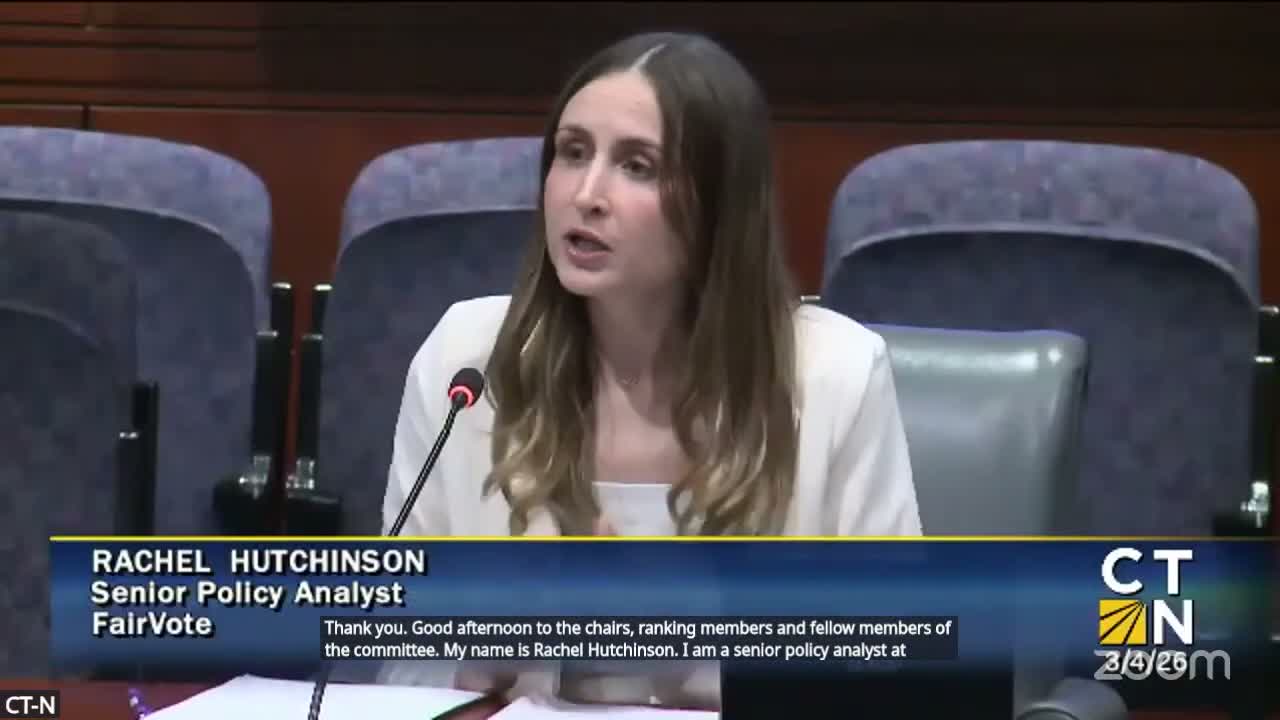
Summary
Supporters including FairVote, a governor's working group and several municipal advocates backed SB 386 to give towns and parties the option to use ranked-choice voting; opponents warned it could complicate ballots and slow results if not implemented carefully.
Proponents of SB 386 told the committee ranked-choice voting (RCV) would give voters more options, promote majority support for winners and reduce negative campaigning. Rachel Hutchinson of FairVote Action said RCV is widely used in U.S. cities and tends to increase voter satisfaction and the election of women and candidates of color.
Monty Frank, vice-chair of the governor's RCV working group, said SB 386 follows recommendations to make RCV optional for municipalities and parties, include robust civic education and set an effective date to allow rollout and training. Monty Frank noted the working group's recommendation for an implementation date of Jan. 1, 2028 so jurisdictions would have time to prepare.
Registrars and some election administrators urged careful sequencing. Lisa Amatruta, a Republican registrar, said Connecticut is still implementing several election reforms (new tabulators, early voting, statewide registration system) and adding RCV now could complicate administration and slow results; she also warned about transparency of algorithmic redistribution and potential confusion.
Supporters said the bill is permissive, not mandatory, and that pilot or municipal adoption would allow local control while the state provides guidance and funds for voter education.