Get Full Government Meeting Transcripts, Videos, & Alerts Forever!
Get email alerts on the Countycare Update topic
No spam. Unsubscribe anytime.
CountyCare reports membership decline and readies $100M in savings as federal Medicaid changes approach
Summary
CountyCare presented membership at about 306,000, said overall Medicaid enrollment in Cook County has fallen nearly 100,000 year‑over‑year, listed retention and market‑share gains, and described a $100 million cost‑savings plan as federal Medicaid and SNAP policy changes take effect in 2026–2027.
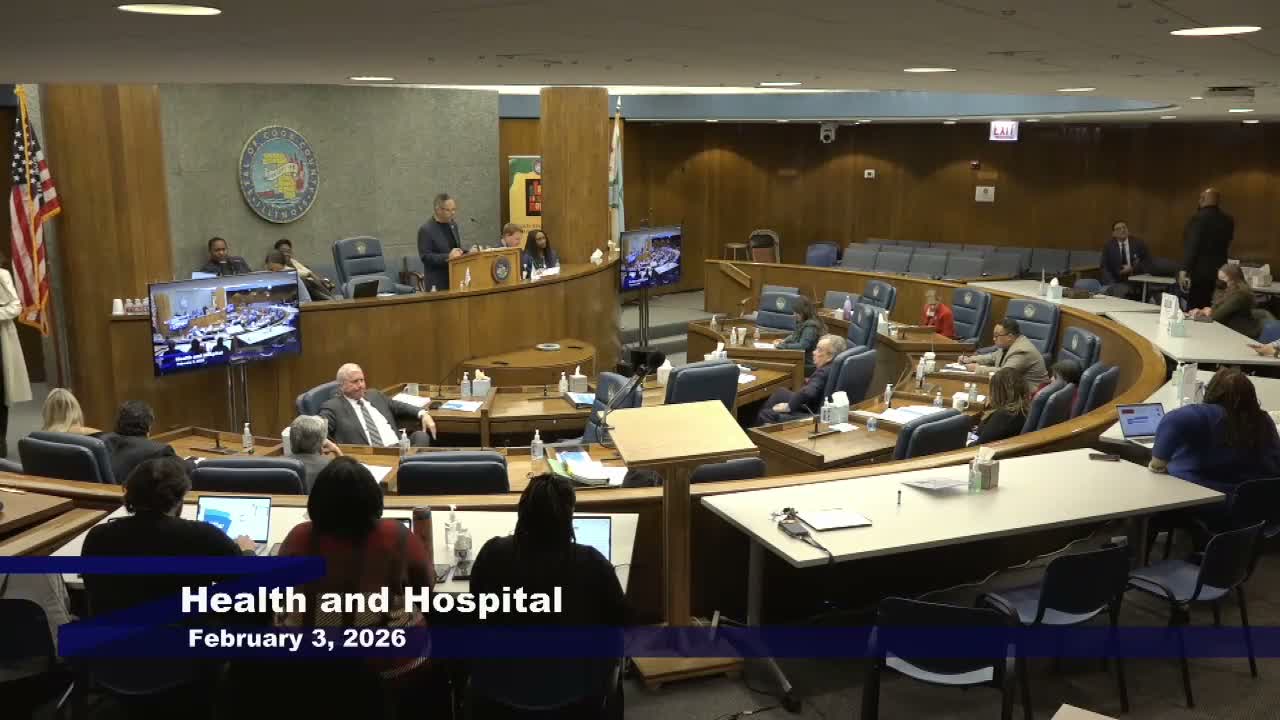
CountyCare officials told the Cook County Health & Hospitals Committee that overall membership is about 306,000 but has been decreasing in line with declining Medicaid enrollment across the county, and they outlined preparations for federal Medicaid policy changes set to take effect in 2026–2027.
Aaron Galliner, Chief Administrative Officer for Health Plan Services, said CountyCare’s retention rate is roughly 88% and that about one‑third of new Medicaid enrollees are choosing CountyCare when selecting a plan. ‘‘We continue to be the largest health plan within Cook County with just shy of 35% market share,’’ Galliner said, noting membership has fallen in recent months as the state and federal landscape shifts.
Galliner highlighted three federal policy changes that will affect CountyCare: new SNAP work requirements beginning Feb. 1, 2026; HR1‑driven Medicaid changes that introduce work requirements for some ACA expansion adults and shorten redetermination intervals to every six months; and an immigrant eligibility restriction scheduled for Oct. 1, 2026, that CountyCare estimates could affect about 2,200 members. Galliner said CMS guidance is still pending on exemptions such as who qualifies as ‘‘medically fragile.’’
Dr. Audrey Tanksley, CountyCare’s chief medical officer, reviewed 2025 program successes: CountyCare has a 4‑star NCQA health plan rating (one of the few in Illinois), achieved a top CAHPS member satisfaction score and staged 231 redetermination events attended by roughly 11,000 people (about 6,800 CountyCare members). Those outreach events and marketing efforts helped CountyCare raise plan selection among new eligibles from about 20% up to the low‑30s over 18–24 months, staff said.
Facing anticipated 2027 impacts from federal changes, CountyCare announced a financial plan to pursue approximately $100,000,000 in cost savings during 2026 through contract adjustments, targeted interventions for high‑cost members, network performance reviews and state rate discussions. Officials stressed these steps aim to position CountyCare and Cook County Health to absorb increased uninsured care demand expected next year.
CountyCare also described its HealthChoice Illinois RFP submission: the plan submitted a voluminous proposal, including technical, diversity and subcontractor documentation, and is awaiting notice of awards. If selected, contract execution would begin July 1 and operations would start Jan. 1, 2027, with potential extensions through 2036.
Committee members asked about the growing uninsured rate (one commissioner cited an increase from 13% to 22% in patients seen), whether competitors are narrowing networks or exiting markets, and how to drive greater use of Cook County Health facilities. CountyCare staff said they are convening a Medicaid working group with other health systems and community partners and pursuing partnerships (workforce, pharmacy mail order, telehealth) to help members meet new documentation and work/volunteer requirements.
Next procedural steps: CountyCare staff will provide more granular data on suburban versus regional trends, sample sizes for youth survey items, and follow up on provider education outreach plans.