Princeton council advances Business Development District ordinance after mixed public feedback
Loading...
Summary
The Princeton City Council voted to advance an ordinance creating Princeton Business Development District No. 1 and imposing a 0.5% retail sales tax within the district; council scheduled a public hearing and second reading for March 16 amid calls for a referendum and public concerns about outreach.
The Princeton City Council on March 2 moved O-26-4, an ordinance to designate Princeton Business Development District No. 1 and impose a 0.5% retail sales tax within that district, to a second reading and set a public hearing for March 16.
Why it matters: The tax would raise dedicated funds to offer incentives and cover eligible expenses—staff and proponents said the revenue could help businesses open, stay and expand, including engineering and infrastructure projects. Opponents and some council members said more public education or a referendum may be needed before imposing a permanent sales tax increase.
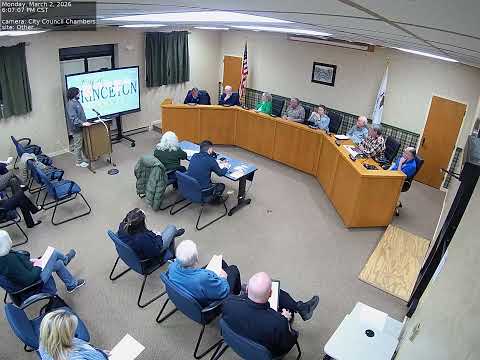
Council discussion and staff presentation: Mayor (S1) invited Michael Ziering (S6) to outline the proposal. Ziering described the BDD as “an incentive district, where we can utilize sales tax money for the specific purpose of helping businesses open, stay, expand in Princeton” and said eligible uses include engineering and other development expenses that other incentive tools may not cover. The mayor and staff described a two-step process and said a committee of two council members would initially screen applications before final council action.
Calls for a referendum and outreach concerns: Councilmember Gerry (S4) flagged public skepticism and urged a referendum, saying in 11 years on the council he has “always held a referendum for proposed tax increases,” and pointed to a prior 0.25% sales tax that voters approved for road improvements as an example. In public comment, Geraldine Woodley (S9), who said she has lived in Princeton nearly 40 years, told the council she surveyed local businesses and “All the business people I talked to didn’t want it,” and said many residents do not use social media and thus have not seen outreach materials.
Proponents’ response: Supporters said outreach events have shown positive reactions once people understand the program. One speaker at the podium responded that a recent town hall drew about 100 people and “once they understood what it was, they were for it,” and noted the city has been transparent and would vote on each proposed assistance case.
Council action and next steps: After discussion and public comment, the council voted to advance O-26-4 to a second reading and scheduled a public hearing for the March 16 meeting. The council also directed staff to have a review committee (two council members, with the option to add a community member) screen initial applications before they return to the full council for final approval.
What remains unresolved: The ordinance was advanced to a second reading but not adopted; whether the council will place a referendum question before voters was raised repeatedly but no formal referendum motion was made at this meeting. Public outreach concerns—particularly that some residents may not receive information distributed via social media—remained a recurring theme.
The council is scheduled to hold the public hearing and the second reading of O-26-4 on March 16.