
Undersecretary Elbridge Colby defends 2026 National Defense Strategy as members press on Iran, munitions and allied burden-sharing
Get AI-powered insights, summaries, and transcripts
Subscribe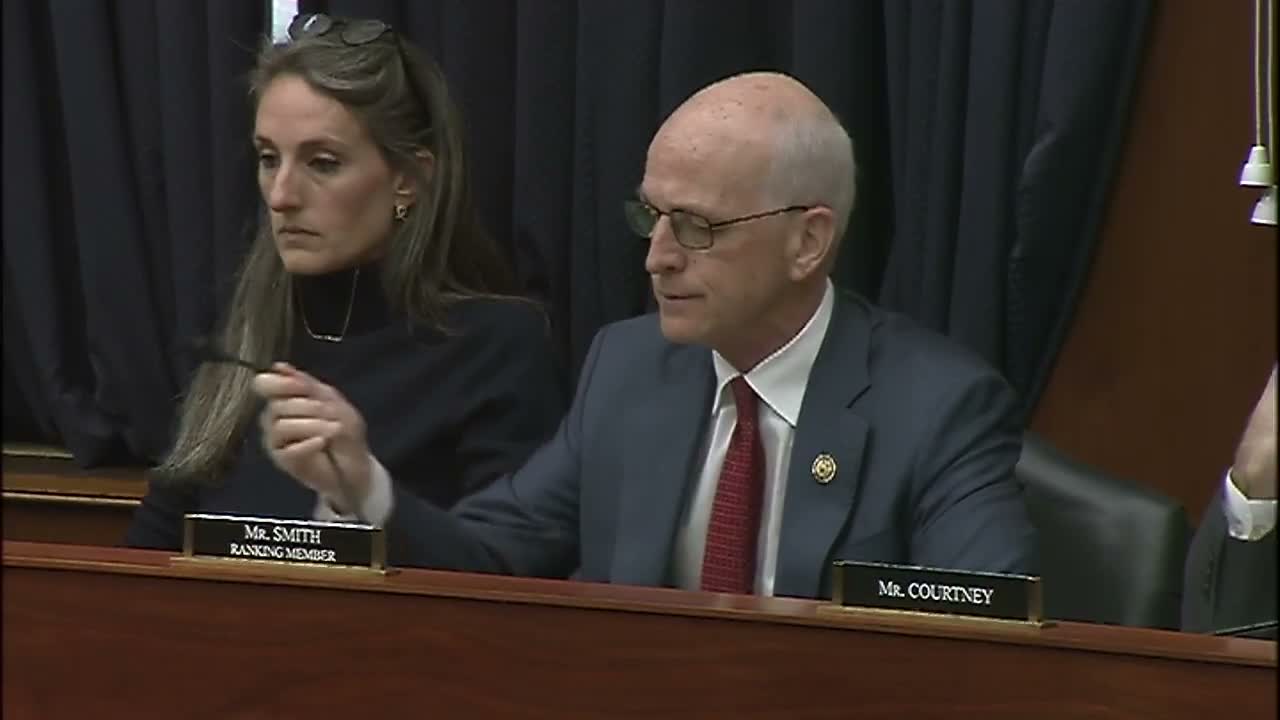
Summary
At a House Armed Services Committee hearing, Undersecretary Elbridge Colby defended the 2026 National Defense Strategy's focus on homeland defense, the Indo'Pacific and burden-sharing while members pressed him about Operation Epic Fury in Iran, depleted munitions stocks and the Pentagon's consultation with Congress on force posture changes.
Undersecretary Elbridge Colby told the House Armed Services Committee that the 2026 National Defense Strategy (NDS) implements a "flexible realism" approach that prioritizes defending the homeland, deterring China in the Indo'Pacific, encouraging allied burden-sharing and mobilizing the U.S. defense industrial base.
"The animating purpose of this strategy was to put into reality the logic of President Trump's 'America First, peace through strength' approach," Colby said in his opening statement, summarizing the four pillars the Department is pursuing.
The hearing quickly shifted to immediate operational questions. Members pressed Colby about Operation Epic Fury, the administration's recent military campaign against Iran. Several representatives asked whether the campaign was compatible with the NDS's stated priority of pacing the People's Republic of China in the Indo'Pacific, and whether the campaign had specific, time-bound objectives.
Colby said the military objectives for current operations are "scoped" and that classified briefings would provide operational specifics. He declined to give detailed numbers in open session but said the Department is monitoring munition inventories and planning to accelerate production. "We're moving very much in the right direction," he told the committee when asked about industrial capacity and munitions replenishment.
Committee members repeatedly raised concerns that recent Pentagon actions have undercut timely congressional consultation. The chair pressed Colby on the October decision to withdraw a brigade from Romania, saying the committee had been told only after the fact. Colby responded that the decision was coordinated through Department channels and pledged to provide further details in follow-ups and during a scheduled closed session.
Members on both sides of the aisle also questioned how operations in the Middle East, including use of high-end munitions and missile-defense interceptors, fit with the NDS's stated effort to prioritize the Indo'Pacific. Several lawmakers noted that high-end weapons expended in recent operations are scarce and take years to replenish, and they sought assurances that the U.S. retains the capacity to deter China while conducting missions elsewhere.
Lawmakers pressed Colby for specifics on several fronts that he said he would provide later: the status and execution of funding allocated for European security cooperation, precise munition stockpile levels, the legal and institutional basis for certain operations in the Western Hemisphere, and whether any Department offices had suspended shipments to Ukraine. Colby repeatedly offered to return with classified or staff-level follow-ups for those queries.
The hearing also included pointed exchanges over policy framing and civil-military boundaries. Ranking Member Smith criticized the administration's perceived prioritization of loyalty to the president over other policy considerations and questioned whether the NDS sufficiently addresses European and homeland threats. Colby said he is "a loyal lieutenant of the president" and that the Department is aligned with presidential guidance while also seeking to preserve congressional oversight and communication.
The committee adjourned the public portion of the hearing to reconvene in a classified session for additional detail. Members said they expected written follow-ups and classified briefings on munitions inventories, the Romania decision, missile-defense site implementation and other operational specifics.
What happens next: Colby pledged to provide supplemental answers and classified briefings requested by members; the committee signaled it will pursue statutory and oversight remedies if the Department cannot demonstrate adequate consultation on major force posture changes.