
School board hears Fleet presentation on health‑insurance trust; participation agreement proposed
Get AI-powered insights, summaries, and transcripts
Subscribe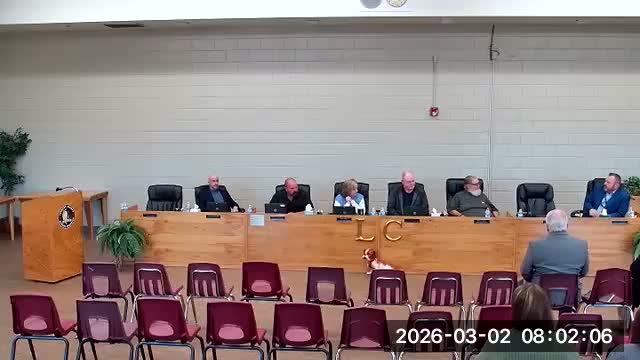
Summary
Liberty County School Board heard a detailed briefing on joining Fleet, a nonprofit health‑insurance trust for Florida school districts, including examples of potential pharmacy and premium savings, stop‑loss protections, participation costs and next steps. Board members asked for district‑specific data and agreed to consider a participation agreement to obtain detailed pricing and disruption analysis.
Dave Stevens, a presenter for Fleet and former FSBA program director, told the Liberty County School Board that Fleet is a nonprofit health‑insurance trust designed to pool school districts to gain buying power, reduce administrative burdens and increase transparency.
"The sole purpose of Fleet is to provide a health insurance trust that helps bring efficiency, economy of scale and buying power," Stevens said, describing Fleet as a member‑run program distinct from for‑profit carriers.
Why it matters: Board members were told that Districts transitioning from fully insured plans to self‑insurance inside a pooled trust have seen an initial year‑one reduction in costs, with Fleet estimating a 7–12% savings in year one when a district moves from fully insured to self‑insured under Fleet’s model. Stevens gave a pharmacy example in which benchmarking produced a $1.1 million concession per district over three years from a vendor, and he said Fleet’s larger group negotiating posture can extract similar concessions for members.
How it would work: Stevens summarized the legal and operational path: a district would sign a one‑page participation agreement that allows Fleet to analyze district‑specific data, prepare ITNs and shop carriers, pharmacy benefit managers (PBMs) and stop‑loss. Districts become active Fleet members when they enter a self‑insured plan; that activation date governs runout and reserves. Stevens said Fleet operates the accounting, filings and monthly reconciliations on behalf of member districts and that each district’s funds remain in an account held under the trust with monthly CFO reporting and an online dashboard for transparency.
Costs and protections: Stevens cited several concrete financial mechanics the board asked about: a one‑time participation setup fee (described in the briefing as $10,000 billed after acceptance of the participation agreement), a sample Fleet maintenance fee illustrated during the presentation (an example of $22.25 per covered employee per month), and the statutory requirement for a 60‑day Office of Insurance Regulation reserve for self‑insured plans. Stevens also explained stop‑loss protection and the trust’s risk‑sharing model: districts choose a stop‑loss attachment point (the deductible) and Fleet would purchase annual stop‑loss contracts and umbrella coverage as appropriate. He said risk‑sharing dividends are available only after districts have established stable self‑insured histories (Fleet typically requires a multi‑year runway before districts are invited into dividend risk pools).
Board questions and concerns: Board members pressed for specifics about membership growth, network disruption for employees’ existing doctors and how Fleet negotiates contracts. One board member asked whether employees would lose access to current providers; Stevens said Fleet can run a disruption report using district provider‑usage data and quantify how many employees would keep their doctors under proposed networks. Other members emphasized the need for clear examples from districts of comparable size and asked for an explicit comparison of current plan costs, proposed Fleet plan pricing and estimated employee out‑of‑pocket changes.
Next steps: Several members urged the district to execute a participation agreement so Fleet can run district‑specific analyses. "I would like personally to see this added as an action item on next month's agenda to execute the participation agreement to see more information that you can provide to us," one board member said, a recommendation the board signaled it would consider putting on a future agenda. No vote or formal commitment to join Fleet was taken at the meeting.
What remains unresolved: Fleet presenters provided example savings and a described process for vendor negotiation but stressed that district‑specific pricing and disruption analyses require the participation agreement and the district’s data. Board members asked for a follow‑up workshop, sample comparisons from similarly sized districts, and a communications plan for employees outlining likely impacts on premiums, copays and provider access.
The board ended the session with agreement to consider adding a participation agreement to an upcoming agenda and to request the additional, district‑specific pricing and disruption information from Fleet before making a decision.