Conference committee agrees to $3.5 million compromise for new forest‑health program
Loading...
Summary
A bicameral conference committee agreed to report back to each chamber a compromise funding level of $3.5 million for a new forest‑health program after debating a Senate amendment that would have raised the appropriation to $5 million. Senators cited rising beetle kill and a strong return on mitigation investment; House members said $3 million is sufficient to start.
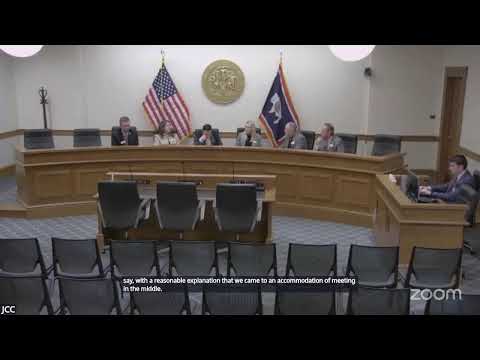
Lawmakers on the Joint & Standing conference committee agreed to send a conference report to their chambers with a compromise appropriation of $3.5 million for a new forest‑health mitigation program after a voice vote, ending a dispute over a Senate amendment that raised funding above the House’s $3,000,000 position.
The committee’s House co‑chair opened the discussion by saying the House did not concur with the Senate amendments and that the sole substantive objection was the increase in funding. An appropriator representing the House said, “on introduction, it was at 3,000,000” and that the agency had told the committee $3,000,000 would be sufficient to start the program.
Senate members pressed for a larger appropriation, describing new information from a recent Forest Health briefing. The Senate co‑chair said the data showed rising beetle kill and mortality and argued that “the magnitude of the problem was going up, not down,” making a larger near‑term investment prudent. He told the panel that, based on examples from the Elk Fire and the Mullen Fire, targeted mitigation can halt fire spread and that “every dollar you spend on mitigating fuels saves $7 in suppression cost,” with returns on the largest fires as high as 10‑to‑1. He added that the state had spent in the low‑to‑mid tens of millions on suppression in recent years, which underscored the urgency of preventive work.
Members discussed compromise options. The Senate co‑chair initially proposed splitting the difference to $4,000,000; House members said that level would not attract enough House votes. The House co‑chair proposed $3.5 million as a number more likely to pass the House, and an appropriator said the House could supplement funds later if the program showed early success. After a brief caucus, the Senate co‑chair accepted the House offer, directed staff to draft the conference report, and the committee approved the proposal by voice vote.
Committee members also noted other amendments the committee retained or removed during negotiations, including the repeal of a sunset date that committee members said would have constrained long‑term contracting and the use of good‑neighbor authority to expedite contracts. The committee adjourned after the vote; the conference report will be carried back to each chamber for final consideration.