
Chamber asks Olmsted County for $200,000 to fund 'Momentum 30' talent and business‑attraction program
Get AI-powered insights, summaries, and transcripts
Subscribe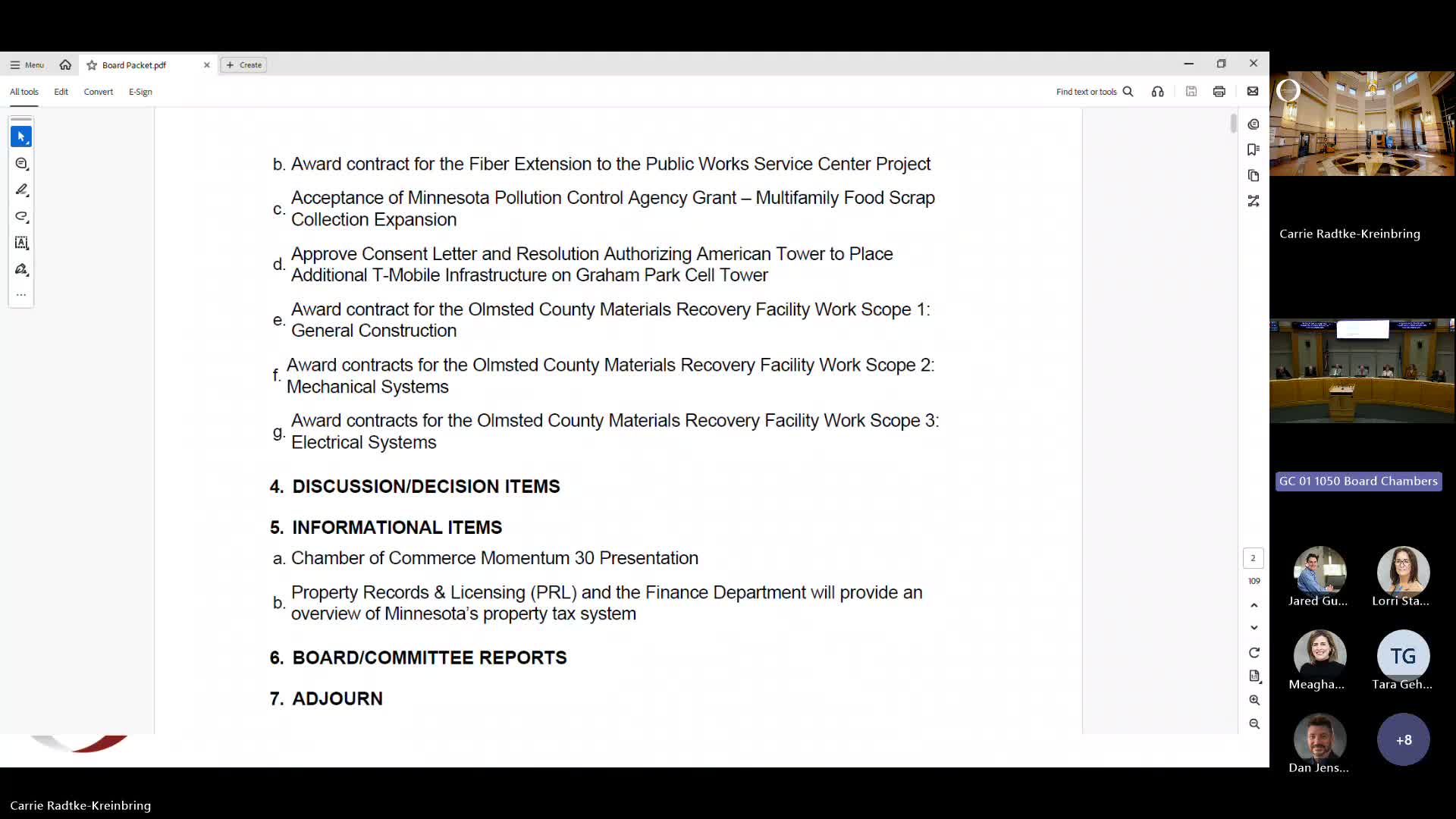
Summary
Rochester Area Chamber President Ryan Parsons presented Momentum 30 to the Olmsted County Board, asking for $200,000 over five years toward a $2,000,000 fundraising goal to support talent attraction, business recruitment and advocacy; commissioners raised questions about measurement, overlap with existing economic development efforts and advocacy conflicts.
Ryan Parsons, president of the Rochester Area Chamber of Commerce, presented the Chamber’s Momentum 30 initiative to the Olmsted County Board on March 31, 2026 and asked the board to consider $200,000 in county support spread over five years.
Parsons described Momentum 30 as a three‑pillar campaign focused on talent attraction and retention, business attraction and retention, and expanded advocacy. He said the program aims to increase the young adult population (ages 20–39) by 5% over five years, raise college graduate retention from 65% to 73%, and create 3,500 new non‑health care or construction jobs; the initiative’s fundraising goal is $2,000,000 to be deployed between 2026 and 2030. Parsons said the Chamber has raised $790,000 so far and plans to add at least one business‑attraction coordinator to its staff.
Board members pressed for details. Commissioner Dine questioned how the Chamber will measure the 5% population increase versus natural growth and asked how the county would evaluate whether the funding produced results beyond trends that would have occurred without the initiative. "I want to be able to say, well, if we hadn't have done this, we wouldn't have been able to accomplish this," Dine said, and asked for clearer measurement and attribution plans.
Commissioners also asked how Momentum 30 would coordinate with existing local economic‑development entities such as REDI and city efforts, whether the funds would support direct incentives, and how the Chamber will manage potential advocacy conflicts — funding an organization that sometimes advocates positions at odds with county policy. Parsons said partnerships are central to the plan, some promotional funds could be used for incentives, and the Chamber would welcome ongoing conversations about advocacy boundaries.
The board did not take a funding vote. The Chair said the item would be set aside for additional discussion at a committee‑of‑the‑whole meeting or a retreat so members can study materials and follow up individually.