
Holliston Public Schools report midyear gains; absenteeism remains focus of support efforts
Get AI-powered insights, summaries, and transcripts
Subscribe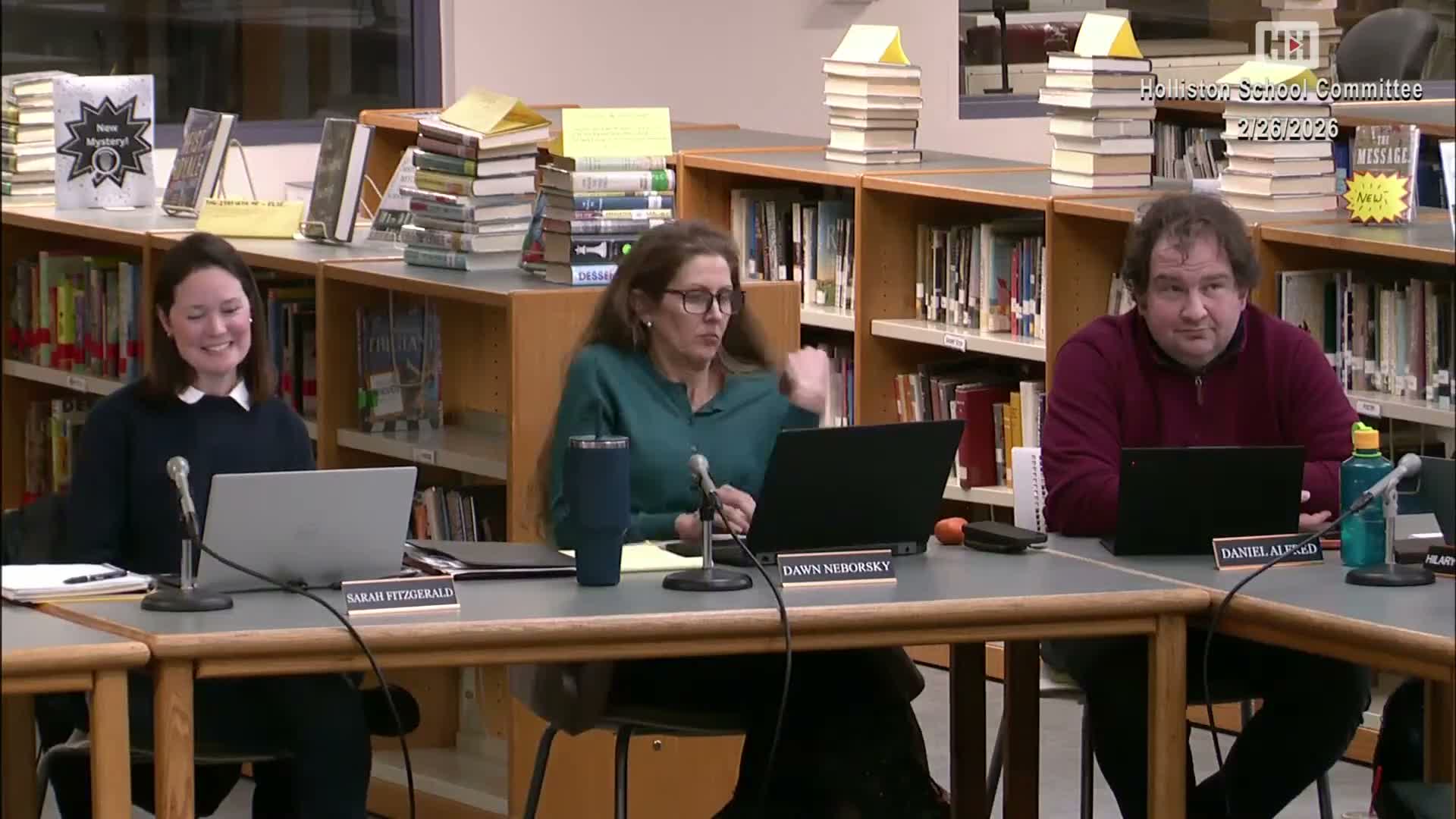
Summary
District leaders and principals presented midyear data showing gains in math and literacy placements and expanded interventions, while administrators flagged pockets of chronic absenteeism—about 80 students at immediate risk—and new efforts to tie dyslexia screening into MTSS.
Principal and district presentations at the Feb. 26 Holliston School Committee meeting highlighted year-to-date academic gains and persistent attendance challenges. Principal List, presenting high-school data, said PSAT results show many more students would likely score a 3 or higher on AP exams if encouraged to enroll and supported; he urged targeted supports for students who fall behind, saying, “my biggest piece of advice to you is just don’t get behind.”
The district-level midyear review, introduced by an administration leader, framed work around four strategic arches — communications, social-emotional learning/MTSS, teaching and learning, and talent and resources. The district reported investments in cybersecurity training and curriculum reviews and said it is aligning professional development to multi-tiered systems of support.
At the middle-school level, Principal Manning reported a Rams attendance rate of 95.3% and noted a meaningful drop in daily tardies from roughly 2,100 to 1,700 year over year, but pointed to a total of 2,391 absences so far this year and a troubling subgroup of roughly 80 students whose patterns suggest entrenched chronic absenteeism. Manning displayed district MCAS and I Ready correlations showing substantive score declines associated with high absence counts and described tiered MTSS outreach, counseling, and community referrals as early interventions.
Elementary presentations (Placentino) described declines in chronic absenteeism districtwide—from 15.2% to about 11% at some buildings—and said the largest drivers are daily illness and family travel (estimated at roughly 36% of absences at one school). Dr. Slaney noted that the district is integrating dyslexia-screening practices into MTSS and expanding Orton-Gillingham training among special educators and reading specialists.
Administrators highlighted increases in targeted interventions: math intervention contacts rose by about 274% at one site and literacy interventions by 158% districtwide, while tutoring and progress-monitoring frequency have been expanded. District staff emphasized that improvements in tier 1 instruction, consistent curriculum adoption, and deeper collaborative planning are needed to sustain subgroup gains.
Next steps noted to the committee included continuing data-driven interventions, refining family communications around attendance and testing opportunities, and piloting ELA curricular resources with a schedule for further updates to come.