Lifetime Citizen Portal Access — AI Briefings, Alerts & Unlimited Follows
Census webinar highlights consumer expenditure surveys, data tools that feed CPI and poverty measures
Loading...
Summary
The U.S. Census Bureau webinar outlined the Consumer Expenditure surveys (quarterly interview and diary), data‑access tools (OneScreen, geographic tables, public use microdata), and how CE data feed the Consumer Price Index and supplemental poverty measures.
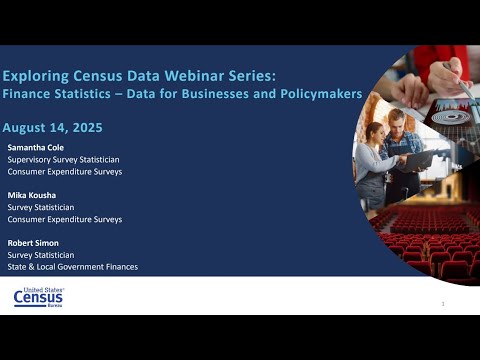
The U.S. Census Bureau hosted an Exploring Census Data webinar that introduced the Consumer Expenditure (CE) surveys, demonstrated online tools for accessing spending data, and explained how CE inputs are used by federal agencies.
Mika Kusha, a survey statistician on the CE team, said the CE program measures household spending across categories including housing, transportation and health care and that CE data are a key input for the Consumer Price Index (CPI). Kusha described two CE components: the quarterly interview survey (CEQ) and the diary survey (CED). She said the CEQ will sample about 50,000 addresses in 2026 (roughly 6,000 per month) and is conducted in four interview waves over 12 months; the diary survey will sample about 33,000 addresses in 2026 (about 2,700 per month) with two interviews separated by a 14‑day diary recording period.
Kusha illustrated the survey outputs via a participant poll and examples. She noted that respondents reported spending the most on tomatoes among a set of vegetables in 2023 and that consumers reported spending over $90 annually on cookies in 2023. Using geographic means tables, Kusha showed New Jersey education spending declined between 2018 and 2020 and linked that drop to a New Jersey community college tuition‑support program implemented in spring 2019. Using the OneScreen tool, she showed a large decline in school lunch spending in 2020 after in‑person school closures and another drop from 2022 to 2023 that correlates with the expiration of USDA universal meal waivers in most states (waiver expiration: June 2022 in most states).
Samantha Cole, supervisory survey statistician and CE diary team lead, demonstrated the CE website and data access points: methods and questionnaire materials, published tables, the CE library, public use microdata, and interactive database tools. Cole said users can retrieve single‑year or trend tables, export data to text or Excel, and access archived presentations and technical documentation. She also summarized how CE data are used by other federal agencies: to determine the U.S. supplemental poverty measure, inform the Department of Agriculture's cost‑of‑raising‑a‑child estimates, supply the Department of Defense with cost‑of‑living adjustments for military pay, and help the Centers for Medicare & Medicaid Services and the Bureau of Economic Analysis with health‑spending and personal‑spending estimates.
The webinar closed with a question about data coverage and timing. Rob Simon, a Census survey statistician who later presented on state finance and tax surveys, answered that QTAX and related products are typically published about two months after the quarter ends and that "most of the states provide data," although some states require an application process for certain submissions.
The Census Academy recording and supporting materials will be posted; attendees were given a contact email (askdata@census.gov) for follow‑up and training requests.