
Officials report growth in state-supported student housing but say demand still outpaces supply
Get AI-powered insights, summaries, and transcripts
Subscribe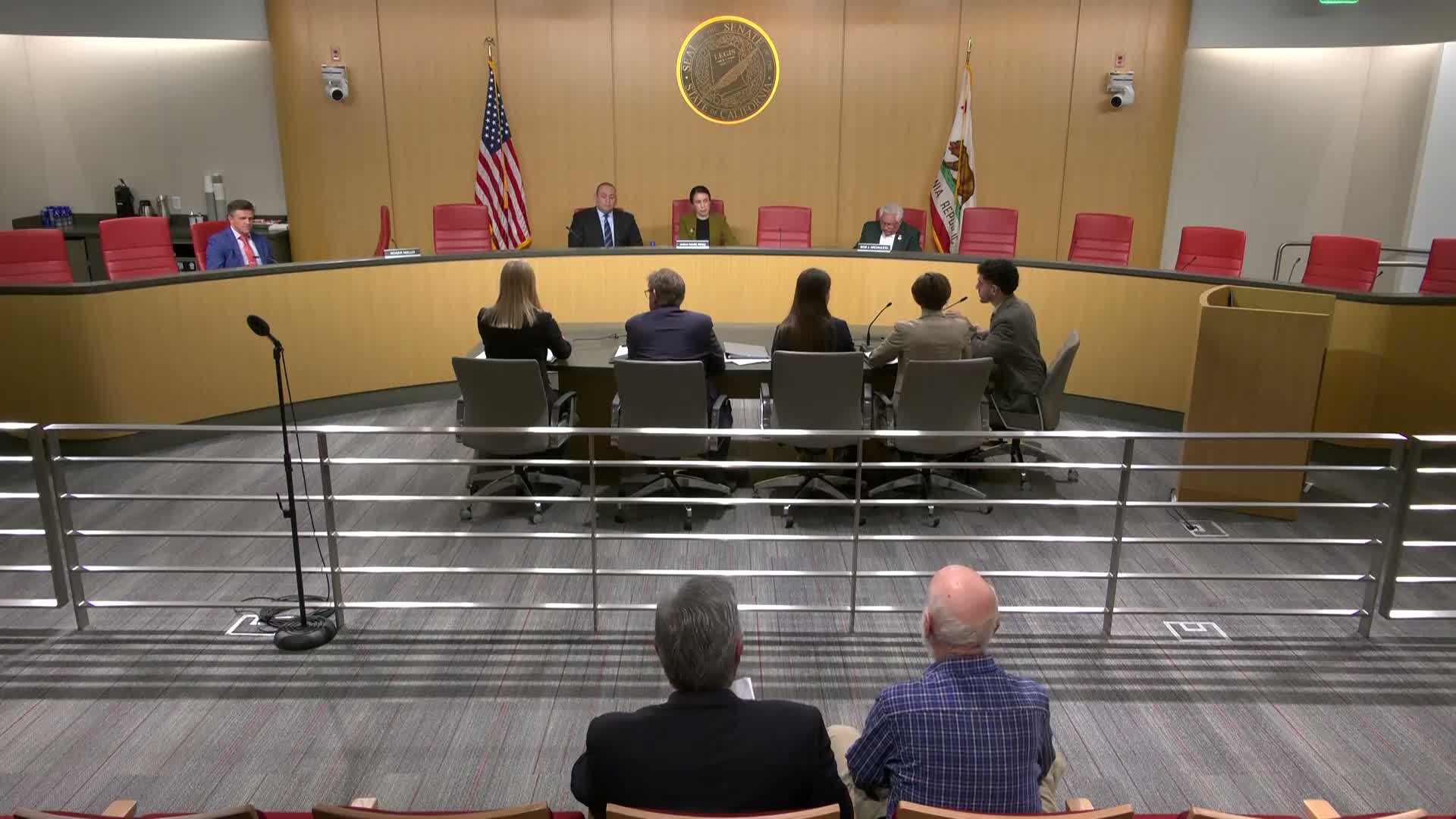
Summary
Department of Finance, LAO, UC and CSU representatives reported on the state higher-education student housing grant program: dozens of projects are underway adding thousands of beds, but campuses still face waitlists and financing constraints; officials flagged a possible bond and statutory limits on public-private models for UC projects.
State officials and system representatives told a Senate budget subcommittee that student housing projects funded through the higher-education student housing grant program have added thousands of beds but that demand continues to outstrip supply, prompting discussion of a potential state bond to expand construction.
Alex Anaya Velasquez of the Department of Finance said the governor's January budget does not propose new, significant changes to the student housing grant program but maintains ongoing support. Florence Bouvet of the Legislative Analyst's Office outlined the program's track record: the state has approved 10 UC housing projects (including intersegmental projects) and 12 CSU projects, and the LAO suggested lawmakers consider the projects' status when weighing enrollment and capacity targets.
Mark Martin, representing CSU, said the system has built more than 17,000 new beds between 2014 and 2024, has about 68,000 beds in inventory, and reported that program-funded projects will add 5,047 beds (about 75% below-market-rate per program rules). He said occupancy is roughly 92% systemwide and noted plans for about 12,000 additional beds beyond current projects.
Seiya Vertanen for UC said the system's housing projects have added more than 3,400 reduced-rent beds and another 3,500 regular-rate beds by leveraging lease-revenue bonds. He said campuses identified 13 additional projects that could add about 7,500 beds but currently lack funding. Vertanen also noted that existing law prohibits UC from using program funds for public-private (P3) development models and suggested amending statute to allow UC participation in some P3 projects to enable more intersegmental collaborations with community colleges.
Officials also described supports for students in crisis: CSU receives about $6.8 million and UC about $3.8 million annually for rapid rehousing; both systems maintain short-term emergency bed reserves and partner with local organizations to provide hotel vouchers and case management.
Why it matters: Housing affordability and availability affect student retention, persistence and campus access. Lawmakers discussed how additional state support—potentially through a bond—could expand capacity and reduce student housing insecurity.
Next steps: LAO and system staff said they would continue to provide status updates on specific projects and explore statutory changes and funding options the Legislature may consider.