Lifetime Citizen Portal Access — AI Briefings, Alerts & Unlimited Follows
Census: Median household income steady in 2024; poverty edges down and uninsured rate holds near historic lows
Loading...
Summary
The U.S. Census Bureau reported that real median household income was $83,730 in 2024 (not statistically different from 2023); the official poverty rate fell to 10.6% while the supplemental poverty measure was 12.9%. The uninsured rate remained 8%, and Medicaid enrollment declined modestly.
The U.S. Census Bureau released three reports on income, poverty and health insurance for 2024 showing real median household income of $83,730 — “not statistically different than 2023,” the agency said.
The bureau’s Division Chief David Waddington summarized the release, reporting an official poverty rate of 10.6% in 2024 and a supplemental poverty measure (SPM) of 12.9%. “Real median household income was $83,730 in 2024, not statistically different than 2023,” he said.
Assistant Division Chief Liana Fox, who presented the income and poverty findings, said most income estimates in the presentation use money income (cash resources such as wages, Social Security and public assistance) and noted differences along the distribution. She said household income rose 4.2% at the 90th percentile while holding steady at the median and the 10th percentile. “We saw increases at the ninetieth percentile in both pre‑ and post‑tax measures,” Fox said, adding that earnings constitute about 77% of aggregate income.
Fox also described changes in median earnings for full‑time, year‑round workers: men’s median earnings rose 3.7% while women’s did not change significantly at the median, producing a decline in the female‑to‑male earnings ratio to about 80.9% in 2024.
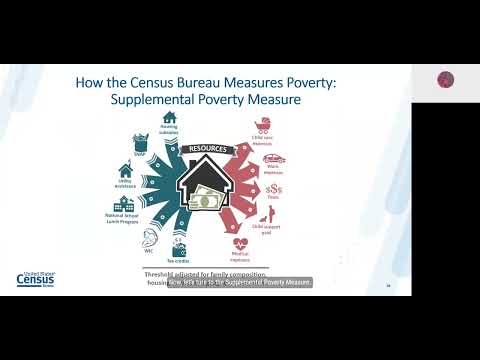
On poverty, Fox explained the two standard measures. The official poverty threshold — which does not vary by geography — produced a 2024 rate of 10.6% (a 0.4 percentage‑point decline from 2023), while the SPM, which adds noncash benefits and subtracts taxes and necessary expenses, was 12.9% and not statistically different from 2023. The bureau estimated there were about 35.9 million people in poverty in 2024.
The presenters broke down the SPM’s resource effects: Social Security benefits removed roughly 28.7 million people from poverty (about 70% of those beneficiaries were age 65 and older), refundable tax credits removed about 6.8 million people, and medical expenses pushed about 7.5 million people into poverty.
Sharon Stern, Assistant Division Chief for Employment Characteristics, summarized the health insurance results: 92% of people had health insurance for some or all of 2024, meaning roughly 8% of the population — about 27.1 million people — were uninsured for the entire year. Private coverage prevailed (66.1% overall; 53.8% employer‑based), while public coverage was 35.5%. Stern noted that Medicaid coverage declined to 17.6% in 2024 from 18.9% in 2023 and that the decline in public coverage overall was largely driven by the Medicaid change.
During a question-and-answer session, reporters pressed presenters on the distributional drivers behind the 90th‑percentile gains, the role of the labor market in income and poverty trends, and whether the observed changes for specific groups — including Black households — reflected statistically significant shifts. Presenters repeatedly emphasized the role of margins of error in survey estimates and pointed reporters to detailed tables, appendices and accompanying America Counts stories and working papers on census.gov for decompositions and state‑level estimates.
The bureau provided example counts and table references for researchers seeking exact figures: the Census estimate of people with Medicaid in 2024 was reported as about 59.4 million, versus about 62.7 million in 2023, and staff cautioned that population controls and processing choices can change direct comparisons.
The bureau said supplemental materials — including the full reports, slide deck, appendices and several America Counts stories — are available in the press kit on census.gov, and reminded media of an embargo for the American Community Survey releases noted during the call.