Get Full Government Meeting Transcripts, Videos, & Alerts Forever!
Get email alerts on the Juvenile Justice topic
No spam. Unsubscribe anytime.
Probation officer outlines juvenile detention costs and staffing strain at Tazewell County meeting
Summary
A probation officer told the Tazewell County board that many youths in regional detention face serious violent charges and that placement options are costly and limited; the officer described funding from the Illinois Supreme Court, staffing levels and use of Zoom to reduce transport burdens. Trustees asked about aftercare and caseloads.
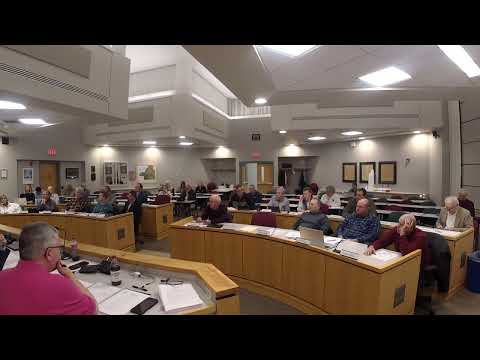
A probation officer briefed the Tazewell County Board on juvenile detention, placements and probation staffing at the board meeting on March 7, 2026, saying many youths housed in nearby facilities face serious violent charges and that placement options are expensive and limited.
The officer told trustees that "most all of them are... murder, armed robbery, they're violent offenses," and distinguished secure detention from longer-term placements such as youth farms, which the officer said carry higher per-person costs (described in the presentation as "around about a quarter of 1,000,000"). The officer also said probation officer payroll for front-line staff is largely reimbursed through allocations from the Illinois Supreme Court, while fringe benefits and facility responsibilities remain the county's obligation: "we are judicial officers, and that funding comes through the Illinois Supreme Court." (Probation officer)
Why it matters: the board heard that limited detention capacity and expensive placement options create operational and budget pressure. The officer said Tazewell County maintains a one-bed guarantee under contract with a juvenile detention center, and that when local beds are unavailable youth are sent to counties such as McLean, Galesburg, Quincy or Springfield — requiring staff to transport them and increasing operational costs.
Trustees pressed the presenter on aftercare and family access. One trustee asked whether family seating around "round tables" would be cut; the officer said families still attend. Trustees also questioned the officer about facility safety and the short length of many detention stays, which the officer said hinder aftercare planning because youths may be held only a few days and then released before longer-term services can be arranged.
The officer outlined staffing and supervision details: the office has about 20 officers (including five who handle home visits) and roughly 700 active probation cases at a given time. "I have 20 total officers," the officer said, adding that some officers work nontraditional hours and are armed to safely perform fieldwork. Trustees and the presenter discussed how rural geography affects the number of home visits field officers can complete in a day and how caseloads fluctuate with turnover.
The presenter described administrative changes to probation service funds and standards: recent updates (implemented in the last six months) narrow allowable uses toward offender services and require the office to bring practices into compliance over the next two years. The officer said the office has started using Zoom for detention hearings, which has reduced transportation demands for remote hearings but does not change placement limitations when a facility refuses admittance.
At the close of the provided transcript, a meeting official asked for a motion on agenda item RM 50404 (Appointments); no mover, second or vote appears in the recorded excerpt.
The meeting moved on after trustees thanked the presenter; next procedural business (appointments) was called but no final action on that item is recorded in the provided segment.