Get Full Government Meeting Transcripts, Videos, & Alerts Forever!
Get email alerts on the Firearms Legislation topic
No spam. Unsubscribe anytime.
Lake County Board backs state firearms‑accountability bill after heated debate over committee process
Summary
After hours of debate about committee notice and transparency, the Lake County Board voted 13–6 on Feb. 10 to confirm support for the state Responsibility in Firearm Legislation Act (House Bill 3320 / Senate Bill 2279), a measure proponents say would fund violence‑prevention programs by licensing and levying fees on firearm manufacturers.
The Lake County Board voted 13–6 on Feb. 10 to confirm support for the Responsibility in Firearm Legislation Act, a state bill that would require firearm manufacturers operating in Illinois to obtain a license and contribute to a fund for victims and gun‑violence prevention programs.
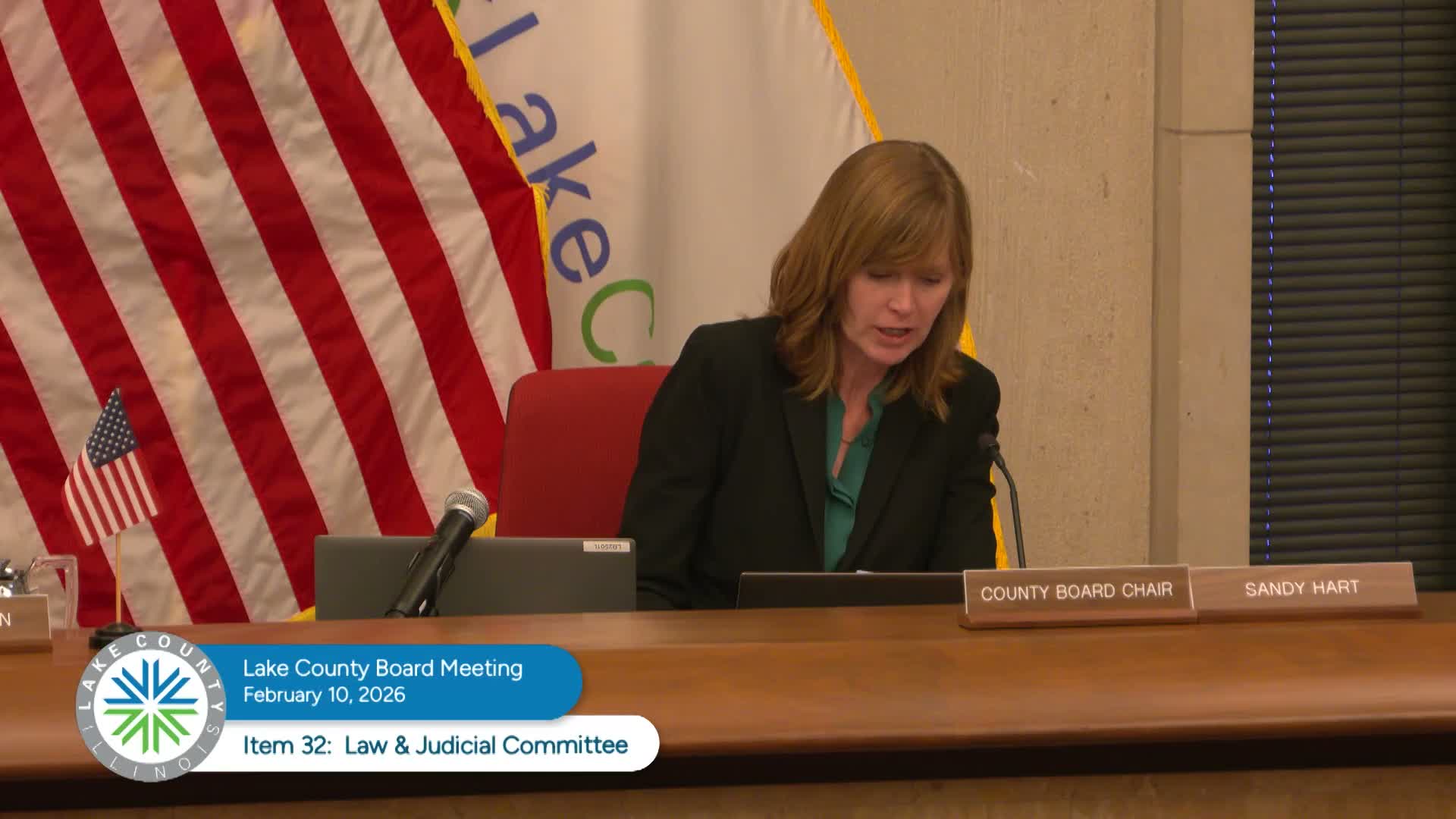
The action, introduced by Member Wasek and seconded by Member Knoznick, followed a lengthy full‑board discussion about both the policy and whether the legislative committee’s process had given board members and the public adequate notice. “This item was nowhere on the agenda, but well coordinated in advance,” said Member Hunter, who said she would not support what she described as a surprise addition until the full board could properly discuss it. Member Danforth said he was “appalled” by elements of the presentation he reviewed and disputed several factual claims made at committee.
Supporters argued the measure would shift some costs of gun violence away from taxpayers and toward manufacturers while funding community violence intervention. "If you believe firearm manufacturers should share in that cost, please vote yes," Member Kanishnick said when urging colleagues to back adding the county’s name to the bill’s supporters. State's Attorney Eric Reinhardt told the board the office has long supported the bill and cited national and state cost estimates for firearm‑related harm. "Gun violence is not in our DNA. It is our decision," Reinhardt said.
Members who opposed or abstained raised procedural concerns and policy objections. Several who said they support stronger gun‑safety measures nonetheless said they could not vote for the board endorsement because staff did not circulate committee materials via the board agenda process in advance. “My concern is transparency for the public,” one member said, noting that the version of the bill on the legislature’s website differed from the materials distributed to committee members.
The board also heard more than a dozen public comments on the bill. Victims’ family members, public‑health professionals and advocates described the human and fiscal toll of gun violence and urged support; other speakers and some board members questioned the bill’s cost assumptions and whether manufacturers could or would absorb fees. Tierra Lemann, director of the Lake County State’s Attorney’s Gun Violence Prevention initiative, described local declines in firearm homicides and urged sustained funding for intervention programs.
The motion on the measure passed by roll call. Aye votes (13): Member Altenberg; Member Campos; Member Kazdin; Member Clark; Member Cunningham; Member Frank; Member Hart; Member Hunter; Member Kanishnick; Member Kyle; Member Perak; Member Roberts; Member Velitsik; Member Wasick. No votes (6): Member Danforth; Member Hewitt; Member Hunter (note: hunter appears twice in transcript; see audit); Member May; Member Petersen; Member Schlick. The board’s approval confirms Lake County’s support and allows county lobbyists to advocate for the legislation in Springfield; it does not create a local ordinance or change county law.
The board also agreed to revisit its legislative‑agenda procedures for future situations where legislation surfaces quickly in Springfield or committee materials are submitted late. Chair Hart said the process rules will be reviewed to improve transparency to both members and the public.
What happens next: the board’s action adds Lake County to the list of local jurisdictions supporting the bill; any change to state law would be enacted only by the Illinois General Assembly and governor. The county’s vote is an advocacy position, not a local regulation, and the county will not itself levy manufacturer fees.