Get Full Government Meeting Transcripts, Videos, & Alerts Forever!
Get email alerts on the Budget topic
No spam. Unsubscribe anytime.
Chappaqua board reviews $150 million budget proposal, trustees seek scenarios to reduce fund-balance reliance
Summary
Board members reviewed the proposed 2026–27 budget of about $150 million (a ~3.97% budget-to-budget increase; tax levy +2.99%, below the tax cap), pressed for inflation-adjusted instruction-per-student metrics, and asked administration for alternative slides showing tax impacts of reducing fund-balance reliance.
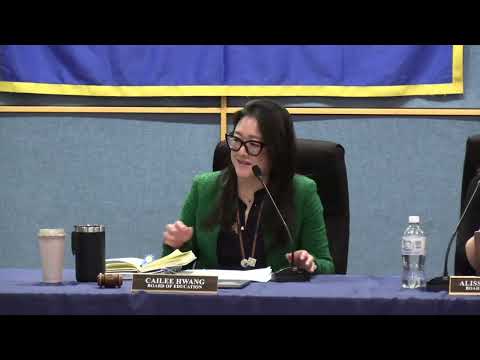
The Chappaqua Central School District Board of Education on March 4 heard an overview of the proposed 2026–27 budget, which administration described as a little over $150 million — a budget-to-budget increase of roughly 3.97% (about $5.7 million) and a tax levy increase of 2.99%, which officials said is below the state tax-cap calculation.
Dr. Ackerman, the district superintendent, framed the board’s strategic priorities as fiscal responsibility, strong instructional programming and student social-emotional development, and urged the community to be patient with weather-related operational decisions. Josh, the district’s finance presenter, told trustees that salaries and benefits make up about 70.7% of the budget and that increased debt service tied to ongoing bond repayments is the principal reason for much of the proposed increase; he cited a projected debt-service payment of about $8,900,000 for 2026–27 and said the district plans to use portions of its debt-service reserve to offset costs.
Trustees asked for additional, inflation-adjusted detail. One trustee requested a presentation that separates instruction and noninstruction spending, adjusted per pupil and for inflation, to test whether the district is maintaining historic instructional spending per student. "I'd like to also see that adjusted for inflation and then per student in a future presentation," the trustee said, asking the administration to produce five-year comparisons and to pull out technology spend separately.
Another trustee asked administration to prepare alternate budget scenarios showing the tax-impact tradeoffs of reducing the amount of fund balance the district plans to appropriate next year. Finance staff said the proposed budget appropriates about $2.3 million from fund balance and can produce slides showing the levy effect if that appropriation were reduced by various amounts (for example, $500,000; $800,000; $1,000,000; $1,500,000), noting the board had not requested specific reduction targets.
Josh summarized other revenue assumptions: state aid increases that he estimated at roughly $1.9 million (largely tied to increased BOCES aid and excess-cost aid), an expected Teachers’ Retirement System contribution decrease (TRS contribution rate noted as 8.24%, a 1.35% decrease), and uncertainty about final federal aid and the Consumer Price Index (CPI) that will affect transportation and tax-cap calculations. He said the district expects final CPI and assessed-value inputs by late March and will publish a household tax-impact calculator on the district website once the data are firm.
Board members and administration agreed to present deeper component-level slides at upcoming meetings (curriculum, technology, special education, athletics, facilities) and to produce the requested per-student, inflation-adjusted instructional analysis and practical levy scenarios to help the board weigh whether to reduce reliance on fund balance or pursue other approaches.
What happens next: the administration will return with the detailed component presentations at a budget-focused series of meetings in March and a work session; the board will receive legal notices, hold a public hearing May 6 and put the budget to a public vote on May 19.