Get Full Government Meeting Transcripts, Videos, & Alerts Forever!
Get email alerts on the District Budget topic
No spam. Unsubscribe anytime.
Twin Valley SD previews $77.9 million preliminary budget, proposes average 2.71% tax change
Summary
Twin Valley School District presented a preliminary 2025–26 budget totaling about $77.9 million, citing salary and benefit increases, higher retirement and health costs, rising cyber charter payments and transportation costs; staff will monitor assumptions and return a final proposal before the June adoption date.
The Twin Valley School District publicly presented a preliminary $77.9 million budget for the 2025–26 school year at its March 10 work session, with staff warning the figures remain subject to change before final adoption in June.
Finance presenter Richie told the board the major expenditure drivers are contractually required salary increases (about 3.8%, roughly $1.1 million), an estimated 8% rise in medical insurance premiums (a net impact the presenter described as roughly $393,000), and a certified employer retirement (PEASERS) rate of 34% that raises the budget by about 5.3% (approximately $500,000). Other upward pressures include a 21% projected increase in cyber charter costs tied to enrollment, transportation contract increases (a cited 6% contract bump and two additional bus runs), rising debt service from a new bond issued last July, and greater out‑of‑district special‑education costs including personal care assistance and nursing services.
On revenues, the district’s draft budget assumes a tax-rate change that averages 2.71% across the multi‑county district; the presenter broke that down as a 6.1493% increase on the Berks side and a 0.7264% decrease on the Chester side, while noting local revenues continue to provide the majority of funding and state and federal shares remain smaller. The budget also includes a $100,000 placeholder for a charter‑school reimbursement that staff said may be affected by the governor’s pending budget and therefore remains uncertain.
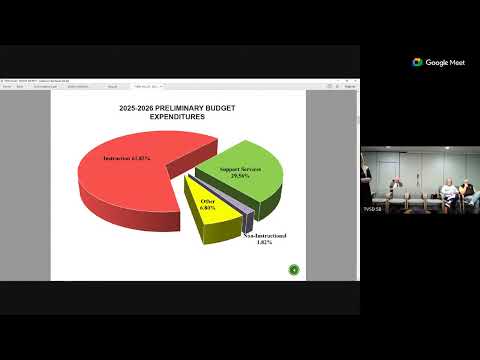
Richie reported the total budgeted expenditures as $77,908,000 (discussed in the meeting and rounded in conversation to $77.9M) and showed an object‑level breakdown with nearly 62% of expenditures budgeted for instruction, about 30% for support services and the remainder for debt service; supplies and equipment were described as roughly 3% of the total. The presenter emphasized the numbers are preliminary, that staff will continue monthly monitoring, and that a proposed final budget must be placed on public display before formal adoption, with a target adoption at the board’s June meeting.
Board members asked specific follow‑ups about assumptions, including whether transportation fuel surcharges would affect next year’s costs (the presenter said surcharges were not triggered this year and that some fuel pricing may be locked via consortium contracts but staff would confirm), and pressed for continued monitoring of cyber charter enrollment trends after the district budgeted 45 cyber students but recorded 60 the prior year.
The finance presentation and supplemental slides will be posted on the district’s website under the business office for public review. Staff indicated action items related to some budget‑adjacent contracts and fee schedules will be moved to next week’s regular board meeting for official votes.