
Former DHS general counsel Steve Bunnell says ICE has "lost its way," urges transparency and reform
Get AI-powered insights, summaries, and transcripts
Subscribe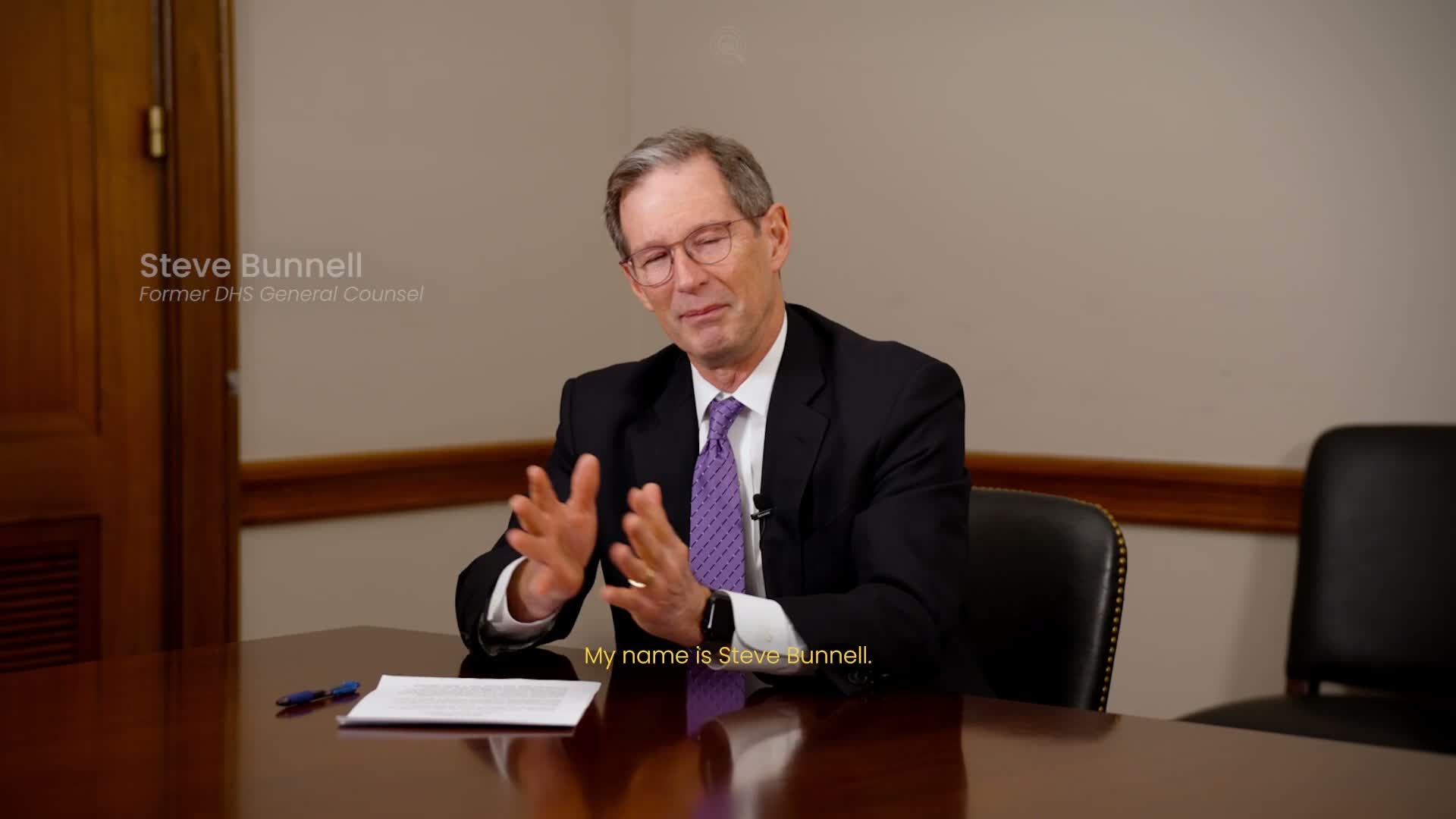
Summary
Steve Bunnell, who served as general counsel at the Department of Homeland Security from 2013 to 2017, warned that parts of DHS and ICE have eroded public trust and called for legal, strategic and tactical reforms, greater transparency, and better community engagement.
Steve Bunnell, who said he served as general counsel of the Department of Homeland Security from 2013 to 2017, criticized parts of DHS and Immigration and Customs Enforcement in a set of remarks, saying the agencies have eroded public trust and need broad reforms.
"With its current leadership, ICE has kinda lost its way, and it's no longer focused on its core enforcement mission," Bunnell said, arguing that the agency has placed people with legitimate legal or humanitarian reasons to be in the country "in the spotlight" of enforcement activities.
Bunnell framed the problem as both legal and cultural, saying trust and credibility are "foundational" for law enforcement and that without public trust the agencies' mission is "unattainable." He called for changes to law, strategy and tactics as well as "training better" and building a healthier workforce culture.
He pressed for more public disclosure, saying the department needs "more transparency, more data, more information" about what ICE is doing, including its strategy, tactics and results, so local law enforcement and community leaders can assess partnership possibilities.
On community engagement Bunnell urged de-escalatory approaches. "For the community, I might start by taking off my masks and not dressing like I was coming to invade Iraq," he said, and warned that labeling people in inflammatory terms before investigations are complete undermines trust.
Bunnell also clarified that ERO, the Enforcement and Removal Operations arm of ICE, conducts civil immigration enforcement rather than criminal policing and contrasted that with criminal investigations that typically require warrants.
He framed his recommendations within broader democratic safeguards, listing the Constitution, courts, Congress, elections, transparency, oversight, a merit-based civil service, the press and public protest as mechanisms that should both constrain executive overreach and be modeled by DHS.
As a concrete example of practices he found troubling, Bunnell cited what he described as "the policy of breaking into homes without a judicial warrant," saying it illustrates a departure from norms the department should protect and defend.
The remarks focused on restoring trust through legal and procedural reforms, transparency and improved community relations; Bunnell did not announce any specific litigation or legislative proposals in the record provided.