
AARP urges working group on consumer fraud amid rising scams targeting older adults
Get AI-powered insights, summaries, and transcripts
Subscribe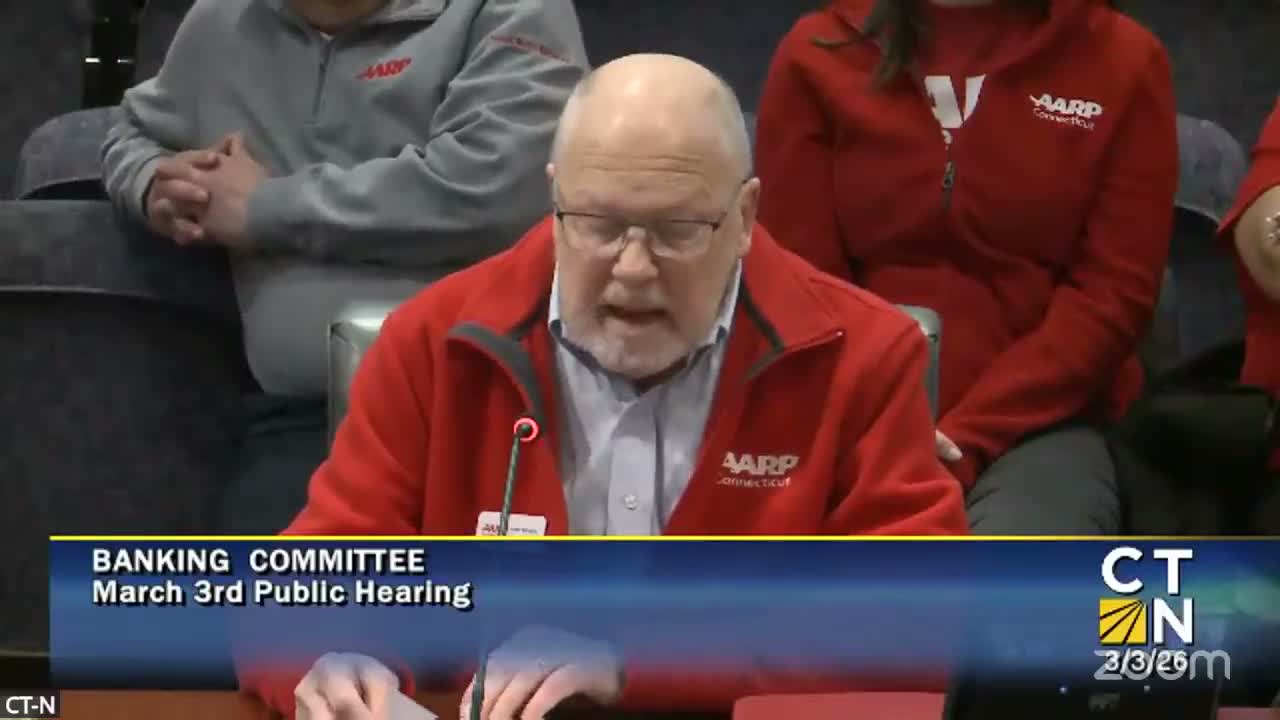
Summary
AARP Connecticut asked the Banking Committee to create a working group to study consumer fraud (HB 5315), highlighting scams that use gift cards, cryptocurrency and impersonation and citing Federal Trade Commission estimates of large losses to older adults.
John Wilson, volunteer state president of AARP Connecticut, told the committee that a working group to study consumer fraud would collect evolving trends and provide actionable recommendations to legislators and law enforcement. Wilson said fraudsters increasingly use gift cards, electronic payments and cryptocurrency and that many losses are irreversible without timely intervention.
Wilson cited Federal Trade Commission data, saying the agency estimates losses to older adults in 2024 at about $81.5 billion. He urged the committee to create the working group described in House Bill 5315 and offered AARP’s participation and data resources.
Lawmakers asked about the makeup of the proposed panel and whether to include law‑enforcement members with crypto expertise; Wilson said the currently proposed membership broadly covers necessary expertise but that inclusion of Connecticut State Police fraud specialists could be valuable.
Why it matters: Testimony stressed that older residents are a frequent target, that rapid transfers (gift cards, crypto) make recovery difficult, and that a cross‑sector working group could improve prevention and coordination with law enforcement.
What’s next: Committee members responded positively to AARP’s offer to participate and indicated they will consider the working‑group proposal and membership as part of the bill’s drafting.
Ending: The committee took testimony and asked witnesses for follow‑up on membership and evidence the working group should review; no vote was taken at the hearing.