Get Full Government Meeting Transcripts, Videos, & Alerts Forever!
Get email alerts on the Homeless Encampment Policy topic
No spam. Unsubscribe anytime.
Board declines pause in enforcement while developer’s SOP challenge moves through court
Summary
A developer’s attorney asked the Code Enforcement Board to delay action on a Dixie Highway property pending litigation over LMPD SOP 8.57; county counsel opposed the request and the board upheld the $600 citation.
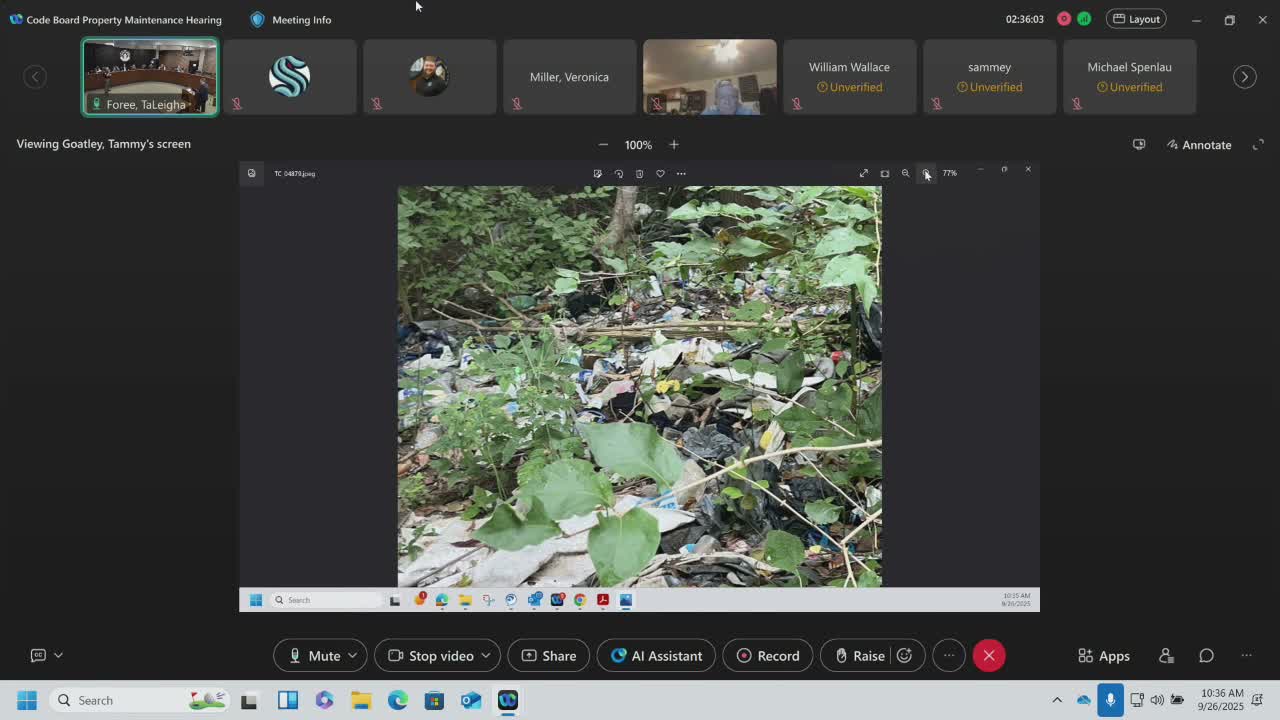
A private attorney representing Renaissance asked the Louisville Metro Code Enforcement Board on Sept. 26 to delay enforcement at a Dixie Highway property while the company pursues a district-court challenge over how Louisville Metro Police Department standard operating procedure 8.57 governs clearing homeless encampments.
Renaissance’s counsel told the board that SOP 8.57 assigns coordination with the division resource officer and RCS (Resiliency and Community Services) for clearing encampments and urged the board to hold enforcement while the court resolves that question. County counsel objected, saying local ordinance places a continuing duty on property owners to remove hazards and that a standard operating procedure cannot transfer that statutory obligation.
After argument, the hearing officer ruled the conditions cited by staff remained and upheld the $600 penalty, declining to stay enforcement pending the separate court case. County counsel summarized the county's position that each day a condition persists is a separate offense under local ordinance; Renaissance’s counsel said the company had followed certain SOP steps (trespass-enforcement waiver, coordination attempts) but wanted the board to pause its own action while the judicial matter proceeds.
The board’s decision keeps municipal enforcement active while litigation continues in another forum; the transcript records both sides’ arguments on the appropriate division of responsibility between private property owners and municipal response teams.