Get Full Government Meeting Transcripts, Videos, & Alerts Forever!
Get email alerts on the Budget topic
No spam. Unsubscribe anytime.
Shenandoah council workshop trims budgets, weighs utility‑fee ordinance and funds design for City Hall HVAC
Summary
During an extended budget workshop councillors reviewed departmental adjustments that reduce administrative and finance line items, directed staff to draft an ordinance to recover utility credit‑card fees, approved a small Veterans Point change order, and agreed to fund a $100,000 HVAC design for City Hall rather than a short‑term $130,000 coil replacement.
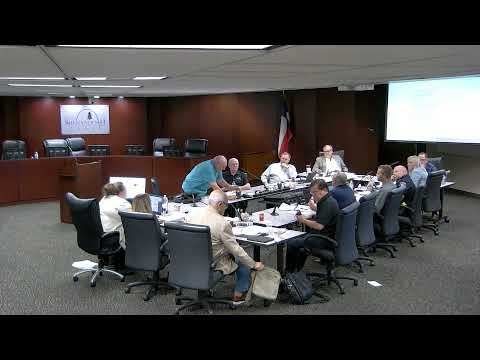
Shenandoah council members spent the bulk of their Aug. 14 meeting in a budget workshop that updated revenues, pared duplicative line items and set priorities for capital improvements.
Staff (speaker 9) presented updated certified property values and revised revenue estimates that modestly increased projected sales-tax receipts. On the expenditure side, staff removed duplication in administrative printing/postage, reworked unemployment assumptions, and recommended modest savings in recurring line items. Staff reported a projected general‑fund surplus of approximately $56,477 following the agreed adjustments.
Council reviewed several departmental budgets and capital projects. Highlights included:
• Veterans Point change order approved: Council approved Change Order No. 1 for Veterans Point for $24,673.27 for bench seating, a foundation modification around an existing water line and concrete curbing at storm outfalls; staff said additional erosion repairs are being priced (potential change order #2).
• City Hall HVAC study funded: Staff presented two options for the failing HVAC system: a $130,000 coil replacement to extend life 2–3 years, or a $100,000 design engagement (MEP RFQ) to scope a full replacement (staff estimated roughly $1,000,000 for full replacement). Council favored funding the $100,000 design so engineers can specify long‑term construction costs.
• Utility‑billing convenience fees: Staff reported that credit‑card and transaction fees have amounted to about $72,000 year‑to‑date. Staff recommended drafting an ordinance that would allow the city to pass through the reasonable cost of credit‑card transactions in a non‑discriminatory way (for example, applying fees above a threshold or across account classes equally). Council directed staff to consult the PUC and prepare ordinance language for a future meeting.
• Water and sewer CIP items: Council reviewed a suite of water‑and‑sewer projects, including an impact‑fee and rate study, pump control enclosures ($40,000), a comprehensive hydrant audit, pipe recoating and lift‑station work. Staff also presented security‑camera quotes for water and wastewater facilities with a preliminary combined cost near $95,000 but council asked staff for detailed quotes showing annual monitoring and replacement costs before committing funds.
Council did not adopt final budget or staffing additions at the workshop; members agreed to monitor sales‑tax receipts from new businesses and revisit additional positions (including police staffing) once revenue trends are clearer. Staff will update the budget documents and return to the council for adoption and required tax‑rate hearings at the next meeting.