Get Full Government Meeting Transcripts, Videos, & Alerts Forever!
Get email alerts on the Public Funds Limits topic
No spam. Unsubscribe anytime.
Shenandoah council debates legal limits on using public funds for private storm recovery help
Summary
Council members reviewed Texas constitutional limits after a tornadic storm and asked the city attorney to draft options that could allow narrowly tailored assistance (such as debris removal from public rights-of-way) without violating Article III, §52(a). They agreed to seek legal guidance before adopting any exceptions for individuals.
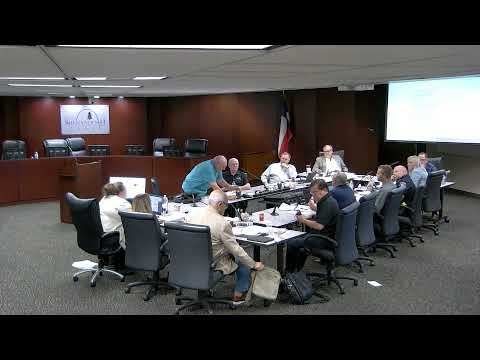
Shenandoah city council members spent the opening portion of their Aug. 14 meeting debating how far the city can go to help individual residents after a recent tornadic event.
The discussion focused on Texas Constitution Article III, §52(a), which a council member (speaker 6) read aloud and summarized as prohibiting a city from granting public money to an individual or corporation: “We can only aid the public in general. We cannot help individuals,” the member said, arguing the city must avoid gratuitous grants of public funds.
Several councilmembers urged staff to explore narrowly tailored approaches that meet established legal tests. One councilmember (speaker 4) cited an Attorney General opinion and a three-point public-purpose test — showing “control of the activity, control of the funding, and delivery of a public benefit” — and asked the city attorney to draft options and, if necessary, request an Attorney General opinion before the council acts.
Council members offered practical examples they said might qualify as public-purpose measures if the city retained control of the work: removing debris from public easements so sidewalks and rights-of-way are accessible; hiring contractors to clear limbs that encroach on public spaces; or making bottled water broadly available during emergencies. The mayoral presiding official (speaker 1) pressed for balance, citing elderly residents unable to clear large uprooted trees but warning against creating criteria that would be impossible to administer or that would invite unequal treatment.
No policy was adopted. Council directed staff to research case law and attorney-general guidance and return with draft language and recommended procedures that would specify eligibility, procurement and oversight so that any assistance would be structured, transparent and legally defensible.