
Nantucket health officials report PFAS detections, lone-star ticks and wastewater substance data
Get AI-powered insights, summaries, and transcripts
Subscribe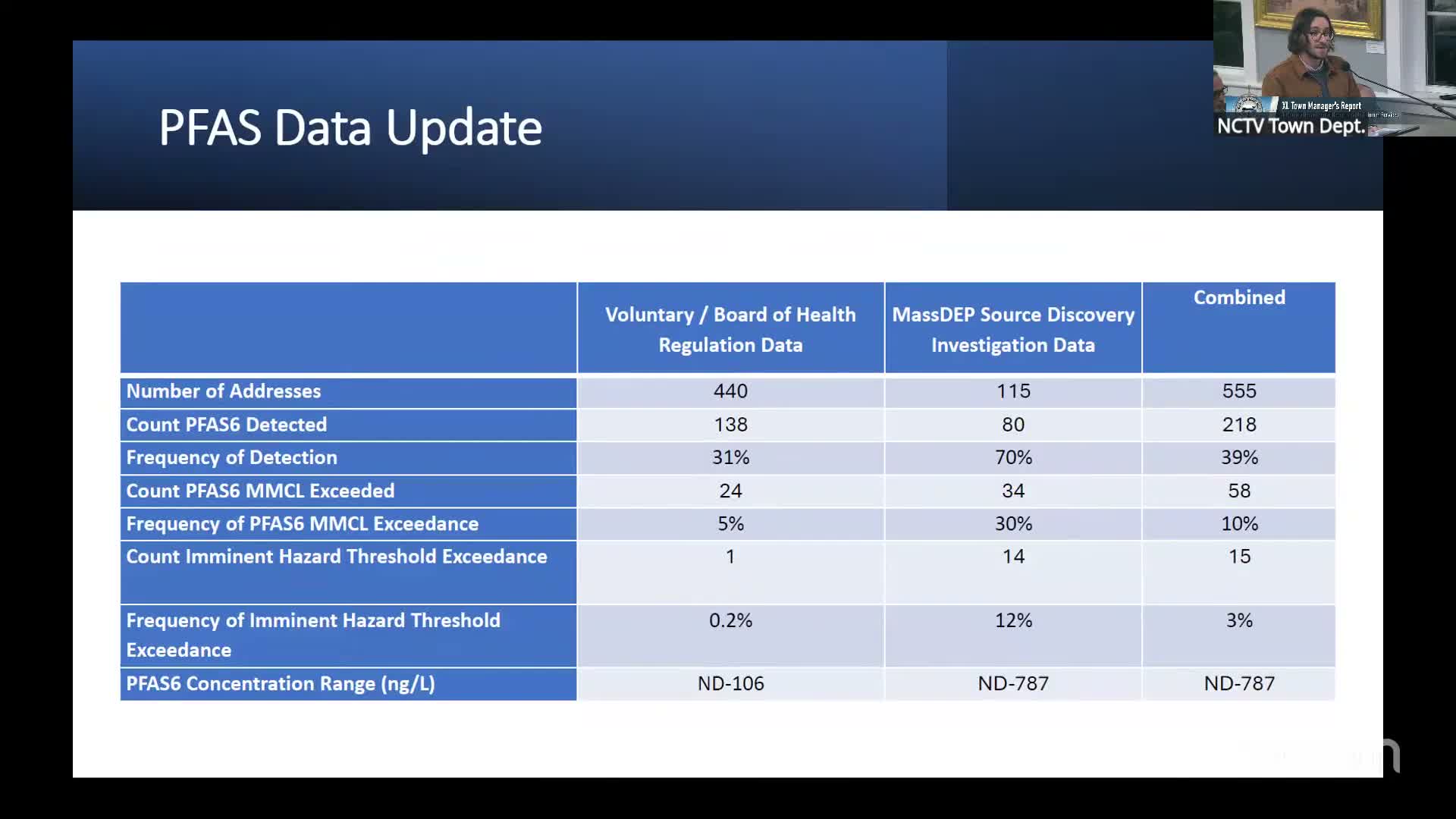
Summary
Town public health leaders reported PFAS detections in private wells, rising detection of lone-star ticks and early wastewater surveillance showing intermittent spikes in cocaine markers; the board heard updates on vaccine clinics, short-term-rental registration and human-services grants.
Town health officials delivered a wide-ranging Health & Human Services briefing that highlighted environmental contamination, vector-borne threats and new wastewater surveillance data.
Rocky Maramantes, public health director, said the department stepped up vaccine clinics this past season and has provided thousands of influenza and COVID vaccinations locally. He and his team also described environmental monitoring activity. "PFAS are commonly detected in groundwater on Nantucket with about 39% of residences in our dataset having a detect of the Massachusetts regulated PFAS 6," Andrew Shapiro, environmental contamination administrator, told the board. Shapiro said about 10% of sampled residences in their dataset exceed the state's drinking-water standard of 20 parts per trillion and 15 homes exceeded the state's imminent-hazard threshold of 90 parts per trillion in their dataset; the airport disposal-site data were handled separately.
Public-health staff also flagged the growing presence of lone-star ticks and the risk of alpha-gal syndrome, which can cause severe food allergies. Officials said detections have expanded beyond historical areas and emphasized outreach and education.
The department debuted wastewater surveillance for high-risk substances and reported intermittent elevated readings for cocaine metabolites during a period last summer and fall, while most opioid markers were low or near nondetect. The data are intended to guide prevention and treatment partners rather than to identify individuals. "Our intention in sharing it is not to alarm the community, but to provide transparent factual data that can help guide prevention and response efforts," Maramantes said.
Health staff outlined short-term-rental registration compliance work and ongoing updates to Board of Health regulations for sensitive watersheds; they also summarized human-services grant awards and a community needs assessment that will close in May with final analysis expected in July.
Officials urged private well owners to obtain their own PFAS tests and advised residents to heed updated public information on ticks and prevention. The board asked staff to continue coordinating with state agencies and regional partners on contamination source discovery and public-health interventions.