Committee briefed on draft repeal after Growth Management Hearings Board voided stadium-overlay zoning change
Loading...
Summary
Committee received an initial briefing on a draft repeal to rescind an ordinance that allowed residential use in the Stadium Transition Area overlay after the Growth Management Hearings Board found the ordinance invalid; staff said the May 11 compliance deadline creates a tight schedule and a public hearing is set for April 1.
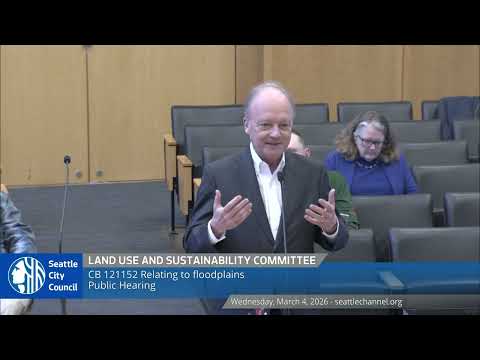
The Land Use & Sustainability Committee on March 4, 2026 received an initial briefing on a draft repeal ordinance intended to bring the city into compliance after the Growth Management Hearings Board deemed a previous ordinance invalid. HB Harper of council central staff presented the repeal draft, described the board decision and the narrow timeline for compliance, and said repeal is likely the most straightforward short-term option.
Harper explained that Council Bill 120933 (which became Ordinance 127191) amended development regulations to allow residential uses as a conditional use in part of the Stadium Transition Area overlay district. The Port submitted a petition for review; in November the Growth Management Hearings Board issued a final order finding the ordinance invalid and ordered the city to take compliance action by May 11, 2026.
"The city does not have time to complete all the necessary procedural steps to attempt a replacement ordinance by that compliance date, and therefore a draft repeal has been prepared for your consideration," Harper said, noting that repeal requires the usual notice and effective-date periods that make the mid-May compliance schedule tight. Harper said a public hearing notice was posted for April 1 and that a March 18 additional briefing is scheduled.
Committee members asked staff to clarify the role of the Growth Management Hearings Board and the effect of a finding of invalidity. Harper said the board adjudicates compliance with the Growth Management Act and that a finding of invalidity means the policies passed cannot be implemented; permit applications could not be processed under invalid regulations. He added that any future action to revisit zoning or development regulations would have to follow state law and comprehensive-plan constraints and that a repeal would not necessarily prevent future modifications if those later actions comply with applicable legal requirements.
Members asked about the tight calendar and whether the repeal would permanently bind the council; staff said the repeal is likely the quickest path to meet the board's order but that the city can revisit the matter under state law. The committee scheduled a public hearing for April 1 (public notice published) and an additional briefing on March 18; no vote was taken today.