Get Full Government Meeting Transcripts, Videos, & Alerts Forever!
Get email alerts on the E Collar Ordinance topic
No spam. Unsubscribe anytime.
Commission hears mixed testimony on proposed e‑collar ordinance; special meeting set for March 9
Summary
Assembly sponsor and staff presented a narrowed substitute ordinance to allow electronic collars in a designated recreation area; commissioners expressed concerns about training, enforcement and device power, and public testimony split between rural‑safety supporters and neighbors who described a past bite incident; the commission scheduled a special meeting March 9 for further review.
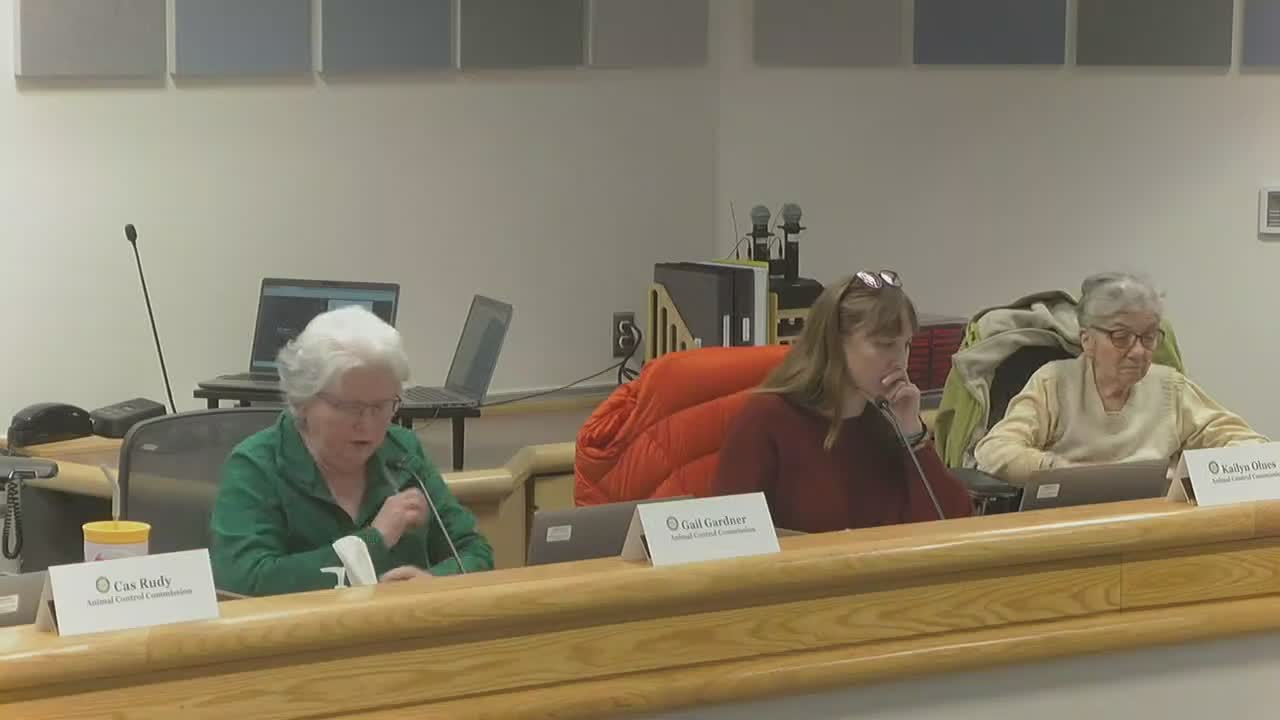
The commission opened a legislative hearing Feb. 2 on a substitute ordinance (2025‑29) that would amend Fairbanks North Star Borough code to allow restraint by electronic collars (e‑collars) in designated locations, adjust the fine schedule and preserve existing prohibitions for animals deemed dangerous.
Assemblymember Wilson, the ordinance sponsor, told the commission she and staff narrowed the initial proposal to begin with limited pilot areas — notably the Chena River State Recreation Area and a public gravel‑pit‑type site — and excluded downtown and other sensitive zones. She emphasized that the substitute would allow a measured pilot so the borough could ‘‘monitor the action, and then if nothing bad happened... we could then grow the program,’’ and that dangerous or nuisance animals would remain prohibited from using e‑collars.
Commissioners questioned several details: training and certification for owners, collars’ varying power levels, how to enforce compliance if a device’s range exceeds the permitted physical distance, and how signs or notification would alert other park users. Commissioner Sherman said she is ‘‘uncomfortable’’ with the absence of training requirements and noted international moves to restrict shock‑type devices; Commissioner Wilson (a commissioner with dog‑training experience) described e‑collars as an effective tool in the right hands but warned of abuse by untrained owners. Commissioners also discussed the practicality of a proposed 4‑foot distance limit, with members noting that playing fetch or riding a horse with a dog would exceed that limit and likely need special language.
Public testimony was mixed. Barbara Haney (Steamboat Landing area) and Victoria Mowery (North Pole) supported allowing e‑collars in limited rural areas for safety and reliable recall in wildlife country. Jane Scheid — who said she had previously been involved in a bite incident that she described as isolated and attributable in part to another dog coming off a leash — urged context and argued that well‑used e‑collars can prevent euthanasia and have legitimate training and medical uses. Peggy Sullivan, who said she has known the Scheid family for years, also testified that she has not observed behavior problems with the dog in question.
Commissioners and staff noted they had received a detailed emailed account from a different member of the public alleging two serious attacks; staff said they had not yet verified that account. Assemblymember Wilson and staff committed to further research on device types, power levels and possible training or signage requirements before a recommendation is drafted.
Because the commission received the substitute ordinance only that evening and several substantive issues remained unresolved, commissioners agreed not to forward a recommendation to the assembly and scheduled a special meeting to continue the legislative hearing on March 9, 2026, at 6 p.m. The commission also reminded members that any commissioners wishing to testify at the assembly public hearing should do so as private citizens to avoid potential Open Meetings Act issues.
The hearing will proceed to a future meeting for additional public comment, staff follow up and potential draft language clarifying permitted locations, device standards and enforcement mechanisms.