Get Full Government Meeting Transcripts, Videos, & Alerts Forever!
Get email alerts on the Multifamily Tax Incentive topic
No spam. Unsubscribe anytime.
Fairbanks North Star mayor, staff outline proposed multifamily tax break to boost multi‑bedroom rentals
Summary
The borough presented Ordinance 2026‑01, a tiered property‑tax exemption aimed at spurring construction of multi‑bedroom rental units (targeting military families and employers). The administration promised maps, prior‑program cost data and clarified eligibility, contractor and compliance rules for applicants.
Mayor Hopkins and borough staff presented an initial review of Ordinance 2026‑01, a proposed property‑tax exemption designed to accelerate construction of multifamily housing in the Fairbanks North Star Borough.
Tom Hewitt, delivering the staff report, said the Fairbanks rental market is tight — vacancy generally between 7% and 13% and months of inventory below the healthy three‑month benchmark — and that average rents have risen sharply in recent years (two‑bedroom averages were described rising from about $1,000 to $1,600; three‑bedroom averages from about $2,000 to $2,500). Hewitt said incoming military personnel will increase demand: Fort Wainwright plans for roughly 300–500 inbound soldiers and Eielson Air Force Base anticipates about 400 additional airmen, with many service members bringing families. On‑base housing occupancy was reported at roughly 95.7%, creating a forecasted shortfall of several hundred units.
The ordinance — listed in the agenda as an ordinance adding FNSBC 8.12.0.046 and amending FNSBC 8.08.0.03 — would offer tiered, discretionary exemptions based on the number of units constructed and number of bedrooms per unit. Hewitt summarized the structure: projects of 2–4 units with two bedrooms could receive up to three years of exemption; 2–4 units with three or more bedrooms up to five years; and five or more units (either two‑bedroom or three‑plus bedroom configurations) up to 10 years. Hewitt said the maximum terms remain at assembly discretion and are intended to reflect community benefit.
Eligibility and process details described by staff included a one‑page application, a $300 fee payable to Treasury and Budget, and a 30‑day review clock for the assessor once a complete application is submitted. Applicants must be current on applicable taxes. The ordinance requires new construction (not rehabilitation), construction by a licensed Alaska contractor, completion within two years of approval, and connection to public water where available; DEC‑inspected septic systems are acceptable where sewer is unavailable. Hewitt said an annual report will be required of developers to verify ongoing compliance and that the assessor may request lease information to confirm long‑term rental use. If a property converts to short‑term rentals during the exemption period, owners must repay the full value of the exemption to the borough.
Hewitt framed the draft as informed by a prior 2022 incentive: "We learned from that, and we have tiered it based on the number of units constructed and the number of bedrooms per unit," he said, adding the prior program produced 101 units for successful applicants but that 80% were one‑bedroom or studio units. The new proposal explicitly targets multi‑bedroom units to address military family needs.
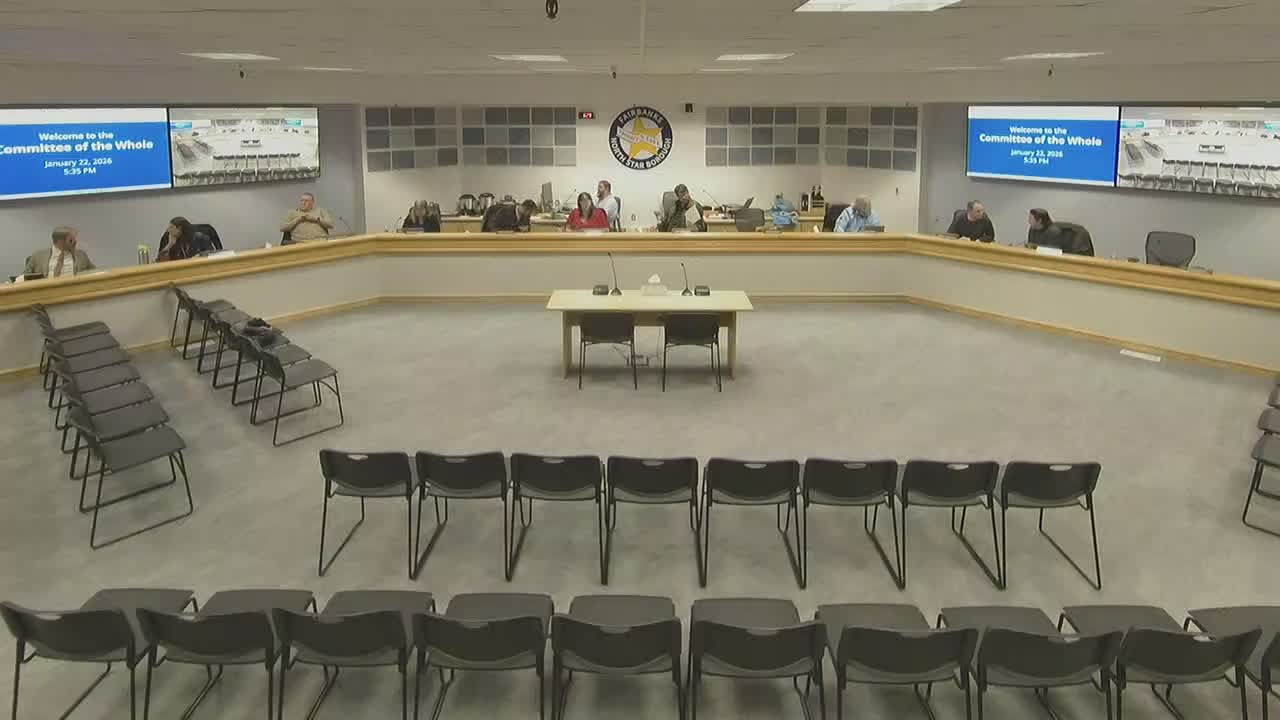
Assembly members used the committee setting to press for clarifications and follow‑up materials. Ms. Wilson asked whether freestanding single‑family homes could qualify; staff said single‑family homes are not eligible except in limited configurations where multiple single‑family units sit on a single parcel and meet the 5+ unit rules. Members requested maps showing where public water exists but not sewer and data on the fiscal cost and geographic distribution of units built under the 2022 program; staff agreed to provide those maps and cost estimates at a later meeting.
On transferability, staff said exemptions for properties of five or more units can continue under new ownership only if that transfer was specified in the original development plan (for example, a developer designating a property‑management LLC at application); otherwise a change in ownership terminates the exemption. Builders and bankers who were consulted indicated interest but offered no firm commitments to build a specific number of units if the ordinance passes.
Next steps: this meeting was an initial staff presentation and Q&A; the ordinance will return for further review and potential amendments. Staff and the mayor committed to provide requested maps (water/sewer overlays, military facility zone boundaries), historical program cost estimates, and other clarifying data ahead of subsequent meetings.