Get Full Government Meeting Transcripts, Videos, & Alerts Forever!
Get email alerts on the Elections topic
No spam. Unsubscribe anytime.
Commission declines to pursue moving elections; voluntary 'clean campaign' pledge withdrawn after debate
Summary
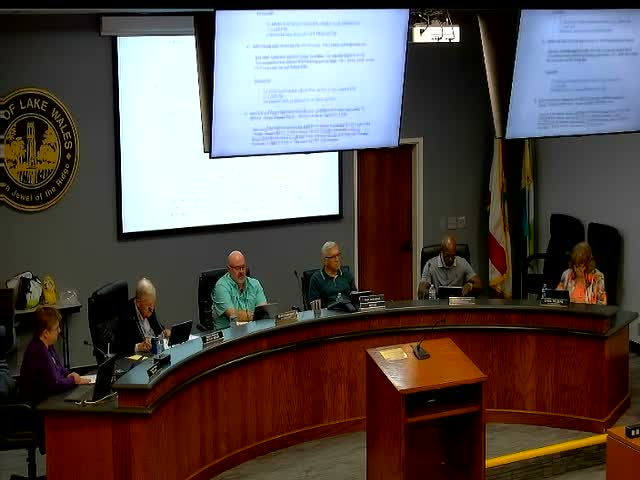
City clerk presented turnout data comparing April and odd‑year November municipal elections; commissioners reached consensus not to draft an ordinance to move the date. A separate voluntary 'pledge for a clean campaign' introduced by the deputy mayor drew extensive debate over enforceability and potential weaponization and was not advanced.
City clerk Jennifer summarized a request from the Supervisor of Elections to consider moving municipal elections from every‑April dates to odd‑year Novembers, citing potential turnout benefits in some peer jurisdictions. She presented turnout comparisons (Lake Wales reported turnout in recent years ranging roughly 17–26% in the past several elections) and outlined options including changing terms and cycle lengths, and placing a charter amendment referendum before voters if the commission chooses to pursue the change.
After discussion about historical cycles, term length implications and the risk that moving to November could concentrate multiple seats on a single ballot ("fruit basket turnover"), the commission established a consensus not to direct staff to draft ordinances to change the election date at this time. Several commissioners said the current staggered three‑year terms and local nonpartisan timing help preserve continuity.
Separately, the deputy mayor introduced a draft voluntary "pledge for a clean campaign" intended to discourage negative third‑party mailings and anonymous outside spending. He emphasized the pledge was voluntary and designed to tamp down post‑election anger. Commissioners debated whether the pledge would be enforceable, how to define "third party" or "reject support," and whether it would be weaponized against candidates. One commissioner said the pledge risked being used as a political cudgel; another said a public rejection of third‑party attacks could at least clarify a candidate's stance.
After a lengthy exchange, the deputy mayor said he would not advocate the pledge further; other commissioners said they shared the goal of more civil local elections but were not ready to adopt a voluntary or mandatory mechanism as drafted.
Why it matters: The discussion touched on turnout, election timing, the design of local democratic processes, and local safeguards against anonymous outside influence. Commissioners emphasized balancing voter participation with continuity and the risk of unintended consequences from changes to timing or voluntary pledges.