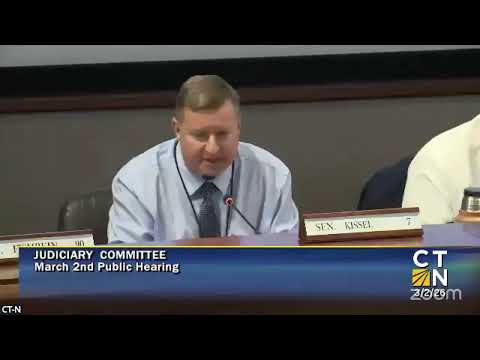
Debate at Judiciary Committee as Connecticut Lawmakers Weigh Parental Notification for Minors Seeking Abortion
Loading...
Summary
The state Judiciary Committee heard hours of testimony for and against HB5309, a bill that would require providers to notify a parent or guardian before a minor obtains an abortion; supporters cited safety and trafficking risks while medical groups warned the requirement would delay care and endanger vulnerable teens.
The Judiciary Committee heard competing appeals on HB5309 on March 2, when dozens of witnesses urged lawmakers either to approve a parental‑notification requirement for minors seeking pregnancy‑related care or to reject it as harmful.
Supporters framed the bill as a safety measure. "A minor should not have to process this waiting alone," said Doctor Kathleen Johnson, a registered nurse and CEO of St. Gerard’s Center for Life, urging committee members to back the measure to ensure parents can help minors after a procedure. Several other speakers — including parents, clergy, and survivors — told the committee they had seen cases where traffickers or abusers used secrecy to conceal exploitation, and they argued parental notice could surface abuse earlier.
Opponents included physicians and medical associations who said routine parental notification would create new barriers to time‑sensitive care. "Confidentiality is essential to building trust with adolescent patients," said Dr. Nancy Stanwood of Planned Parenthood Southern New England, adding that established Connecticut practice already encourages clinicians to involve a trusted adult when safe. Representatives of the American Academy of Pediatrics and the state’s OB‑GYN community also opposed the bill, saying judicial bypass processes and added steps can delay care and push patients into later, riskier procedures.
Several witnesses who oppose the bill said most minors already involve a parent or trusted adult voluntarily. They warned a statutory notification requirement, even with a judicial bypass, will disproportionately harm teens who fear violence, homelessness or further coercion if parents are notified. Public health witnesses cited research showing judicial bypass can add days to care timelines and that delays raise medical risk.
Lawmakers questioned both sides over evidence and implementation. Committee members noted safeguards included in the bill — a judicial bypass and exceptions for abuse — but asked whether the practical effect would be to force disclosures that put some minors at greater risk. Supporters pointed to examples where lack of parental awareness delayed emergency recognition of complications; opponents cited clinical guidance from medical societies that oppose mandatory parental involvement.
The committee did not vote at the hearing. Next steps will depend on whether members choose to advance the bill for further markup or incorporate amendments to narrow or clarify the notification and bypass procedures.
Provenance: Witnesses and committee exchanges occurred throughout the public‑comment segment beginning with the opening remarks and continuing across extended testimony on HB5309 (public testimony segments).