Council adopts staff plan to rebalance FY27 after $2.3M auto sales-tax reporting change
Loading...
Summary
Staff told the Walnut Creek City Council that a CDTFA reporting change in the autos/transportation group created an estimated $2.3 million General Fund deficit for FY27; the council voted to adopt staff—'s recommendation to maintain a 10——% vacancy rate short term while pursuing CDTFA clarifications, potential appeals and a fee study.
Administrative Services Director Kirsten Lacasse presented the city—'s updated fiscal outlook during the March 3 meeting, telling council that a reporting change by the California Department of Tax and Fee Administration (CDTFA) affecting the autos and transportation industry group led to an 11% decline in that group's reported revenue in FY25 and has produced an updated projection of a $2.3 million deficit for fiscal year 2027 in the General Fund.
Lacasse recapped that the FY26/'27 adopted budget already included about $6.33 million in reductions and explained three staff options to close the projected FY27 gap: 1) maintain the current elevated vacancy rate (reported at about 10——%), 2) identify ongoing reductions equal to roughly 2% of general fund expenditures, or 3) use reserves on a one-time basis. Staff recommended maintaining the roughly 10——% vacancy rate in the short term while continuing work to resolve CDTFA reporting issues, complete a citywide fee study, and update the 10-year financial forecast.
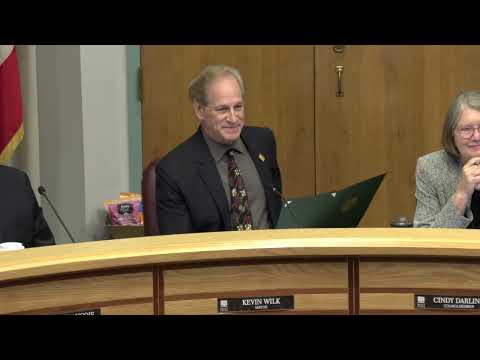
Council members asked whether the CDTFA decision could be appealed and whether legislative remedies were being pursued. Lacasse said CDTFA had not made a final determination and that the city is working with its consultants and state representatives; Mayor Wilk said the city sent a letter that day to state legislators, including Senator Tim Grayson and Assemblymember Rebecca Bauer-Kahan, asking for help to clarify the change. City Manager Dan Buckshay said staff is trying to understand the driver of CDTFA—'s change and noted that similar reporting shifts affected other cities. Buckshay also cautioned that the magnitude of the sales-tax loss did not meet emergency-reserve triggers and suggested the general fund contingency reserve could be used for one-time needs if necessary.
The finance committee reviewed the options and supported the staff recommendation. A councilmember moved to adopt staff's rebalancing recommendation to maintain the current vacancy rate and monitor CDTFA outcomes. The motion passed on a 5———Aye roll call.
Next steps: staff will continue to work with CDTFA and state representatives, refine projections with third-quarter results, complete the fee study and update the 10-year forecast; additional actions (appeal, legislative remedy, or ongoing reductions) may be brought back to council if new information requires them.