Get Full Government Meeting Transcripts, Videos, & Alerts Forever!
Get email alerts on the School Budget topic
No spam. Unsubscribe anytime.
Norfolk Agricultural High School officials outline budget shortfall tied to lottery-driven enrollment shift
Summary
School leaders told the Norfolk County Commission that a recent mandated lottery has increased in-county enrollment at the agricultural high school, reducing higher out-of-county tuition revenue and contributing to a projected deficit; commissioners took the budget under review for further analysis.
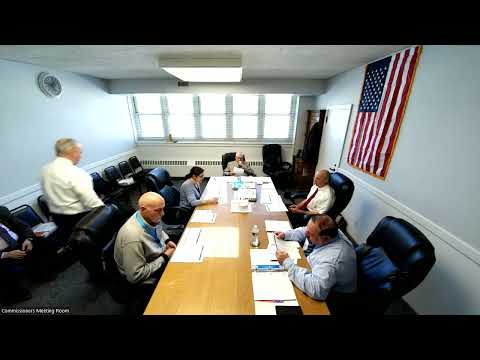
Chair opened the meeting by reading House Bill 62, which extends the option for public bodies to hold remote meetings through June 30, 2027, before moving the Agricultural High School budget ahead on the agenda.
Superintendent Jared, who introduced the school team, said the school has been without a business manager for much of the prior year and praised the new hire’s work in modernizing budget processes. “We get about 450 applications for roughly 155 seats,” Jared told commissioners as he set the context for enrollment and revenue projections.
Jenna, the school’s business manager, walked commissioners through her budget methodology: she used prior-year figures, met with department leads, tagged individual budget lines in an electronic file and increased placeholders by 3 percent where appropriate. She said she has not yet finalized reserve contributions or system budget codes and asked commissioners to treat the figures as preliminary.
The administrators warned the board the mandated lottery this year has shifted a larger share of students to in-county seats, which lowers average tuition revenue. Jared and Jenna said in-county tuition is “just over $5,000” while out-of-county tuition is substantially higher. Jared estimated a difference of roughly $25,000 per student could amount to about $250,000 in lost revenue if 10 fewer out-of-county students enroll, and said that if the pattern persisted across all grades it could approach $1,000,000 over time.
Jenna reported preliminary expenditures near $19,000,000 and said she has held some lines as placeholders until final trust/reserve figures are determined. Commissioners pressed for clarifications on reclassified line items — notably how athletics and student-activity stipends were separated — and Jenna said she would provide reconciled totals showing how the new classifications roll up to prior aggregate figures.
Jared also flagged rising special-education needs among students with IEPs, saying higher service levels have cost implications and may require at least one additional special-education teacher to maintain compliance.
After questions and discussion, the commission voted to take the Norfolk Agricultural High School FY26–27 budget under review for further analysis and reconciliation of line-item classifications. The board did not adopt or approve the budget at the meeting; next steps include submission of any revised school budgets by trustees and inclusion in the county’s final proposed FY27 budget packet for public viewing and later action.