Get Full Government Meeting Transcripts, Videos, & Alerts Forever!
Get email alerts on the Profile Future Ready topic
No spam. Unsubscribe anytime.
Avon Grove counselors and principals outline "future-ready" student portfolios and classroom framework
Summary
District presenters described two 2025-26 initiatives: elementary "future-ready" portfolios tied to Naviance artifacts and a K-12 instructional framework to align competencies to classroom practice; the board asked about PBIS links, equity for middle students and AI lessons for ninth graders.
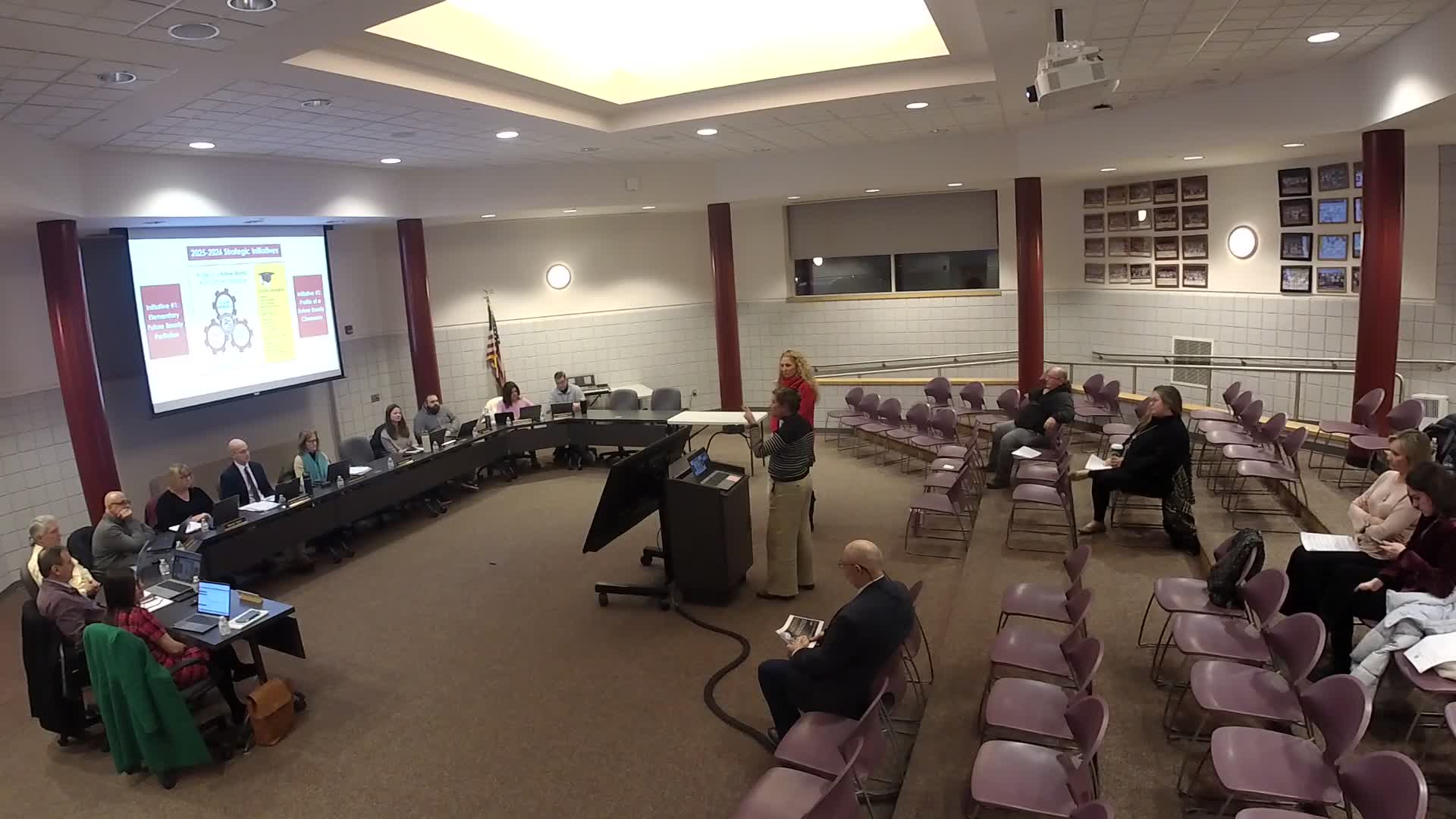
The Avon Grove School District on Friday presented plans to make its "profile of a future-ready graduate" tangible in classrooms and in counseling work across grades K-12. Patty Schmaltz, the district's supervisor of teaching and learning, and Kim Hall, principal at Abingrove Intermediate School, described two initiatives for 2025-26: developing elementary future-ready portfolios and creating a profile-of-a-future-ready-classroom instructional framework.
Schmaltz said the district will collaborate with school counselors to transition career-readiness portfolios into "future-ready portfolios" tied to the district's competencies. "A lot of this work the counselors are already doing," she said, noting the effort is intended to connect classroom instruction, counselor lessons and student artifacts.
Hall gave specifics on how the portfolios will be evidenced: "Our goal is 90 percent of future-ready learners in grade 5 will demonstrate proficiency in the career education standards," she said, describing a system that uses Naviance as the district's data platform to house artifacts and track competency evidence. Hall said the district will aim to store at least six artifacts per student in Naviance to support reporting.
The presentation emphasized alignment with PBIS (Positive Behavioral Interventions and Supports) and with classroom culture and instruction. Schmaltz described two prongs of work: clarifying classroom culture expectations and identifying instructional practices that will be priorities across grades.
Board members asked about who benefits from the portfolio work and how it applies to students who are not on high-achievement tracks. "How do we approach those middle students and making sure that they're getting all the same experiences?" one board member asked. Schmaltz and Hall said career lessons are being built into the counseling curriculum so all students will get exposure and opportunities to build artifacts reflective of career and character competencies.
On technology, the board asked whether AI and digital literacies are included. Schmaltz said digital literacies are a stated competency and that "we're developing AI lessons for ninth graders"; last year the district piloted sessions and this year exposure is required as part of a ninth-grade AI ethics lesson.
The board praised the workplace connections in the plan and asked for follow-up on classroom-level and individual-student impacts as the work continues. Schmaltz said the future-of-learning action team will present next month and that cross-site principal visits are being used to see how profile elements appear in different buildings.
The presentation concluded with an invitation to the board to examine classroom-level examples as the district refines essential instructional practices and rollout plans.