
Bedford County Public Schools outlines FY26‑27 budget pressures: 30% insurance spike, step raises, SRO funding and nutrition shortfalls
Get AI-powered insights, summaries, and transcripts
Sign Up Free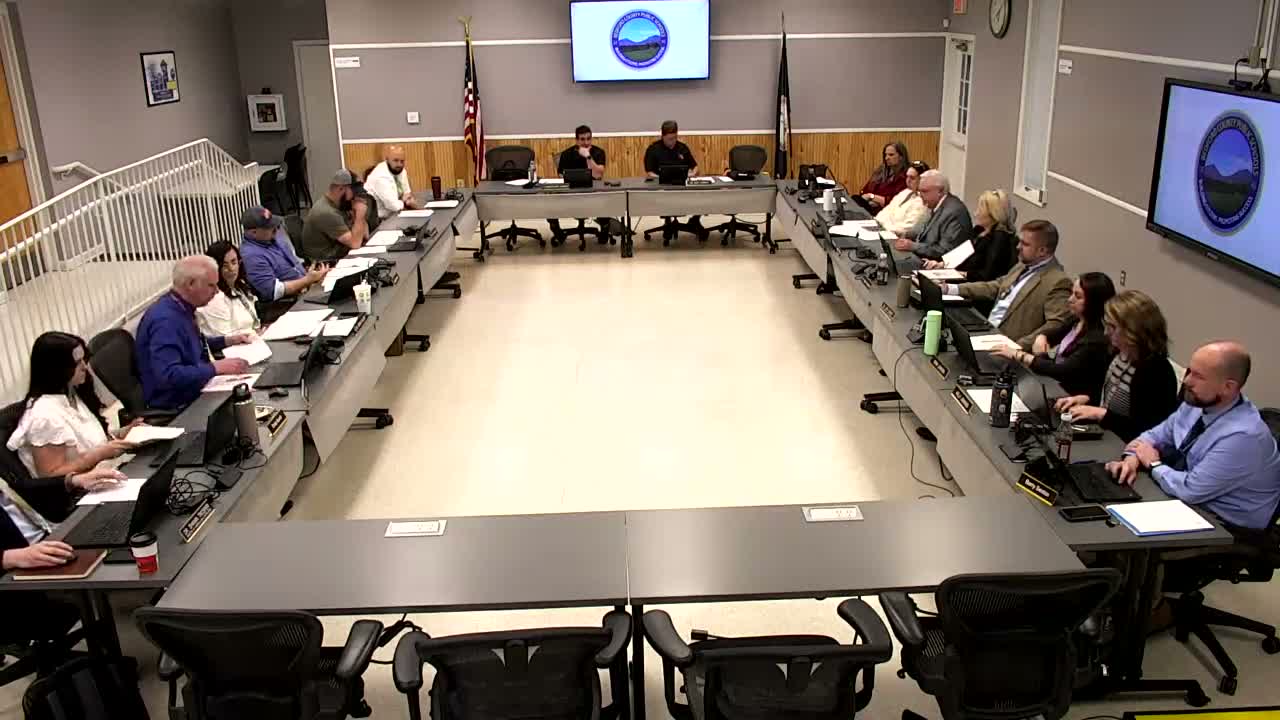
Summary
Assistant Superintendent Randy Haagler presented the FY26‑27 budget summary highlighting a modeled 30% increase in health insurance costs, a built‑in 3% salary column plus step raises, funding to absorb 13 elementary SROs and two pilot elementary ISS positions, and multi‑year reversion projections that could widen a $2.9M gap.
Bedford County Public Schools administrators told the school board on March 5 that the FY26‑27 budget will be shaped by rising health insurance costs, a push to remain regionally competitive on pay, and structural state funding changes that could create a multi‑million‑dollar shortfall.
Assistant Superintendent of Finance and Operations Randy Haagler (S2) said the budget package includes an assumption of a 3% state salary column and associated step raises, and that the division built its budget to absorb a projected 30% increase in health insurance premiums. "This initiative will address an expected 30% increase in health insurance premiums for FY26 and '27," Haagler said.
Haagler said the proposed operating‑fund increases primarily cover salary adjustments, the insurance spike, funding to cover the full cost of 13 elementary school resource officers and one additional SRO at the Susie G. Gibson Science and Technology Center, and two paraprofessional ISS positions at elementary schools to keep at‑risk students in school.
He told the board the budget would require an additional county request of $1,837,555 but that the board and county plan to move $600,000 into the maintenance reserve, leaving roughly $1.2 million of the county request to support operating costs. Haagler cautioned that those set‑asides still leave the district facing a projected $2.9 million gap tied to reversion and the Local Composite Index (LCI) changes.
Board members pressed for details on how the ISS positions would work in space‑constrained schools; Dr. Woodford (S6) explained the positions are intended to be paraprofessional roles, possibly shared across smaller schools, to supervise removed students while keeping them in school, completing work and receiving behavior supports.
Board discussion also focused on the nutrition fund, where Haagler said reserves have eroded and past reductions eliminated 8–9 positions; the administration recommends reducing six more positions as part of balancing efforts and is modeling CEP (Community Eligibility Provision) conversions, noting CEP can increase participation but does not always yield breakeven revenues because federal reimbursement rates vary.
Haagler and board members discussed modeling alternatives for making health‑insurance contributions more equitable for lower‑wage workers but noted payroll system complexity could make sliding percentage approaches difficult; the administration offered to research options further.
The board heard a separate five‑year CIP and maintenance reserve estimate; the administration said $5 million in today’s dollars would be a minimum to cover routine major maintenance (HVAC, roofs, parking lots) though several members called that figure low and urged planning for higher needs.
Next steps: the board will consider proposed budget numbers at the next meeting; any changes the board makes will be reflected in the budget the board will vote on the following week.