Get Full Government Meeting Transcripts, Videos, & Alerts Forever!
Get email alerts on the Climate Culture Survey topic
No spam. Unsubscribe anytime.
PGCPS climate and culture survey shows higher parent satisfaction than student connectedness
Summary
District staff reported increased survey participation and highlighted that parents report higher feelings of welcome and connectedness than students; the results will inform the district’s next strategic plan and prompted PCAC recommendations on benchmarks, PBIS and clearer survey wording.
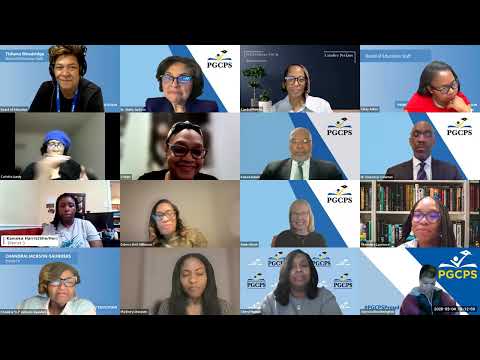
Prince George’s County Public Schools staff presented the 2023–2025 climate and culture survey results to the Parent and Community Advisory Council on March 4, reporting higher overall participation and several areas for targeted work, particularly to boost middle and high school students’ sense of belonging.
"We hear from over 53,866 students from grades 4 to 12, staff and families," said Marjoriese, who presented the dashboard and key metrics. She reported that 72% of parents agreed the district communicates effectively, while parent measures of connection and welcome outpaced student responses: for example, roughly 74% of families said they feel connected to the school while student connectedness was reported at about 41%.
Cheryl Hughes, supervisor of strategic planning and change management, said the survey yielded more than 37,000 open‑ended comments and will feed the district’s next three‑year strategic plan. She emphasized the district’s intent to "write the next chapter together," use focus groups and town halls, and return to communities with how input was used.
Hanover Research recommendations highlighted two priorities the district plans to explore further: deepen middle and high school efforts to improve safety and belonging through student‑informed actions, and partner with student leaders to address cleanliness concerns in school buildings.
PCAC members asked about benchmarks, the process for analyzing open‑ended comments, and how findings will translate into measurable action. District staff said comments are shared with schools and responsible departments, that they flag sensitive items for immediate follow‑up, and that some departments (for example, climate teams and equity offices) are already using survey findings to design training and programs.
Members suggested clearer survey items (distinguishing PTO events from district‑sponsored events), the addition of benchmarks for key questions, and piloting PBIS (Positive Behavioral Interventions and Supports) practices to improve student belonging and behavior. District staff agreed to incorporate PCAC input into the next phases of engagement and make results accessible through the online CSI dashboard and a new executive summary report.
Next steps: staff will continue focus groups and community outreach as the strategic plan is drafted, circulate infographics and executive summaries in multiple languages, and invite PCAC to track how family voices are reflected in the plan.