
Santa Rosa staff outline options to shore up ‘Help to Others’ water-bill assistance program
Get AI-powered insights, summaries, and transcripts
Subscribe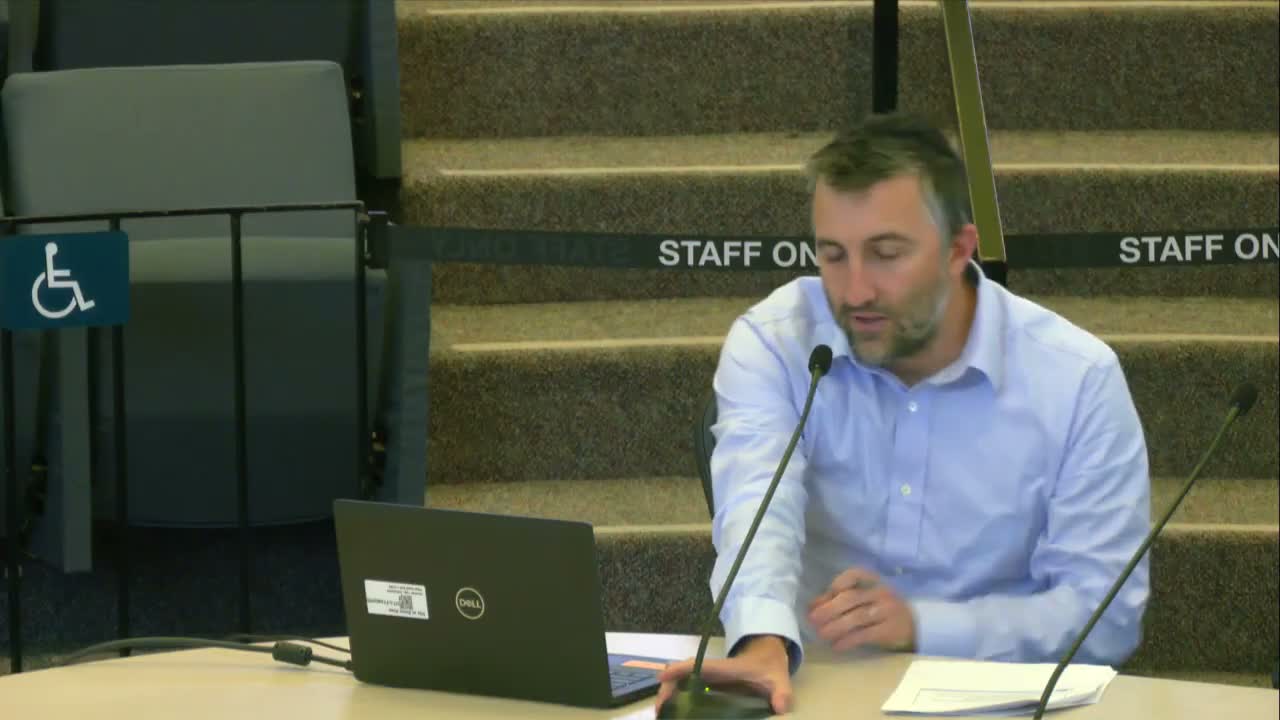
Summary
City staff told the Board of Public Utilities the Help to Others program is running a structural shortfall after telecom lease revenue declined; staff recommended reducing the fixed-charge subsidy to 75% to buy time, while board members urged exploring a 50% subsidy or adding participants with careful staffing-cost analysis.
Kevin Buchanan, the water department’s budget and financial analysis manager, told the Santa Rosa Board of Public Utilities that the city’s Help to Others bill-assistance program — in place since 2014 — currently pays 100% of customers’ fixed water and fixed sewer charges for qualifying low-income households, roughly $45 a month for a typical account.
Buchanan said the city began a wait list in October 2024 because lease revenues that subsidize the program have declined. "That wait list is fairly long now. We're up over 300," he said, and later noted the program presently serves about 724 customers. He identified recent lease losses — T‑Mobile ended a lease and DISH notified the city it would not renew — that together reduced revenue by roughly $354,000 this year and imperil the program’s long‑term funding.
The staff presentation outlined scenarios showing the program would exhaust funds under a “do nothing” path and end in FY29. Buchanan presented three alternatives he said would buy time or restore sustainability: lowering the subsidy to 75% (staff recommendation), lowering to 60% (sustainable), or dropping to 50% and adding about 50 people from the wait list (which would raise first‑year staff and third‑party costs to verify eligibility). "My recommendation would be to go to the 75% subsidy," Buchanan said, arguing it preserves more subsidy for current participants while using carryover funds to buy time.
Board members pressed staff for more detail before deciding. Board member DeWitt said she favored a return to a 50% subsidy with a phased approach to admit new participants: "I would like to see the possibility of going back to 50% and opening it up to a few people gradually," she said. Board member Mullen asked where any shortfalls would be made up, and whether fines, grants or other revenue sources were options.
Deputy Director Nick Harvey told the board the city is constrained by Proposition 218, which limits use of rate revenues to subsidize others, and said many grants carry local match requirements that would effectively use ratepayer funds. "I don't believe it would be constitutional under the provisions of Prop 218 to use... ratepayer revenues," Harvey said. He added staff continue to monitor proposed state legislation (referred to as LIRA) that could change allowable funding approaches but noted no successful legislative changes to date.
Vice chair Arnoni and others raised the possibility of partnering with the housing authority to leverage existing eligibility verification, or considering a general‑fund transfer. Staff said they had discussed options but cited legal, privacy and record‑retention constraints with internal verification and noted Sonoma Can was retained as a third party to avoid perceived bias in selection.
Real estate staff Jill Scott explained why some telecom leases were lost: T‑Mobile’s site was in a burned area and ultimately not rebuilt; DISH never completed a planned build and opted out. Scott said the city is negotiating to bring another carrier into one site but cautioned telecom contracts can take years to finalize.
Buchanan asked for direction to return with scenario modeling that includes projected staffing and third‑party verification costs for each subsidy level and for options that would add participants from the wait list. Chair Galvin closed the item after public comment produced no speakers and asked staff to return with the additional financial detail.
What's next: staff will prepare the requested cost scenarios (50%, 60% and 75% subsidy levels, and estimates of the first‑year staffing/third‑party costs to add 50–100 people) and return to the board for further direction.