Get Full Government Meeting Transcripts, Videos, & Alerts Forever!
Get email alerts on the Mobile Food Dispensers topic
No spam. Unsubscribe anytime.
Planning board backs draft food‑truck ordinance, drops 6‑hour private‑event cap
Summary
The Planning and Land Development Regulation Board recommended approval of a draft ordinance to allow mobile food dispensing vehicles in more nonresidential zones and on certain city properties, after amending the draft to remove a six‑hour cap on private catered events and to align noise rules with other commercial uses.
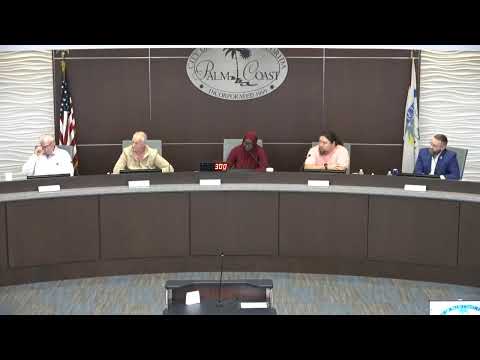
The Palm Coast Planning and Land Development Regulation Board on Dec. 17 recommended the City Council approve a draft ordinance to expand where mobile food dispensing vehicles and temporary commercial kitchens may operate.
Senior planner Michael Hansen told the board the ordinance, drafted after council direction and stakeholder input, would permit food trucks as either a principal use (a dedicated “food‑truck park”) or an accessory use on private nonresidential property in specified zones. The draft relies on Florida Statute 509.102 for definitions and notes the state preempts licensing and health regulation, so local code can only define zoning, operating hours and site standards.
Hansen said the ordinance sets pad dimensions (roughly 20 by 25 feet, about 500 square feet), separation (10 feet between vehicles), caps (15 vehicles for a principal food‑truck park, 3 for an accessory use unless an administrative deviation is granted), requirements for impervious surfaces, traffic‑cone delineation if located in a vehicle use area, and safety measures including a required fire extinguisher and prohibitions on discharging fats, oils or wastewater to soil. He also described a process for parks and recreation to manage operations on city property.
Why it matters: the change would let property owners invite food‑truck operators as an ancillary amenity without requiring a special event permit, while establishing dimensional, safety and operational standards to reduce conflicts with parking, circulation and stormwater requirements.
Public vendors who spoke generally supported the draft but asked for clarifications and fairness. Mary Keenan of Original Philly Cheesesteak thanked staff for outreach but urged the city to ensure local vendors have opportunity: “We’re family‑ and veteran‑owned; if the right people run it, it will be great for the community,” she said. Sheila Hines of Sweet Sheila’s Funnel Cakes asked the board to remove the presentation’s description of some vendors as “rogue,” calling that term offensive and asking for clearer, lower fees for small operators. Vendor speakers described typical operating runs of 8–12 hours.
Several board members pressed staff about the 6‑hour rule in the draft’s exemption language for private catered events. Hansen said the six‑hour limit was increased from an initial three‑hour draft on city‑attorney advice to allow longer private events; he also noted special event permits already allow exceptions.
Board action: Board Member Decker moved that the board recommend approval of the ordinance to City Council with two amendments: (1) remove the six‑hour cap tied to private catered events, and (2) make the draft’s noise and signage provisions consistent with existing rules applied to bars and restaurants rather than imposing a stricter standard for food‑truck accessory sites. Board Member Stancil seconded. The board approved the motion 6–0 on a roll call vote.
Next steps: The Planning and Land Development Regulation Board’s recommendation will be forwarded to City Council for first and second readings; staff said public comment and additional refinements — including creation of the city application form and any fees — would occur before any final council action.
Quoted voices in this article are drawn from Planning Board proceedings and public comment on Dec. 17, 2025.