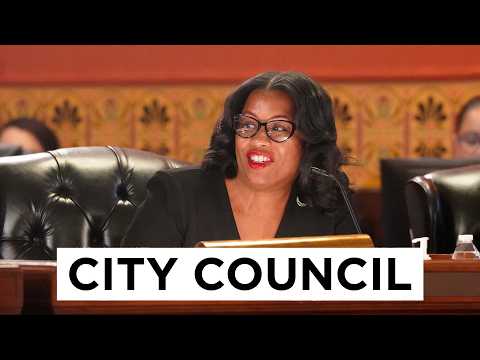
Council advances two community crisis charter amendments to May ballot after Safety Collective testimony
Loading...
Summary
Columbus City Council advanced two proposed charter amendments to create or expand non-police crisis response services to the May 5, 2026 ballot after testimony from the Columbus Safety Collective and council discussion of consultant findings and implementation timelines.
Columbus City Council on March 2 advanced two proposed charter amendments that would create or expand non-police community crisis response services and submit competing but related ballot questions to voters on May 5, 2026. Council President (chairing Rules & Policy) said the council will advance the Safety Collective’s original proposal and a collaborative, revised version the council negotiated with the collective; if both pass the collective will withdraw its original question so voters see a single measure.
The president framed the measures as part of an evolving approach to public safety and cited an external consultant’s findings that scaling up mobile crisis response units could divert “5 to 10 times more costs” and that up to a third of incoming 911 calls could be answered by a non-uniform specialized response. The council president said the collaborative ordinance includes earlier implementation deadlines so teams could be operational in 2028 and available 24/7 by 2030 under the proposed timeline.
Channa Wiley, cochair of the Columbus Safety Collective, told council she launched the campaign after the death of her brother Jeron Thomas during a mental-health crisis and that volunteers collected nearly 30,000 signatures to place the issue before voters. “This campaign is for the people and by the people,” Wiley said, urging council to give voters the choice to establish an alternative crisis-response system.
Council members praised the coalition-building that led to compromise language and asked questions about funding, staffing and the relationship to existing police and labor contracts. Several speakers noted organized labor and public-safety officials attended a press conference earlier that day endorsing the collaborative approach.
Council voted to advance ordinance 0649-2026 (the Safety Collective’s original text) and ordinance 0657-2026 (the collaborative text) to the Board of Elections; both were advanced by voice vote. The council president said the process anticipates the collective withdrawing one ballot question so the two measures will not compete in May.
What happens next: Both measures will be sent to the Board of Elections for the May 5, 2026 primary ballot. If voters approve a charter amendment, implementation will require council and administration coordination on funding, hiring and operational rules. Council requested continued reporting from staff and the coalition during the implementation planning phase.