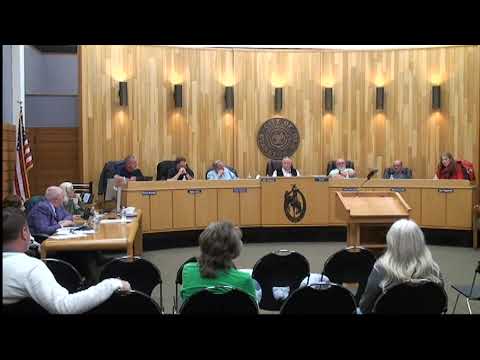
Council advances Visionary Communications franchise on second reading after debate over consultant and fee
Loading...
Summary
The Evanston City Council approved Ordinance 2602 on second reading to grant a franchise to Visionary Communications LLC, amid council concern about a consultant the city paid and negotiation of a 3% franchise fee; members asked for a work session before final approval.
The Evanston City Council voted to approve Ordinance 2602 on second reading, moving forward a franchise agreement that would allow Visionary Communications LLC to construct and operate a telecommunications system in the city's rights-of-way.
At a public hearing and during council discussion, members pressed company representatives and staff over two main points: the proposed 3% franchise fee and the role and cost of a private consultant the council had retained during negotiations. "We did discuss that, and during that phone call, it was decided to recommend a 3% ... flat fee," Visionary representative Kyle Farley said, describing the outcome of negotiations.
Council member Hegeman raised sharper criticism about the consulting work, saying the city had paid "$5,045.25" to a consultant she described as representing Visionary rather than the city and saying the work-session that had been promised to the council was canceled. "We hired a consultant at $105 over the highest price I could find. We have paid him $5,045.25, and he's represented Visionary, not us," Hegeman said.
Hearing officer Mark Harris pushed back on the characterization: "River Oaks does not represent Visionary, and I take great offense to an implication otherwise," he said, and clarified that any contract overages would have to be approved by the council. Council members asked staff to arrange a work session to review contract language and asked that the paid consultant be available to answer questions.
Despite the concerns, the council voted to approve the ordinance on second reading and agreed to schedule additional review before a final vote. The council recorded one opposing vote on the second-reading motion and directed staff to ensure the consultant and negotiation participants are available for the follow-up work session prior to third reading.