Get Full Government Meeting Transcripts, Videos, & Alerts Forever!
Get email alerts on the Solar Zoning topic
No spam. Unsubscribe anytime.
Clark County commissioners and York County planning commission begin work on solar zoning, focusing on conditional use and decommissioning
Summary
At a special meeting on April 12, Clark County commissioners met with the York County Planning Commission to begin drafting zoning rules for large-scale solar projects emphasizing conditional-use permitting, upfront decommissioning securities, setbacks and public hearings.
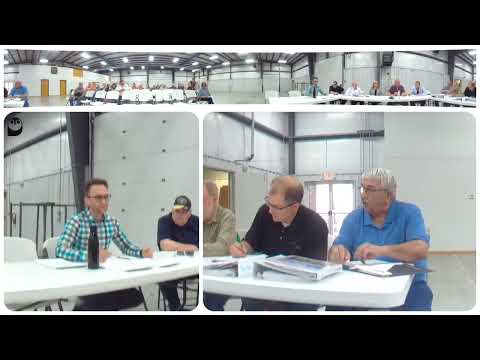
Clark County commissioners met with members of the York County Planning Commission on April 12 to begin drafting local zoning rules for large-scale solar projects, with participants emphasizing conditional-use permitting, enforceable decommissioning requirements and community protections.
The chair of the board opened the discussion by saying the county should treat large solar facilities as an exception handled through a conditional‑use permit and should require decommissioning commitments and financial securities up front. The chair said, “I think that any of these projects … should have to go through a conditional use process,” and urged rules that require public hearings before approvals.
Joe Selby, the planning commission’s zoning administrator, told the group the planning commission intends to notice a public hearing, present draft rules and vote on them before forwarding recommendations to the board. “So we will notice a public hearing and present some rules eventually and vote on them, and then it will go to the board,” Selby said, describing the sequence he expects the commission to follow.
Participants discussed several specific regulatory elements county officials said they want to consider: setback distances from dwellings and property lines, screening and landscaping standards, fencing and site security, environmental and erosion controls, and explicit decommissioning plans with financial assurances that survive a sale. The chair cited Lancaster County as an example, reciting its setback scheme: nonparticipating property with a dwelling, 100 feet; nonparticipating without a dwelling, 50 feet; participating property, 0 feet.
Commissioners and planning commissioners repeatedly raised the need for binding financial assurances. One planning commissioner urged that a third‑party trust or insurance be part of decommissioning plans so the county does not face cleanup costs if a project is abandoned or sold: “There should be insurance coverage out of there for all of those things,” he said.
The group also discussed nontechnical, practical impacts for farmers and landowners: whether center‑pivot irrigation systems would need removal, how conversion of thousands of acres could affect seed, fertilizer and local agricultural businesses, and whether property‑value protection or compensation procedures should be built into local rules. One commissioner described a model called a property‑value protection plan that allows a nonparticipating owner to seek an evaluation and potential compensation if their property value declines because of a project.
Legal and process questions came up, including notice periods and timing. Selby said planning commission hearings require public notice (he cited a 10‑day notice period for planning meetings), and commissioners discussed whether the planning commission should require a developer to show an interconnection agreement or a power‑purchase agreement before seeking a conditional‑use permit.
Several participants flagged broader legal risks, including questions about eminent domain raised in news reports. Commissioners noted that while eminent domain is constrained today, legal avenues sometimes exist and landowners should understand those risks before signing easements.
What happens next: the planning commission will draft and refine proposed rules (including at least one public meeting) and then hold a noticed public hearing before sending formal recommendations to the board. The chair said the board will consider an appointment to the planning commission at its next meeting and urged stakeholders to remain engaged in the process.
Votes at a glance: the board approved the minutes of the April 5 meeting and adopted the meeting agenda by roll call during the April 12 session (motions were moved and seconded; both actions carried).