Get Full Government Meeting Transcripts, Videos, & Alerts Forever!
Get email alerts on the Transportation topic
No spam. Unsubscribe anytime.
Pebble Creek residents press Council to remove planned parkway extension; council directs staff to pursue non‑vehicular alternatives and rules out four‑lane buy
Summary
Dozens of Pebble Creek residents urged the College Station City Council to remove a planned southward extension of Pebble Creek Parkway and to preserve neighborhood integrity. After hours of testimony, councilors agreed staff should not pursue widening the existing parkway to four lanes and were directed to return with non‑vehicular or emergency‑access options.
Dozens of residents packed City Hall on Sept. 25 to urge the College Station City Council to remove any future extension of Pebble Creek Parkway to the south and to reject plans to widen the existing parkway to a four‑lane thoroughfare.
The meeting opened with a staff presentation from Jason Schubert, the city’s Transportation Planning Administrator, who traced the roadway’s long history in the city’s thoroughfare plans and stressed that the maps are long‑range, illustrative guides rather than construction orders. Schubert told councilors there is no funded project or active design to widen Pebble Creek Parkway and that any change to the adopted maps would require formal comprehensive‑plan amendment and public review.
The meeting shifted into a sustained public‑comment period that included many residents of Pebble Creek and nearby neighborhoods. Courtney Cannon, speaking virtually, said, “This expansion would be dangerous,” and urged councilors to “value neighborhood integrity above convenience.” Kerry Roper, a Pebble Creek resident and organizer, told the council a petition opposing the extension had gathered “well over 1,450” signatures and warned the proposal would “bisect our neighborhood.” Tom Jackson, a planner and retired appraiser, cautioned that expanded traffic and noise could depress property values. Multiple speakers described frequent pedestrian, bicyclist and golf‑cart crossings along the parkway and said construction and cut‑through traffic would threaten safety and the community’s character.
Council members also pressed staff for technical information. Fire Chief Mann said the city’s response‑time modelling shows the largest travel‑time difference for future development areas could be about three minutes if a direct southward connection does not exist; for many potential locations the difference was smaller. The chief described a target response goal of about 6½ minutes and said travel time is the portion most affected by roadway geometry and connectivity.
Council debate focused on tradeoffs: maintaining neighborhood integrity and safety versus longer emergency response times or leaving central city assets under‑connected. Several councilors highlighted alternatives that residents proposed during public comment, such as prioritizing Lakeway Drive or Rock Prairie for regional connections, installing a roundabout, or negotiating design conditions with the developer to avoid cut‑through traffic. Council member Yancey urged a definitive decision: “We need to walk out of this chamber with a decision made on the extension and the expansion of Pebble Creek Parkway,” he said.
By consensus the council directed staff to pursue a narrow set of steps: (1) proceed with the recommended removal of any four‑lane roadway geometry from the comprehensive/thoroughfare plan so the existing parkway will not be converted into a four‑lane section; and (2) return with a set of alternatives that avoid opening Pebble Creek Parkway to through vehicular traffic while allowing for emergency access or non‑vehicular connectivity (for example, pedestrian/bicycle crossings, emergency‑vehicle gates, or engineered treatments such as roundabouts) and analysis of implications for emergency response and developer requirements. City staff said those changes would require formal comprehensive‑plan amendment and public notifications before the council could adopt any map change.
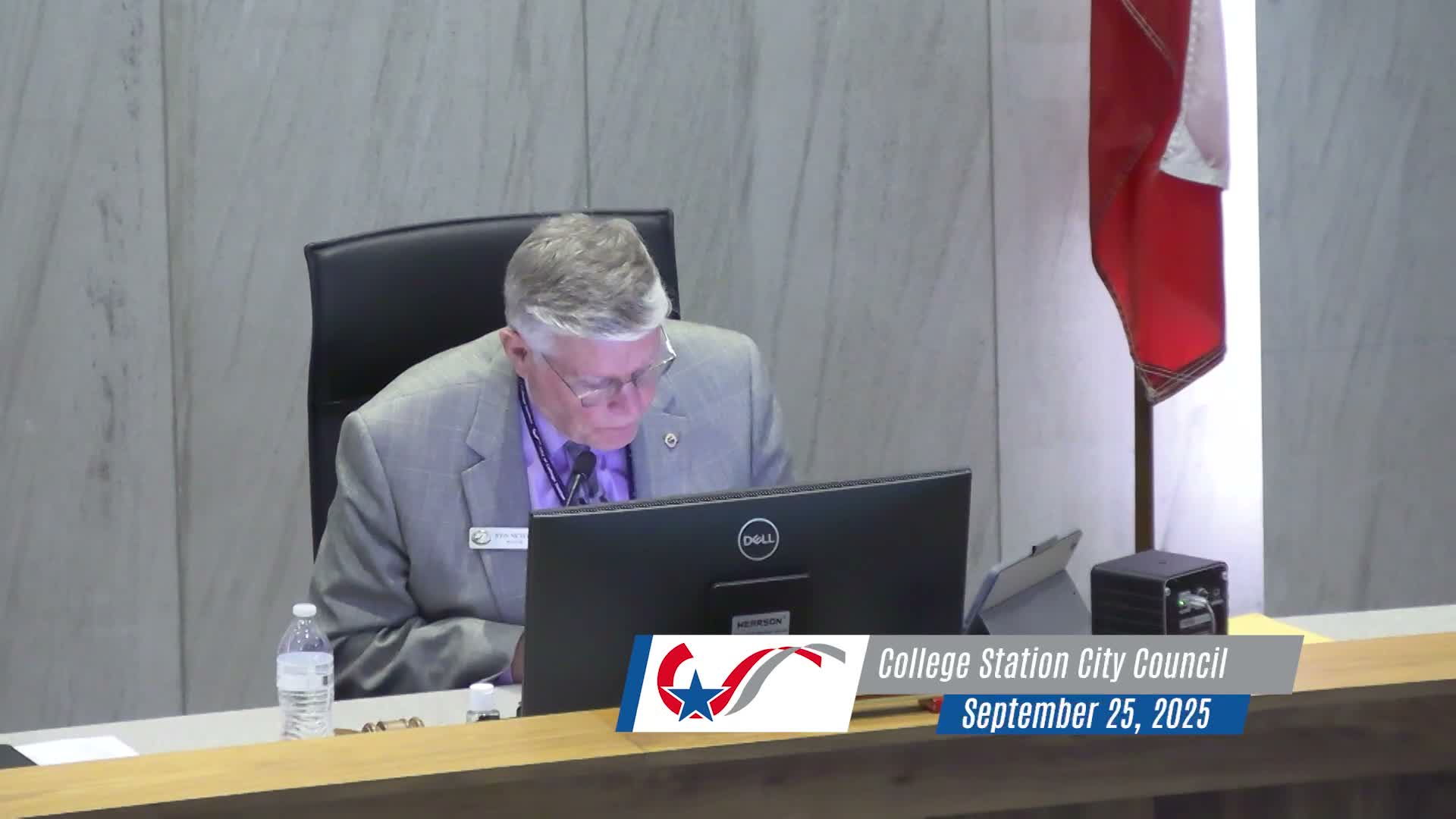
The council did not adopt an immediate ordinance to remove the dotted extension line; staff said the statutory amendment process includes neighborhood meetings, required board reviews and Planning & Zoning and city‑council hearings, and anticipated bringing recommended amendments back as part of a package in the months ahead. Mayor John P. Nichols thanked residents and staff for the thorough discussion and asked staff to return with a set of feasible, design‑level options that meet public‑safety needs while protecting Pebble Creek’s character.
What’s next: staff will prepare options and run the formal comprehensive‑plan amendment process (neighborhood meeting → Bike, Pedestrian & Greenways Board review → Planning & Zoning → City Council), and will also evaluate whether improvements on Lakeway or other corridors could provide acceptable regional connectivity without routing traffic through Pebble Creek.