
Home-care workers press Solano supervisors for higher IHSS wages and contract action
Get AI-powered insights, summaries, and transcripts
Subscribe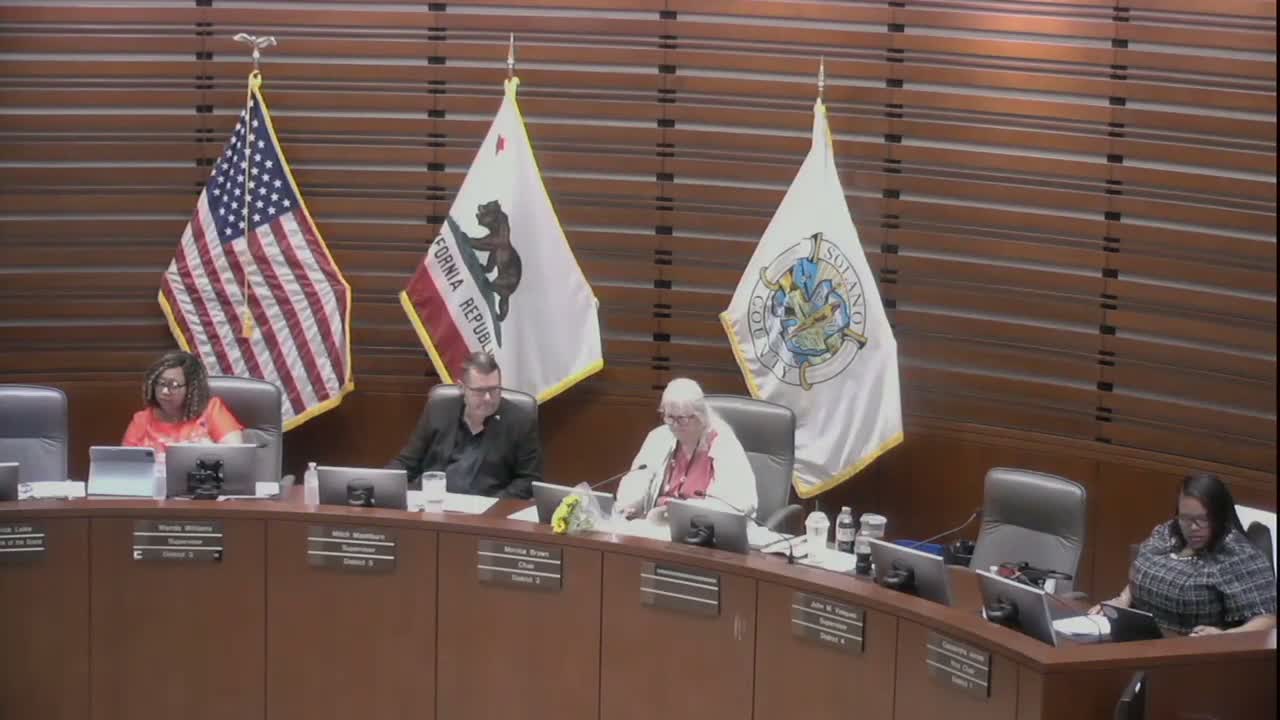
Summary
A large group of in‑home supportive services workers, union leaders and county employees urged the Solano County Board of Supervisors to prioritize higher IHSS wages, a stronger cost-of-living adjustment and concrete bargaining direction to address recruitment and retention problems.
Home-care providers and county employees told the Solano County Board of Supervisors on March 3 that current wages and benefits for in‑home supportive services (IHSS) workers are undermining care and driving workers out of the county.
At public comment, Natasha North, a children’s librarian, described colleagues leaving county jobs for higher pay and urged the board to adopt a stronger cost-of-living adjustment so staff can afford housing and basic needs. Multiple speakers tied low wages to staffing shortages: Jennifer LaRiviere, a SEIU member and Vallejo resident, said a mobile crisis call she placed did not send a clinician and noted that volunteer responders are not a substitute for trained staff. Minerva Chavez, an IHSS provider, urged that wage increases be included in the county’s next union contract, saying each dollar invested returns 86¢ to the county via state and federal funds and that higher pay would boost local economic activity.
Longtime providers described hardship and safety issues. Sherry Williams, an IHSS worker with decades of caregiving experience, said wages have lagged behind cost increases and contrasted her experience with recent pay adjustments for supervisors; she urged the board to act now to prevent a deeper care crisis. Several speakers cited a local IHSS wage of $18.10 per hour and compared it to neighboring counties where rates exceed $20. Many called the board to direct county negotiators to seek larger raises and to provide transparency about IHSS funding streams and contract terms.
Leticia Guerrero, calling in by phone, highlighted research showing that home-based care is significantly cheaper than institutional care and argued that higher caregiver wages reduce turnover, improve continuity of care, and lower avoidable hospitalizations that cost counties money.
The board did not take action on wages during the public meeting; labor negotiations over multiple units were scheduled for closed session later in the day. Board members acknowledged the testimony and indicated staff would follow up on requests for documents and data related to IHSS program costs and past allocations.
The public comment period on March 3 included several requests for an audit of IHSS funding and for the county to identify where state, federal and county dollars are deposited and assigned. Speakers urged that the board ensure funds intended for caregivers are protected and used to stabilize the workforce. The board’s next public meeting is scheduled for March 10; negotiators will report back to the supervisors as appropriate following closed-session discussions.