
Baker Tilly: Churchill County pay structure lags market; commissioners urge further review
Get AI-powered insights, summaries, and transcripts
Subscribe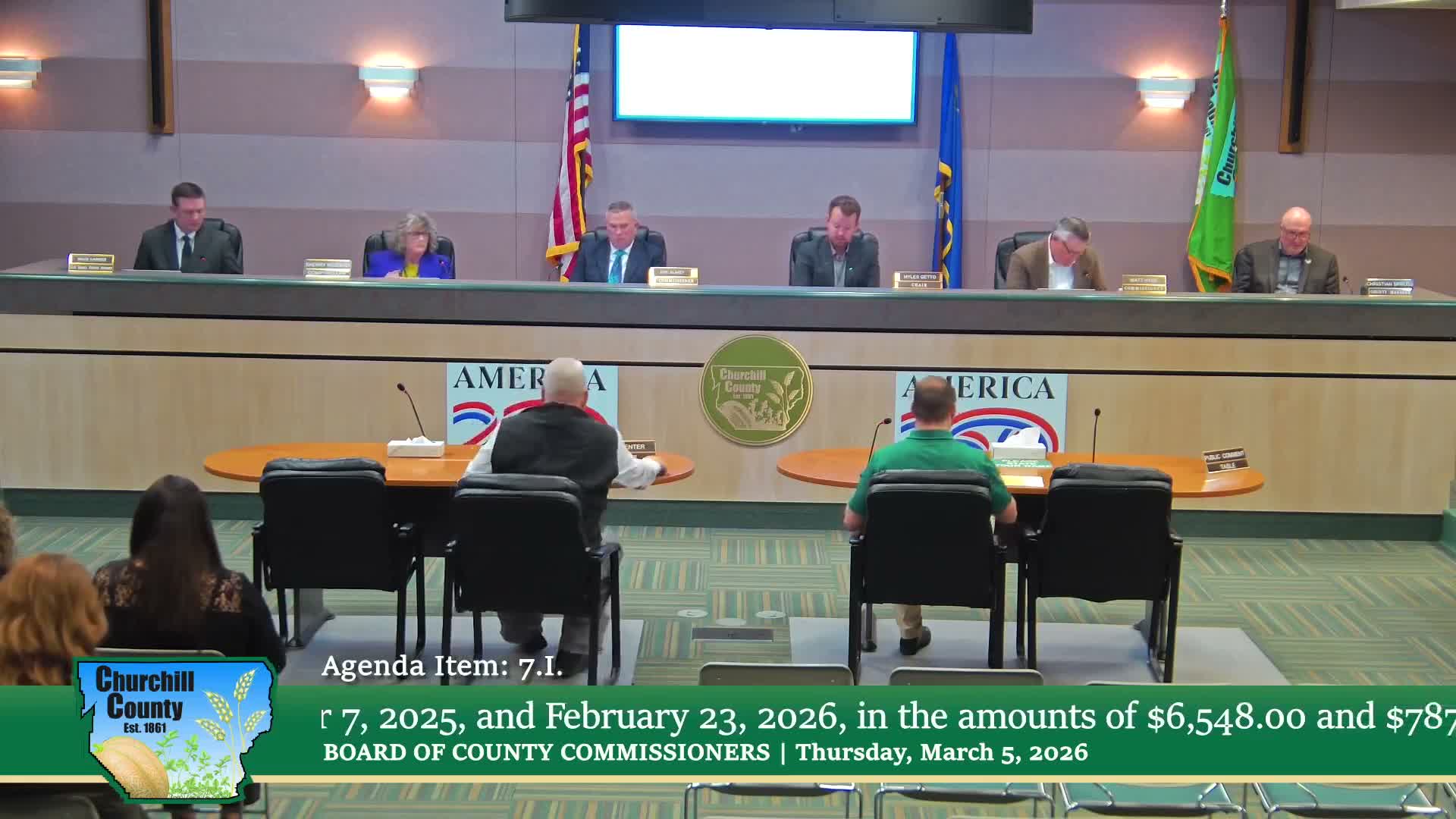
Summary
A Baker Tilly presentation found Churchill County base pay lagging market averages (6.1%–10.7% depending on measure), proposed consolidating the pay structure from ~100 grades to 29, and laid out three implementation options; several department heads raised concerns and requested follow-up analyses.
An outside consultant told the Churchill County Board of Commissioners the county’s base pay structure generally lags market and recommended a redesigned step-and-grade structure to address internal equity and recruitment challenges. "Of these 92 positions with sufficient data, on average, Churchill County is currently 6.1% below market at the minimum, 9% below market at the midpoint, and 10.7% below maximum," Sarah Town, senior consulting manager with Baker Tilly, said during a lengthy presentation.
Town described a five‑phase study: project initiation and data collection, job-title review and job evaluation using a point-factor tool called SAFE, a market survey that included 10 peer organizations and two published private surveys, and pay-plan development. The consultant proposed reducing the existing roughly 100 grades to a consolidated 29‑grade structure, reducing steps from 13 to 11, increasing step differentials and widening grade separation to reduce compression.
Town presented three implementation scenarios: 1) move employees to the closest step in the new structure without reductions; 2) place employees based on years in position (with proposed caps); and 3) map employees to their current step in the new structure (no movement). Baker Tilly emphasized it does not recommend pay decreases for any employee as part of implementation.
Department directors and elected officials raised concerns about apparent discrepancies between market matches and proposed grade placements. One director said the product looked "a little alarming," questioned why so many classifications fell below the midpoint, and asked for clearer transparency so supervisors can explain results to staff. Commissioners and county staff agreed the study remains a work in progress, directed Baker Tilly and county management to increase outreach to department heads, and recommended additional on-site follow-ups to address questions.
Joe Sanford (county staff) and the consultant said follow-up conversations were planned and that Baker Tilly would provide requested clarifications and revised placement information. Commissioners asked staff to keep the compensation study as a rolling agenda item and directed continued communication with department leadership before final implementation choices are made.
The board did not vote on implementing the study during the meeting; commissioners requested additional feedback, confirmed plans to keep the study on future agendas and asked staff to provide preliminary cost estimates to include as a placeholder in budget contingency planning.