Get Full Government Meeting Transcripts, Videos, & Alerts Forever!
Get email alerts on the Land Use Checklists topic
No spam. Unsubscribe anytime.
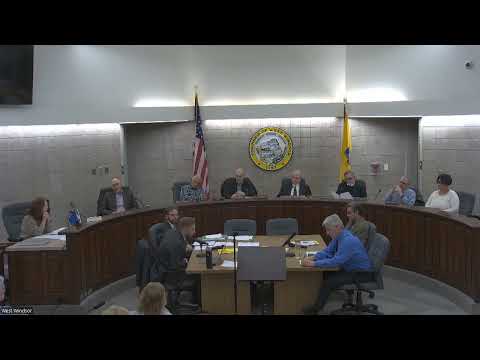
West Windsor planning board advances modernized site-plan and subdivision checklist, removes school-impact requirement
Summary
The planning board reviewed a comprehensive rewrite of West Windsor’s site-plan and subdivision checklists to reflect two decades of technical and legal change, clarified waiver and TRC procedures, and agreed to remove a proposed school-impact estimate to avoid potential misuse in decisions.
David Novak of Purchase Associates told the West Windsor Planning Board on Feb. 25 that the township’s site-plan and subdivision checklist ordinance had not been substantially updated in about 20 years and needs modernization to reflect changes in technology, resources and the municipal land use law’s “time-of-decision” rule. “It’s been about 20 years since the township has updated its site plan and subdivision checklist ordinance,” Novak said, framing the draft as the tool that tells applicants what materials they must submit and what the board can reasonably request.
The memo and draft forms Novak presented reorganize requirements by application type — concept plans, minor site plans and preliminary/final submissions — and include new, downloadable checklist forms with separate checkboxes for applicants and township reviewers to make completeness clearer. Novak said the consultants rewrote the forms so applicants can electronically mark items and the township can track which items are waived or still required.
Board members and staff spent much of the discussion clarifying how waiver requests move through the Technical Review Committee (TRC) and the planning board. Staff described the TRC as the first completeness reviewer and said it typically indicates whether staff will support a waiver request; Novak and staff emphasized that TRC support does not bind the planning board, which must formally grant any checklist or design waiver at the hearing. As Novak put it, “just because we would support a waiver request in TRC does not mean you as the board need to support that waiver.”
Traffic-engineering thresholds were also discussed. A staff member explained the industry standard that typically triggers a full traffic study is generation of 100 or more vehicle trips; smaller projects may not require a study but TRC can ask an applicant’s traffic engineer to expand the study area when warranted.
The draft adds and re-inserts technical items such as an environmental impact statement and a green development-practices checklist; Novak acknowledged a prior accidental deletion of the EIS requirement and said he will restore it. The draft also includes optional items the team had considered — including socioeconomic details such as estimated school-age children and potential tax revenue — intended only for planning context. Novak told the board such socioeconomic information “would not be used as a mechanism to deny those applications,” but several board members and council members raised concerns that including school-kid estimates could be misinterpreted or used against an applicant in litigation.
Council member Dan Weiss and Council President Andrea Mandel both urged caution: Weiss said the school district is better positioned to provide demographic estimates, and Mandel asked for clearer language on how waivers interact with the municipal statutory “clock” for application completeness. Linda Geeb, another council member, said she favored removing the school-impact section because it could improperly influence decision-making.
After discussion, staff and consultants said they were inclined to remove the school-impact/socioeconomic requirement from the ordinance text and instead provide relevant demographic data through coordination with the school district when needed. Novak also said the team will provide clearer footnoting (for example, citing the current edition of USGS topographic quadrants) and will post the completed checklist forms and the full ordinance language to accompany any future council introduction.
Next procedural steps outlined by staff: the final draft will be delivered to the township clerk for distribution to council members; if council introduces the ordinance it will be referred back to the planning board to confirm master-plan consistency, followed by a public hearing and, if approved, mayoral signature (the ordinance becomes effective 20 days after signature). The planning board closed the public hearing and adjourned the meeting.
Votes at a glance: the board approved the July 17, 2024 meeting minutes (motion moved by a board member and seconded by the mayor) with one abstention (Mister Lovera). A motion to close the public hearing carried by voice vote and the meeting was adjourned.