Get Full Government Meeting Transcripts, Videos, & Alerts Forever!
Get email alerts on the RP9 Redevelopment topic
No spam. Unsubscribe anytime.
Planning board adopts RP‑9 land-use and redevelopment amendments to enable commuter parking and a pocket park at former bus depot
Summary
The board adopted amendments to the RP‑9 land‑use element and the Princeton Junction redevelopment plan to allow commuter parking, shared-parking arrangements and a minimum 6,000‑square‑foot public park on the former bus-depot site; a West Windsor Bicycle & Pedestrian Alliance representative opposed added parking on safety grounds.
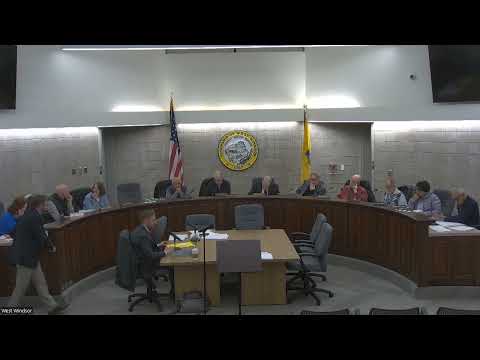
The West Windsor Planning Board voted on April 2 to adopt amendments to the RP‑9 land-use element of the master plan and a matching amendment to the Princeton Junction redevelopment plan that would convert the former bus-depot site (Block 59, Lots 12 and 3) into commuter parking adjacent to a small public park and allow shared-parking arrangements and community events.
David Novak, a township planning consultant with Burgess Associates, opened the formal hearing by describing the land-use amendment and the redevelopment-plan changes. "My name is David Novak, Novak for the record, with Burgess Associates," he said, and explained the amendments would supplement the township's 2020 land-use plan and specifically reframe the RP‑9 district to prioritize commuter parking for the Princeton Junction train station, a public park mirroring the PNC Corner Park, Wallace Road and Princeton Heights Road improvements, and shared parking to allow community events when commuter parking is not needed.
Novak outlined specifics of the redevelopment amendment: permitted uses would include public-park uses and off-street parking, monument signage, street furnishings, and transit training facilities; the plan establishes a minimum public-park area of about 6,000 square feet with a shade structure and at least four picnic tables, allows an improvement coverage up to 90%, and sets setbacks of roughly 18 feet from Wallace Road and about 2 feet from Princeton Heights Road based on the concept plan. He also said the township owns the land and that contamination tied to an old dry-cleaner site may be eligible for state reimbursement as part of cleanup work before redevelopment.
During public comment Anne Clifton, speaking for the West Windsor Bicycle and Pedestrian Alliance, testified under oath that the alliance does not believe additional train-station parking is necessary. "Today in the middle of the work week between 01:30 and 2PM, there was no shortage of parking," she said, citing counts of "only about 100 cars... in the Lower Vaughn Lot and 57 cars in the unpaved Alexander Lot," and argued that adding parking would increase conflicts among motorists, bicyclists and pedestrians on Wallace Road during peak commuting hours.
Board members questioned access, traffic and event management: Novak said driveway location and traffic issues have been reviewed in preliminary TRC meetings and would be refined by the traffic engineer at the TRC stage. Board members also discussed remediation and funding: because the site is contaminated, Novak and staff said the township may seek state grants or reimbursement to address cleanup and that the parking authority is pursuing grant options before filing a final site plan. A member asked about snow storage; staff said snow storage would be on Amtrak property.
After discussion, Anna moved and Allen seconded a motion to adopt the RP‑9 land-use amendment and the associated redevelopment plan amendment as discussed. The chair called the roll; multiple board members answered "yes" and the board adopted the amendments. Novak agreed to correct section-numbering and documentation errors in the submitted plan language prior to further submittals. The project will next proceed through TRC review and future courtesy and council hearings as required.
The planning board's adoption authorizes the revised plan language and permitted uses but does not itself approve a final site plan; detailed design, traffic mitigation and remediation measures will be reviewed in subsequent TRC and site-plan proceedings.