Get Full Government Meeting Transcripts, Videos, & Alerts Forever!
Get email alerts on the Local Government Policy topic
No spam. Unsubscribe anytime.
West Windsor board reviews draft sign ordinance; considers larger monument signs, instructional signs and flag rules
Summary
The planning board began a line-by-line review of a draft revision to the township sign ordinance aimed at reducing waiver demand, clarifying measurement rules, and moving toward sign/content neutrality; several technical issues (flag size, canopy percentages, monument height) were deferred for staff research and return at a follow-up meeting.
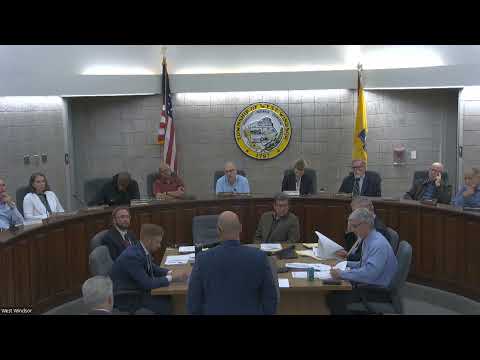
On Sept. 3, 2025 the West Windsor Planning Board conducted a detailed workshop-style review of a draft revision to the township sign ordinance. Planner David Novak outlined three objectives: cleanup and codification of existing language, better alignment of the rules with recent application trends, and moves toward content neutrality to reduce the number of required waivers.
The board focused on a handful of recurring issues raised by sign applications: (1) how sign area and height are measured for walls and freestanding signs, (2) relief historically requested for letter heights on building facades, and (3) monument sign height and placement when landscaping or berms would otherwise obscure visibility from the roadway. Novak proposed measuring sign allowances from the wall of the building where the sign is attached to the nearest public or private roadway (rather than from the closest building edge to the right-of-way), a change designed to avoid unduly small allowances for internally oriented walls.
Key proposed edits and board concerns: - Monument signs: the draft would increase allowable monument area in some plan developments and provide for a larger height (the board discussed changing a 5‑foot base maximum to 6 feet; several members recommended 6 feet to reduce waiver requests). Board members noted cases where rising berms or plantings require taller monuments for visibility and asked for language that ties sign height to grade rather than rigid numeric height in some circumstances. - Letter height: Novak said the draft recommends removing a prescriptive letter-height limit in some zones to better match on-the-ground practice; the board agreed that removing the letter-height rule in appropriate contexts would eliminate many routine waivers. - Instructional/directional signs: the draft would raise the allowable area for small internal wayfinding signs (draft text discussed raising a 2‑sq‑ft limit to something closer to 8 sq. ft.). Board and staff noted that doing so would reduce the number of waiver requests for developments like the application heard earlier that evening. - Flags and flagpoles: board members raised concerns about large corporate or promotional flags and asked the planner to research First Amendment limits and New Jersey case law before prescribing numeric limits on flag size or pole height. Staff agreed to coordinate legal research. - Canopy signage for gas or service-station canopies: the board requested staff research and examples to find an appropriate percentage-of-canopy rule; consultant Novak agreed to provide suggested percentages.
Board process questions: Members asked whether conforming sign changes for existing developments should require a board appearance. Novak and staff suggested drafting an administrative pathway for purely conforming changes (for example, replacing an existing sign under new rules without waivers) to avoid unnecessary minor applications before the board.
Timing and next steps: Staff will revise the draft to incorporate the board’s direction, research flag- and canopy-related issues, and return revised language in two weeks for further review. Temporary sign rules and political/temporary exceptions were deferred to a future meeting.
Representative quotes: “We’re trying to get closer to sign neutrality and content neutrality,” David Novak said. On monument height, one member asked whether the ordinance should measure “feet above grade” rather than an absolute number to avoid penalizing applications with berms and landscaping.
Ending: The board scheduled follow-up work to resolve open technical questions and complete the ordinance edits before a final public hearing on the code changes.