Get Full Government Meeting Transcripts, Videos, & Alerts Forever!
Get email alerts on the Public Transit topic
No spam. Unsubscribe anytime.
Arlington transportation staff report HandyTran and on‑demand ridership and costs; upcoming fare hearing and data requests noted
Summary
Transportation staff updated council on HandyTran and on‑demand services, citing FY25 metrics (HandyTran ~141,000 trips; average HandyTran cost ≈$31 per ride; total HandyTran cost just under $4.4 million) and previewed an upcoming public hearing on fares and a TMI committee discussion of service boundaries. Council members pressed staff for more marketing, rider-demographic data from Via, and clarity about visitor access.
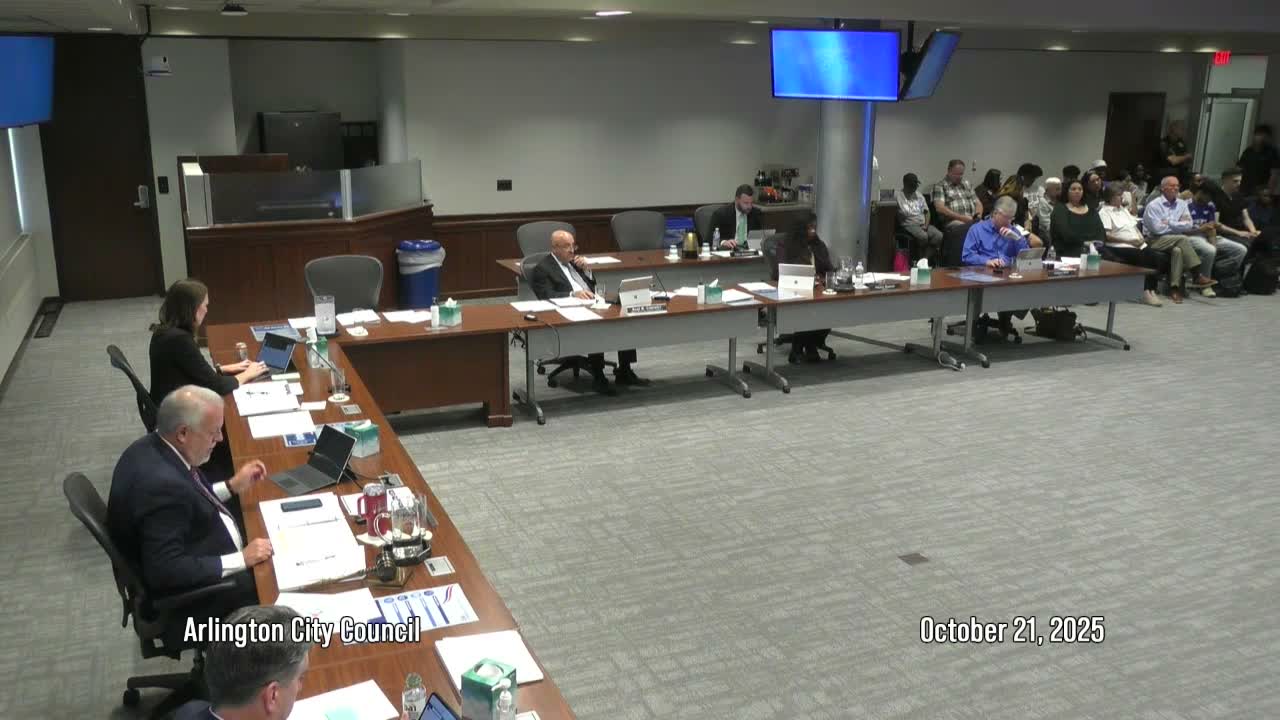
Alicia Winkelblatt, director of transportation, and Anne Foss, planning and programming manager, gave a combined operational briefing on HandyTran (the city's paratransit service for elderly and disabled riders) and the city's on‑demand service.
Winkelblatt described HandyTran as an application-based service for riders 65 and older or those with disabilities, operating within Arlington and a 1.5-mile boundary outside the city. She said the service uses a mix of city buses and contracted taxis (taxis provide about 80% of trips), has roughly 34 vehicles, and that FY25 completed trips were about 141,000 (compared with a FY19 peak near 151,000). The current HandyTran fare is $2 per ride or a 30-day pass for $55.
"In FY25, we were paying an average of about $31 per ride" for HandyTran, Winkelblatt said, and reported total FY25 HandyTran costs were just under $4,400,000 with funding from four sources: farebox, TxDOT, FTA and the city general fund. She gave the FY25 funding breakdown approximately as $210,000 from farebox, $341,000 from TxDOT, $2.73 million from FTA and about $1.08 million from the city.
Foss reviewed the on‑demand network and the Arlington Express pilot, a direct-route, shared-van pilot launched in March to aggregate riders traveling between downtown, UTA and the Centreport TRE station. Foss said Arlington Express has averaged roughly 66 rides per week and delivered a little over 1,000 trips since launch. For the broader on‑demand service, Foss said the city averages about 11,000 trips per week, met demand approximately 96% of the time last year, and tracks metrics including wait times (average 11–16 minutes), utilization (about 2.9 riders per vehicle per hour) and average trip distance (about 6.8 miles).
Councilmembers asked operational and policy questions: how visitors can access HandyTran (application required), whether cameras and safety notices are posted on vehicles, how staff measure rider awareness and non-user reasons for not using Via, and whether the city can recover or require more demographic or trip-purpose data from Via (including Placer/transaction insights). Via representative Vinity Potash said privacy and rider experience limit mandatory data collection at sign-up, and that richer demographic information is typically gathered through opt-in surveys. City staff said the contract includes robust data-sharing clauses and that staff can run heat maps and destination analyses.
Council members also asked about fare and boundary proposals; staff said a required public hearing and comment period on fares will be held in the fall and that the proposed boundary change will be discussed at the TMI committee in January.
Next steps: Staff will return with formal fare proposals after the public hearing process, pursue data analyses requested by council (including heat maps and stakeholder outreach), and continue evaluation of the Arlington Express pilot and potential revenue options such as advertising.