
Lowell launches zoning audit; residents and councilors warn lot-size changes could alter neighborhood character
Get AI-powered insights, summaries, and transcripts
Subscribe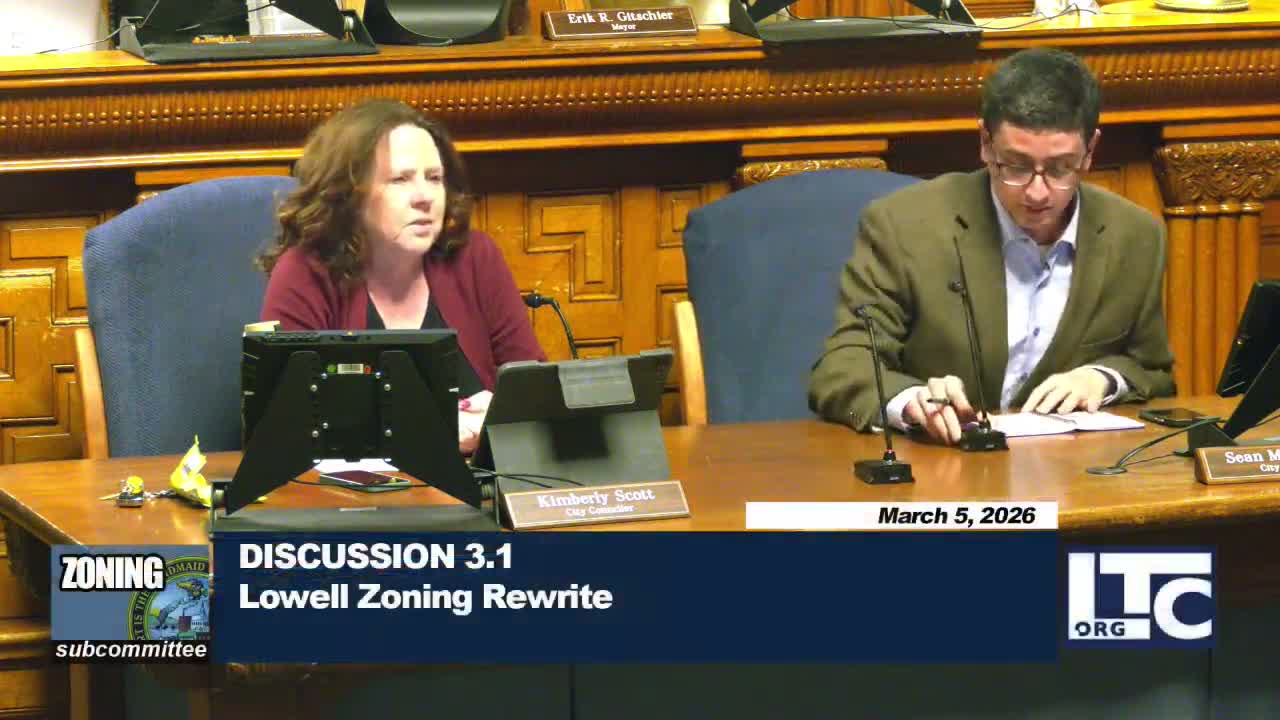
Summary
City staff and consultants presented an initial zoning audit and timeline for a potential rewrite; residents and councilors urged caution, citing audit data that many lots are nonconforming and warning that proposed 'rightsizing' could change neighborhood character without careful, site-specific analysis.
City planning staff and consultants presented the first public briefing on a zoning audit and potential rewrite to a joint zoning and neighborhood subcommittee meeting, saying the work will align zoning with the Lowell Forward master plan and seek to clarify rules for residents and developers.
"Today, we'll be talking about a very important topic, which is our zoning audit and potential rewrite," said Camilo Spiti, deputy director of the Department of Planning and Development, introducing the consultants and the process. He told the subcommittee the engagement will be phased and that the city secured state funding through the EOHLC office via a housing choice grant to support the work.
The consulting team from Community Scale, led by Nels Nelson, described their method of analysis and early observations. Nelson said the audit is an informational analysis, not a set of recommendations: "These aren't recommendations," he said; "this is just part of our analysis." The consultant flagged several recurring issues in the code, including dimensional standards that no longer match what exists on the ground, large numbers of nonconforming parcels, and repeated variances to the zoning board for the same relief (for example, dwelling units-per-acre and parking).
Resident commenters urged a cautious, nuanced approach. "We should not lose that diversity in architecture, history, and neighborhood feel," said Belinda Duran, a Lowell resident, summarizing the audit's findings and citing an audit table showing that roughly 46% of lots in the suburban single-family zone do not conform to the current 10,000-square-foot minimum. Duran said the city should avoid a one-size-fits-all 'rightsizing' that would make different parts of a neighborhood look the same.
Jerry Frechette, vice chair of the Planning Board and a member of the rezoning committee two decades ago, urged similar caution. Frechette recounted the 2003 rezoning effort and said planners should avoid unintended consequences while pursuing opportunities such as downtown activation and MBTA-area zoning changes.
Councilors used the briefing to probe two ideas that the audit touches on: how Lowell's status as a 'front-runner city' might change priorities, and how the city will structure public engagement. Staff said the front-runner concept has aspirational elements to be tied to zoning at a later stage and that a steering committee (including planning staff, planning-board members and a council representative) will be formed to guide outreach, which could include public drafts with visual aids and online tools.
Councillors also raised practical concerns about density and infrastructure. One councilor pointed to the audit's example of reducing lot-area-per-dwelling-unit in places and warned that cutting lot-area requirements could worsen parking and safety issues in neighborhoods already constrained for space, snow storage, and sidewalks. Staff acknowledged those concerns and said additional on-the-ground walkthroughs and more detailed analysis would inform any proposal.
On accessory dwelling units (ADUs) and variance practice, staff clarified process points: ADUs require building permits and must meet the underlying dimensional regulations; if a proposed ADU cannot comply, the applicant would still need to apply to the zoning board of appeals. The consultant noted the audit found recurring patterns in variance requests and suggested that commonly granted relief could indicate code provisions that deserve adjustment.
The meeting concluded without formal recommendations or adoption. Councilor Dakota moved to adjourn; the motion was seconded by Councilor Chao and the chair called for a voice vote. Staff said the project will proceed with more outreach, draft zoning text later in the year, and steering-committee development.
Next steps: the consultant will prepare draft zoning changes for public review later in the calendar year, the steering committee will be convened to shape outreach, and the planning board and full city council will review any formal recommendations before any vote.